


-





NCA SALES

POPULAR POSTS
-


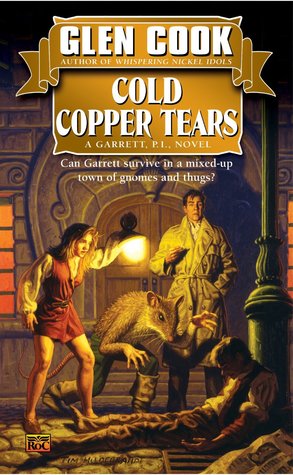
Cold Copper Tears Worth a Try
My rating is 3 out of 5 stars.
This is the third novel in Glen Cook’s Garrett P.I. series, where our hero is a private investigator in a fantasy world. Garrett is an ex-military guy, who doesn’t go looking for trouble but always seems to find it. While this wasn’t the best of the series, Cold Cooper Tears was still a solid novel with enough humor, surprises, and interesting plot lines to keep you turning the pages.
Basically, this story begins when Garrett gets approached by a beautiful damsel in distress named Jill Craight. (Garrett getting hired by a cute chic what are the odds?) Naturally, she needs Garret’st help for a routine job: find out who has been breaking into her apartment and why.
Sounds pretty easy doesn’t it? That is exactly what Garrett believes.
Unfortunately, things immediately get complicated when a Magister Peridont comes by, wanting to hire Garrett to locate some religious relics, which have walked away. Since Garrett isn’t a religious sort of guy – and he is naturally lazy never forget – he respectfully declines. Of course that doesn’t keep things from spiraling downward, and Garrett finds himself being attacked by a gang called the Vampires. This leads our investigator to contact an old friend Maya, who is the leader of a gang called Doom, for advice. From Maya, Garrett learns that his client, Jill, was a former member of Doom and that she is a chronic liar. With Maya in tow and Garrett suitable confused as usual, the story begins in earnest.
What happens next is classic Garrett. He bumbles around without the first clue as to what is going on or who to investigate. He will find a clue here, a dead body there, stumble upon long forgotten bad guys out to murder him, and then spend most of his time drinking beer and attempting not to go home alone. Along the way, a reader is peppered with Garrett’s wit and wisdom about people and life without you even realizing he is doing it.
Almost anything Glen Cook writes to me is worth reading, and Cold Copper Tears is no exception. Now, it won’t give you an epiphany about life, but it will entertain you for more than a few hours. And really isn’t that what P.I. books are all about: entertainment.
Posted in Fantasy
Tagged Cold Copper Tears, detective, Doom, fantasy detective, Garrett, Glen Cook, P.I. Garrett, The Black Company
Leave a comment
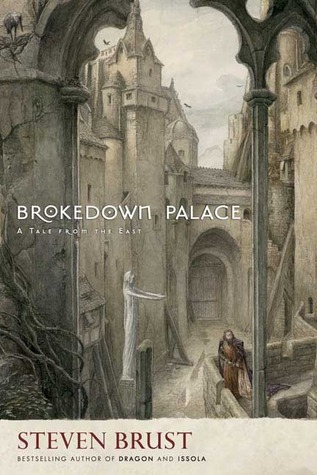
Brokedown Palace More Political Than Fantastical
My rating is 1 out of 5 stars.
Brokedown Palace is a fantasy fable, as told by Stephen Brust.
The tale itself is set in the Dragaeran world of Vlad Taltos in the human (Easterner) kingdom of Fenario, which borders the land of Faerie (Dragaera). Legend tells that mighty Fenarr established the land and brought it peace by riding a Taltos horse (talking horse) across the mountains into Faerie, where he took up the magic sword Allam, and forced the lords of Faerie to swear to leave his people alone forever. (Of course, another view of the legend of Fenarr is found in The Phoenix Guards, where we see him from the Faerie (Dragaera) view point.)
If you are interested in reading this book because it is set in Brust’s Dragaera, I would feel remiss in not pointing out that – while the dragaera are mentioned at various times in the story – they have little part in the actual plot of this tale. So be forewarned.
The majority of the action in Brokedown Palace takes place within the confines of the actually Palace of the Fenario Kings, which has become a crumbling ruin. There King Laszlò, the oldest of four brothers, rules in his father’s stead, aware of the decay of his home but steadfastly determined to maintain the status quo. With him resides his three brothers: Prince Andor, the second oldest, is a man seeking meaning in his life; Prince Vilmos is a giant of a man, endowed with physical strength and limited intellect – or so it seems; and lastly, Miklòs, who is the deep thinker of the family.
Our tale begins with Miklòs and King Laszlò having argued, and the younger brother throwing himself into the mighty river beside the palace to save his life. The younger brother miraculously survives his watery flight, is found by a taltos horse like his ancient forefather was, and is taken into the land of Faerie.
After several years, Miklòs grows weary of his life in Faerie and longs to go back to his riverside home, so one day he leaves his master’s lands and does just that.
When he gets there, of course, it does not live up to Miklòs’ memories, and he finds that the joy of his reappearance among his brothers is mingled with suspicion of him. This wariness a byproduct of the growth of a mysterious tree in his long vacated rooms.
Soon, Miklòs finds himself clashing with his brother the king yet again. Now though – armed with the power of Faerie, a taltos horse, and a mission for change – he will not flee his home, but is determined to transform the palace for the better. The remainder of the tale concerns itself with this struggle for change and the mysterious tree.
For those wishing to try this story, you need to keep several things in mind: one funny and one serious.
The funny item first. Supposedly, the title of the novel, the “tall tales” in the book as well as the names of places and things were all inspired by the Grateful Dead. On the Dead’s American Beauty album, there is a song titled “Brokedown Palace”, which talks about returning to a riverside home a different person after a long journey. As for the “tall tales,” an example of the Dead’s influence can be seen in the story of the boy trying to win the Princess, where he meets the Demon Goddess in three guises: one twice his age, one twice his height, and one twice his weight. Those three forms are specifically mentioned in the Dead song “I Need a Miracle.” And an example of the Grateful Dead’s influence on place names is clearly seen by Cukros Elofa, which – supposedly – is Hungarian for Sugar Magnolia: another track on the Dead’s American Beauty album. So basically, the whole novel can be viewed as a tribute, of sorts, to the Grateful Dead.
Now, the more serious thing to keep in mind. This is not a standard fantasy novel, but is more correctly labeled a folk tale, or fable.
As most of you are aware, a fable is a fictional story that generally “features animals, mythical creatures, plants, inanimate objects or forces of nature which are anthropomorphized (given human qualities such as verbal communication), and that illustrates or leads to an interpretation of a moral lesson (a “moral”), which may at the end be added explicitly in a pithy maxim.” Wikipedia. A “maxim” is a wise saying, “especially one intended to advise or recommend a course of conduct.” Wikipedia. And this is exactly what Brust is writing: a fable regarding the inevitable societal clash between the old status quo and the new.
Indeed, in this novel, Brust uses everything as an allegory for society as a whole. The palace itself is the sociopolitical status quo, which is aging and showing signs of decay. King Laszlò is the stagnant dominant class, attempting to maintain the status quo. The government of this status quo is represented by the magical sword, Allam. Prince Miklòs represents the Proletariat, who are subordinate but demanding that change takes place. Prince Andor is the representation of religious adherents (he is shown as a follower of the Demon Goddess: the land’s patron deity) and is portrayed as ignorant, gluttonous, and lacking motivation to discover the truth on his own. The wizard Sandor is the religious leader, who rules over Andor (religious adherents) and influences the ruling elite so as to maintain power. Prince Vilmos represents the majority of society: fully of mighty strength yet slow to respond to change and bound tightly in its loyalty to tradition. Bolk, the taltos horse, is the voice of reason/science, prodding his student, Miklòs, toward a revolutionary upheaval. And the mysterious “tree” is the evolution of a sociopolitical change, which the dominant class wishes to contain or destroy.
Naturally, all these divergent interests take sides and struggle among themselves throughout the book, as would be expected, because – according to Karl Marx – history is nothing but a constantly class struggle and social upheaval.
Now, am I saying this “fable” Brust has given his readers is nothing but a literary device to expound the virtues of revolution or Marxism?
Some people view it as such, but I suppose it can be read as merely an entertaining novel – if you overlook the lack of anything happening. Because the majority of this book is focused on a palace crumbling down and the brothers taking sides whether to destroy a tree growing out of it. Quite simply, that is what the story is about.
I personally find allegorical stories boring, especially ones where the story is about nothing but the sociopolitical message of the writer. Unfortunately, there is practically no way to read Brokedown Palace without being slapped in the face over and over again with the philosophical message that Brust is expounding.
Allow me to give a few, simple examples of this.
One of the first steps in Miklòs change for the better at his palace home is the destruction of religion. Naturally, there is no way to solve the decrepit edifices issues without the kingdom’s patron goddess being destroyed, or at least, that is what Miklòs trusty, taltos horse, Bolk, advises him.
“But – the Goddess. You can’t be serious.” (Miklòs)
“Have I ever been anything else, dear master?” (Bolk)
“But how? How can I fight the Goddess?”
“It is what I am for.”
“But you said you couldn’t-”
“I cannot. You can. I shall be your weapon.”
“But what will it gain us?”
“It will remove a powerful weapon from those who wish to
destroy the tree. It is the Goddess who inspires them against it. Without her, much of their will to fight will be gone.”
And when Miklòs and Blok finally set out to destroy the goddess, they go to the palace’s central courtyard, where her statue resides. Once there, our young prince contemplates the nature of his former god, specifically her statue, and wonders if his planned deicide is “. . . a desecration or perhaps the expression of a sick perversion?”
Thus, this scene – which seems out of place in the flow of events – allows Brust to explain to his readers that the appropriate methods to destroy religion – and thereby aid revolution – is either by desecrating its message or perverting it. Desecration being a violent disrespect or degradation of its tenets until no one feels it is worthy of belief anymore. While perversion is merely the act of altering something from its original meaning, misapplying its rules, or misrepresenting the true meaning. By doing either thing, religion’s influence on society will be nullified.
With the goddess dealt with, Miklòs must destroy the Palace (sociopolitical status quo), and so Brust’s avatar of the proletariat begins to manipulate his brother Vilmos (bulk of society), attempting to persuade him to join in this destruction (revolution).
“What is it you want, right now, more than anything?” (Miklòs)
“What I want? To keep my norska (children) safe?” (Vilmos)
Miklòs nodded, as if that were the answer he’d been expecting. “Good. The danger to the norska is the Palace (societal status quo), isn’t it?” Vilmos nodded. “Then the way to save them is to make it so the Palace isn’t a danger anymore.”
“Ha!” said Vilmos. “Easily said. I have been working for the
last two days to-”
“I know. But listen, Vili, remember the tree in my old room
and how you couldn’t make yourself destroy it? . . . “
”There are those who wish to destroy it (the tree). The chief
among them was the Demon Goddess.” (Miklòs)
. . . “She, like Laszlò, wished to leave the Palace standing
rather than replace it, even though it has become a danger to us all. . . If we leave it standing, it will collapse upon us.”
When Andor (religious adherents) hears this manipulation of Vimos by fear mongering, he intervenes, but Miklòs stops him by stating the following:
“. . . From as far back as I remember, you have been looking for something to make life meaningful for you. Time after time, you have failed. Why? Maybe it isn’t something you have been doing wrong, as we’ve all been thinking it was. Maybe there just isn’t any way to find out who you are, when everywhere you turn you are surrounded by either the collapse of your home or desperate efforts to hold back this destruction.
“But I have another alternative for you: embrace it. Embrace the collapse of all we’ve lived with and work to create something better in its place.”
Naturally, Andor responds by asking a simple question: “How, better? You’ve been saying what is wrong with the Palace (societal status quo), but how do I know that what you want to replace it with is better?”
Miklòs responds by stating that: “Whether it is better or worse than what we have now matters not in the least.”
Revolution for revolutions sake, I suppose?
In any event, I have read some reviews that compare this novel to Animal Farm by George Orwell, and I believe it is a fair assessment. Brokedown Palace is obviously Brust’s attempt “with full consciousness of what he (is) doing, “to fuse political purpose and artistic purpose into one whole” Why I Write by George Orwell. However, here Brust is holding up revolution, or Marxism if you will, as the hope of society – not a failed experiment.
With that being said, I do not believe most fantasy fans of Mr. Brust swashbuckling Vlad Taltos or Khaavren Romances will enjoy this book. But obviously, Brokedown Palace was not written for those type of readers. It is penned for those who love analyzing a story for all the possible allegorical meanings hidden within every sentence and paragraph.
So if you need a novel to discuss with your book club and have already dissected Animal Farm, pick up Brokedown Palace. It might make you *YAWN* in its arguments in favor of Marxism, but you can spend lots of time discussing its flawed logic.
OVERLOOKED FANTASY SERIES (2014 EDITION)
We all have read “overlooked” fantasy series. You know the ones with hardly any publicity and little word of mouth, but you picked them up because you were bored, found it dirt cheap at a used book store, or got it free off amazon. Yet, somehow, you enjoyed it. Maybe not as much as a novel penned by Tolkien or Abercrombie or Weeks or one of the other “it” writers, but enough that you found yourself wondering why so few of your fellow readers had ever tried this fantasy series.
Well, folks, this list is about just that: the fantasy series that I’ve enjoyed in my lifetime, which not enough of you have given a try. While these novels aren’t the best of the best, they were good enough for me to follow the series to completion, which is not something I always do. Now, please keep in mind I have not read every single fantasy book/series out there, because there are not enough hours in the day for me to do so, and so this list is NOT exhaustive. Just because you don’t see a book on this list doesn’t mean it’s bad — it probably means it is one of those book/series that my radar missed, and that is where you come in: I’d very much like you to list other overlooked masterpiece, so we can all try them out!
30) TALES OF THE TAORMIN by CHERYL J. FRANKLIN

A classic fantasy with a twist. In book one, Rhianna, a noble-blooded girl, runs away from home to avoid an arranged marriage. While she holds powerful magic locked within her, she turns out to be more practical and clever than all powerful, but soon, she falls in with Kaedric: tall, dark, intimidating, brooding, and so powerful he can shape the very earth to his whims. The two end up going on a quest together; their task to defeat an all-powerful wizard. The next book in the series changes the tone from pure fantasy to a genre bending fantasy/sci-fi, but it is done in a creative way and is pure fun to read.
Purchase the book at Amazon.
29) WINTER KING’S WAR by SUSAN DEXTER
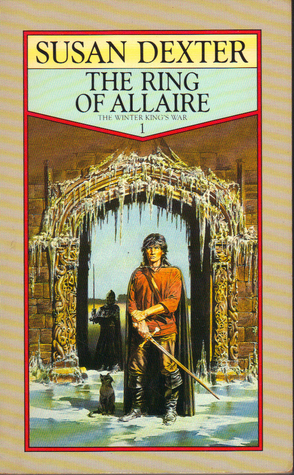
Another classic fantasy story with a somewhat bumbling apprentice mage as hero this time. Tristan and his master Blais live quietly by the sea in the east of Calandra, eking out a living brewing love philters and weather witching. There’s much call for the latter, because Calandra is becoming a land of eternal winter, as Nímir the Evil Wizard’s power grows. Of course, there is a prophecy that Nímir can be defeated by a group of adventurers, which must include a wizard, the true heir to the throne of Calandra (which seat has been vacant for a very long time), and Valadan, the immortal and missing war-horse of Esdragon. Against his wishes, Tristan is sent on this quest, traveling with a sarcastic cat and an overly optimistic canary. This initial quest leads to even more twists and turns in the plot, and a trilogy is born.
Purchase the book at Amazon.
28) THE BOOK OF ELEMENTALS by PHYLLIS EISENSTEIN
This is the first of our “unfinished” series on the list. It begins with the novel, Sorcerer’s Son. Here Cray Ormoru is introduced as the son of the enchantress Delivev. This youth has led an amazing life, growing up in magical Castle Spinweb, and while he is very close to his mother, he longs to find his father, who disappeared years before on a heroic mission. Naturally, when old enough, Cray sets out on a quest to discover the whereabouts of his missing parent; a journey which takes him out of his comfortable life into a world filled with danger and great sorrow. The story that follows is about Cray’s adventure, but also about him growing up and becoming a man. Well worth a try, even if you can’t get your hands on the third volume of the trilogy.
Purchase the book at Amazon.
27) ASCENDANT KINGDOMS by GAIL Z. MARTIN
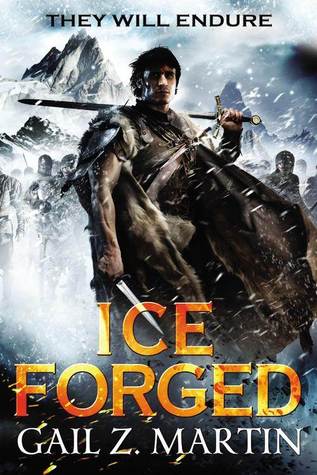
A genre blender series that seamlessly mixes fantasy, post-apocalyptic, urban fantasy, and horror themes into something refreshingly new. Vampires (Didn’t I mention all the vampires in this one?) do play a big part in the story in Ice Forged and Reign of Ash, and I realize many people have post-Twilight dislike of these supernatural creatures, but by War of Shadows , Gail Z. Martin finds a great balance between the human and vampiric, using both to craft an engaging tale of a world dragging itself back from the brink of total destruction.
Purchase the book at Amazon.
26) THE ELENIUM by DAVID EDDINGS
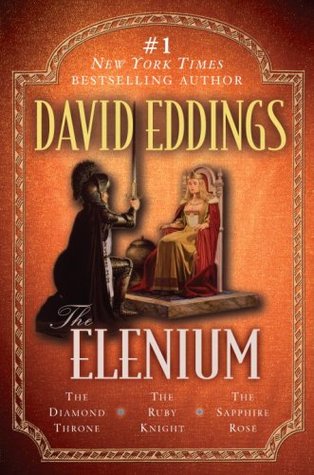
This classic adventure story by one of the masters of Young Adult fantasy is light on ingenuity but full of fun.
In an ancient kingdom, Sparhawk, knight and queen’s champion, has returned to Elenia after ten years of exile. Instead of a happy homecoming, he finds young Queen Ehlana trapped in a crystalline enchantment that keeps her alive, but which is slowly fading. This has left the kingdom under the rule of the tyrannical Annias, who vows to seize power over all the land. Such a situation forces Sparhawk to set forth on an epic quest to find the legendary Bhelliom and face off against monstrous foes and evil creatures.
Purchase the book at Amazon.
25) THE VIDESSOS CYCLE by HARRY TURTLEDOVE
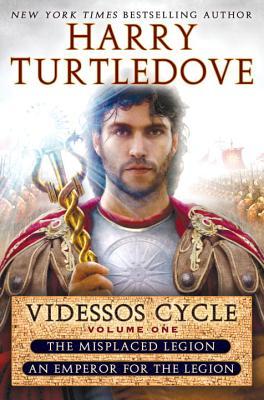
Yes, Turtledove is most well-known for his alternate history novels, but decades ago he burst onto the scene with this little fantasy series. While it is definitely a retelling of Byzantine history with magic, time displaced Roman legionaries, and sword-and-sorcery themes, it is a creature all its own, entertaining a reader with its fast-pace narrative and light-hearted handling of serious themes.
Currently, the Videssos Cycle consists of twelve novels, broken up into several series that have different characters and take place in different time periods of this fantasy world’s history.
Purchase the book at Amazon.
24) LORDS OF DUS by LAWRENCE WATT-Evans

Our protagonist in Lords of Dus is Garth, Lord of the Overmen of the Northern Waste. The Overmen are a magical breed created by wizards centuries in the past and driven by mankind into the Northern Waste during the Racial Wars. The tale begins simply in book one with Garth going to consult the Wise Women of Ordunin, because he wants to gain eternal fame and glory. Naturally, the oracle sends him on a quest to win his desired renown, which leads him from adventure to adventure and fills all four books of the series. All in all, it is a clever series with an interesting lead character in Garth. Well worth a try.
Purchase the book at Amazon.
23) BAZIL BROKETAIL by CHRISTOPHER ROWLEY

One of my favorite dragon series. A military fantasy with a bit of epic-ness and humor thrown in. The story focusing on a war against evil powers as seen through the eyes of the battledragon Bazil and his dragonboy Relkin. These two have a really humourous relationship; the battledragons are an interesting take on these mystical creatures; and the magic system is unique, focusing on sacrifices and planar movements. Sure, there is a focus on military life, but not so much that it bogs down the story in tedious, logistical details. Addictive read for military fantasy fans.
Purchase the book at Amazon.
22) LYONNESSE by JACK VANCE

I realize that you either love Mr. Vance’s style or you do not, but this classic fantasy trilogy reminded me of reading the tales of King Arthur’s Camelot. Here the story takes place upon the Elder Isles, which are located in the Bay of Biscay off the coast of Old Gaul. Ten kingdoms are locked in an eternal struggle for supremacy over the land, but King Casmir of Lyonnesse appears to be close to gaining the upper hand by cementing a grand alliance with the marriage of his beautiful but otherworldly daughter, Suldrun. Things do not as planned, however, when a stranger washes up onto the shore and is found by Suldrun. The love affair that follows changes the very fate of the Elder Isles!
Purchase the book at Amazon.
 21) THE IRON TOWER/THE SILVER CALL by DENNIS L. McKIERNAN
This is the ultimate Lord of the Rings clone. It is so close to Tolkien’s masterpiece in characters, plot, and tone that you will almost think you are reading the War of the Rings over again and then getting to read a sequel. And that really, really annoys some of you, which is perfectly fine. However, I loved LoTR and never wanted it to end, and while McKiernan does not pen a 100% original work in these series, he does imbue the books with their own unique elements and characters, especially in The Silver Call duology. For those reasons these five novels are well worth a read.
Purchase the book at Amazon.
20) THE CYCLE OF FIRE by JANNY WURTS
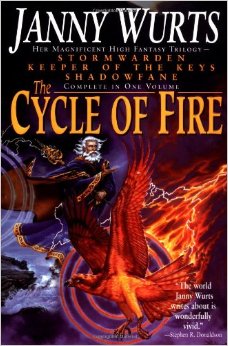
Demons who seek mankind’s destruction. Mysterious wizards (Firelord, Stormwarden, and others) holding back the dark tide. But now the hell spawn have won human allies to their side, vanquished the last great defenders of man and prepare to seize control. New heroes arise, however; each gifted with unique abilities that will shape them and the future of the world as they attempt to hold back the demonic hordes!
Doesn’t really do the story justice, bcause the trilogy really builds upon itself; each book getting better and better until the series concludes with a surprising ending that will leave you amazed you didn’t see it coming.
Purchase the book at Amazon.
19) A MAN OF HIS WORD by DAVE DUNCAN
A stableboy and princess grow up in a tiny backwater kingdom; their childhood friendship turning into something more as they get older, yet neither willing to admit it. Soon fate lends a hand, as both are cast into a world spanning quest that leads to unexpected places and towards each other.
Familiar fantasy trope, I know. What sets it apart is a unique world without any “humans,” only imps, elves, gnomes, jotnar, and many more; an unusual magic system; and several unforgettable characters that you’ll grow to love — which is good, because there is a second series about these same people.
Purchase the book at Amazon.
18) OATH OF EMPIRE by THOMAS HARLAN
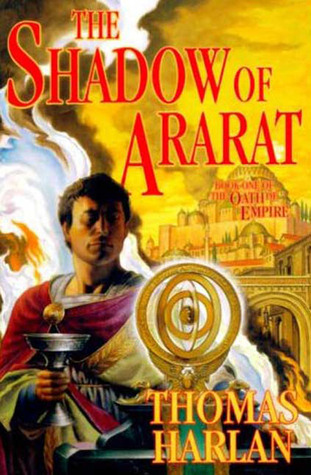
Okay, this one might look like alternate history, but it is filled with magic galore and isn’t really concerned with historical accuracy as much as pulse-pounding excitement, as it tells the story of a Rome that never existed.
The Shadow of Ararat introduces us to this otherworldly Roman Empire, which still stands in A.D. 600, supported by the Legions and Thaumaturges of Rome. The Emperor of the West has determined to aid his colleague in the Eastern Empire and lift the siege of Constantinople. Together, the whole of the Empire will then carry a great war to the Shahanshah of Persia; Roman swords and spears and the blackest necromancy aimed at destroying the Persian threat once and for all!
Purchase the book at Amazon.
17) SEVEN FORGES by JAMES A. MOORE
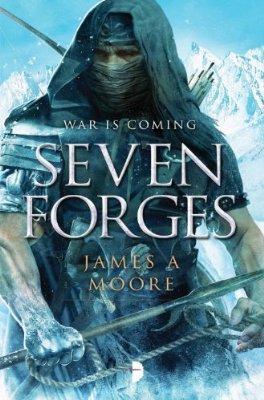
An unstoppable force meets an immovable object. That is the way the author has described Seven Forges, and it is a very accurate assessment of the series, as two civilizations rediscover one another after countless generations separated by an inhospitable sea of icy wastes. Naturally, this reintroduction to each other shouldn’t go smoothly, but it does — which raises suspicions about the Sa’ba Taalor’s true motives toward the outside world.
Purchase the book at Amazon.
16) DARKWAR by GLEN COOK
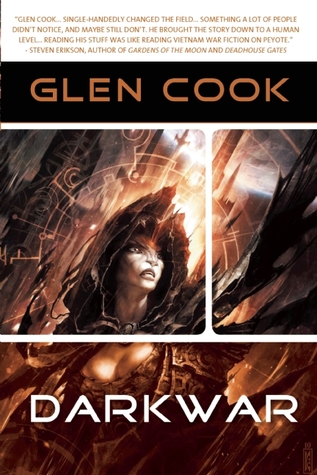
A little known series by the author of The Black Company. This one combines fantasy and sci-fi elements into a compelling narrative about a world growing colder every year.
Among the Degan Packsteads, where the pup Marika is reared, the lengthening winters cause whispers of doom to be exchanged in the loghouse: stories of the witch-like Silth, able to kill with their minds alone, and of the Grauken, that desperate and horrible time when intellect is overcome by cannibalistic urges and meth feeds on meth. Dark times are coming. But awakening within Marika is a power unmatched in all the world, a legendary talent that may not just save her world, but allow her to grasp the stars themselves!
Purchase the book at Amazon.
15) SEVENTH SWORD by DAVE DUNCAN
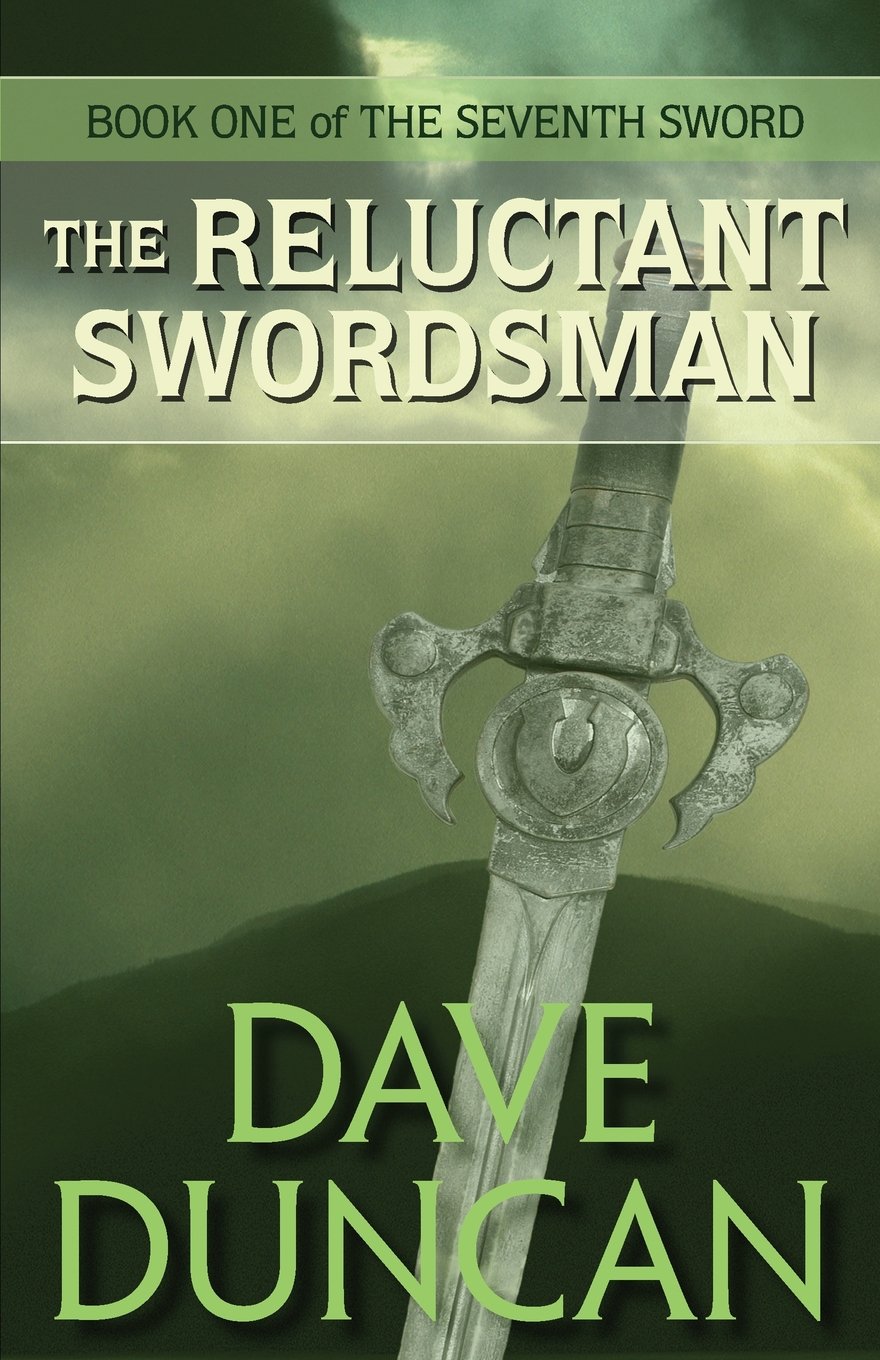
A “portal” fantasy that focuses on one Wally Smith: an ordinary guy, who is dying on Earth but wakes up in a strange, oriental-flavored world. Not only is Wally in a new body that carries the tattoo of a master swordsman, but he discovers that gods are real in this land and that he is their Chosen One, which includes his own prophecy, a legendary sword and the ability to wield it. However, there is always bad with the good, and Wally soon discovers that to fit into this world of honor, duty and obedience he must rethink his modern Earth sensibilities, because they are seen as weakness that encourage his ruthless enemies to retaliate against him and his companions. Even worse, he gradually begins to understand that the goddess’ purpose in bringing him here could be to cause the destruction of the world rather than stop it!
Purchase the book at Amazon.
14) INSTRUMENTALITIES OF THE DARK by GLEN COOK
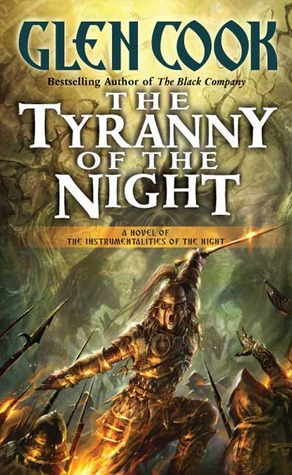
Glen Cook’s thinly concealed 13th century Europe. sees a wall of ice in the north slowly crawling over humanity, reclaiming the land for the imps, demons, and dark gods who are called the instrumentalities of the night. The wise in the world theorize that this ice age is occurring because the great magical Wells of Ihrain, which the world’s two greatest religions eternal fight over, are gradually drying up. Indeed, the glacier’s growth is increasing, which suggests that the wells’ demise are accelerating. However, this lessening of power has not kept the Patriarchs of the West and the Pramans, or the followers of the Written, from fighting several crusade-like wars for possession of them. And Else, a young Praman warrior, finds himself sent on a secret mission to infiltrate his enemies in the Patriarch, but finds himself slowly becoming a crusader against his own people and the instrumentalities of the dark.
Purchase the book at Amazon.
13) THE CHRONICLES OF THE DERYNI by KATHERINE KURTZ

I have always thought of the Deryni novels as the old school, PG-version of Song of Ice and Fire. Perhaps it doesn’t have the graphic sex and murder, but in all other ways, the Chronicles of the Deryni matches SoIF in medieval warfare, political machinations, and lordly homicide.
These books are set in the land of Gwynedd; a land very reminiscent of medieval England, Scotland, and Wales with its own Holy Church (think Roman Catholic Church), and a feudal government ruled by a hereditary nobles. Throughout the series, political, religious, and military conflict on a grand scale are constantly smoldering or erupting into flames. People are always trying to kill each other to gain more power or to avenge some family wrong, and very few of the characters are completely “good” or “evil” but rather ordinary people with their own motives doing what they believe is best for them or their family or their church. Add to this the mysterious and magical Deryni people, who were once overlords of the kingdoms but are now in hiding, and you can see that there is a bit of fantastical in this medieval political drama.
Purchase the book at Amazon.
12) MORDANT’S NEED by STEPHEN R. DONALDSON
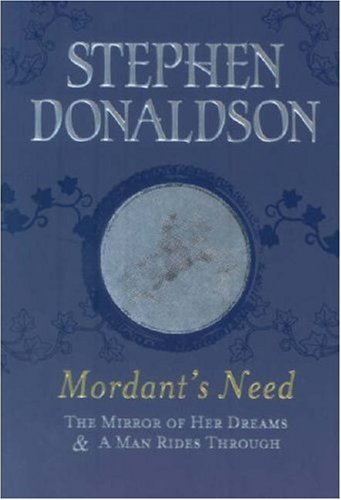
Another wonderful portal fantasy by the author of the Chronicles of Thomas Covenant.
Terisa Morgan lives alone in a New York City apartment, surrounded by mirrors. The daughter of rich but uncaring parents, she wonders at times if she even truly exists. Then something amazing shatters her lonely world: a strange man crashes through one of her mirrors and explains that he is on a desperate quest to find a champion to save his kingdom of Mordant from a pervasive evil. Even though Terisa has no magical powers, she decides to travel back with Geraden. Once in Mordant, she finds herself in a culture of powerful lords, exploring the secret of a mysterious castle, and helping Geraden uncover the enemies that are threatening to destroy his home. But with people able to appear and vanish out of thin air, Terisa truly attempting to vanish, for the enemies of Mordant will stop at nothing to see her dead!
Purchase the book at Amazon.
11) THE GRIM COMPANY by LUKE SCULL

A grimdark that is equal parts gory battle, ambiguous morality, epic worldbuilding, gray characters and gallows humor; all of it combining to make this one fun?
Yeah, I know it shocked me as well, but it is really is true: The Grim Company is fun to read. This tale of a world slowly decomposing after the slaying of the gods is a tour de force of grimdark morbidity with characters that are the most colorful and memorable ones I’ve encountered since reading Joe Abercrombie’s The Blade Itself. Read my review for all my thoughts.
Purchase the book at Amazon.
10) GREATCOATS by SEBASTIEN de CASTELL
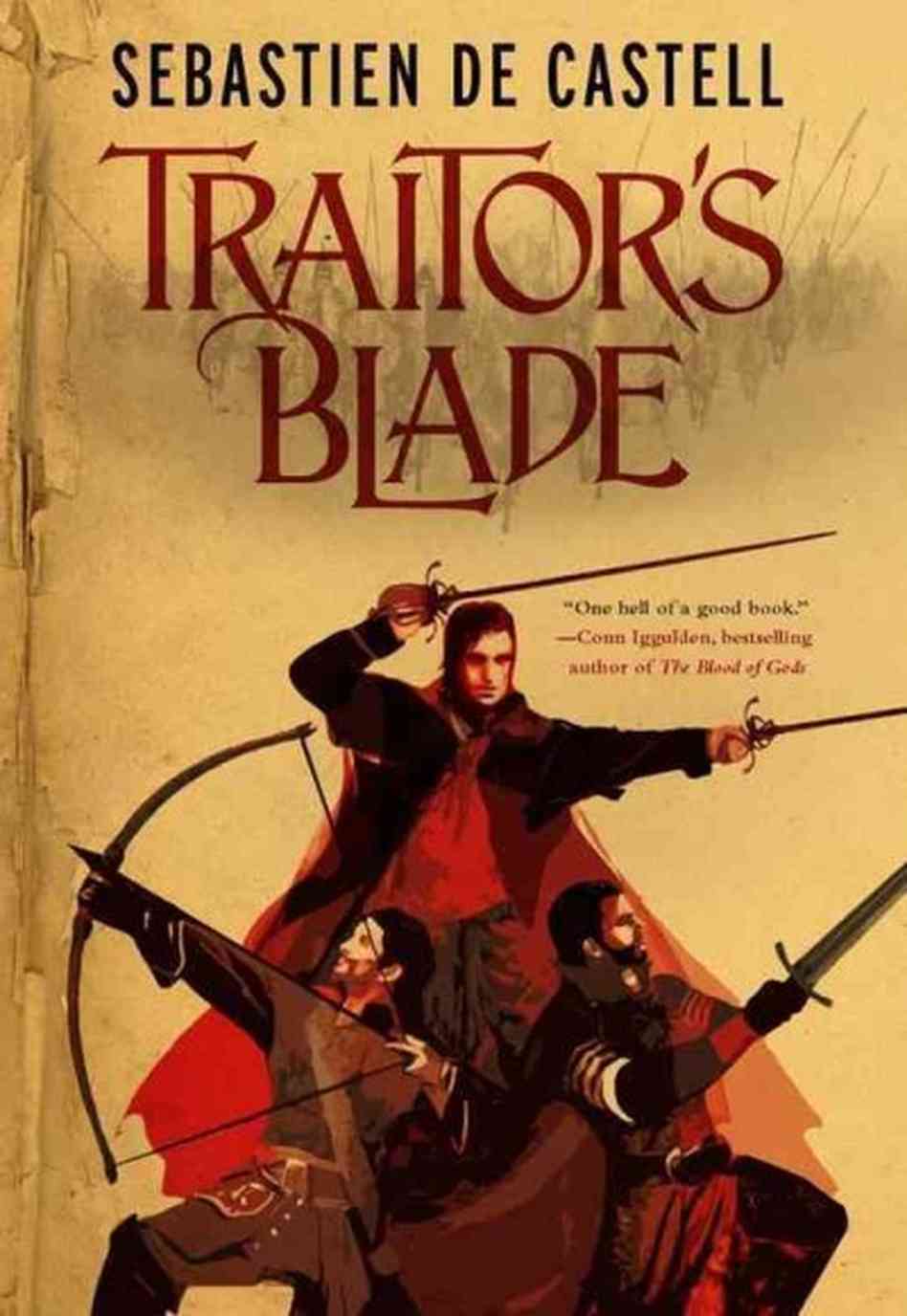
Capturing the spirit of the Three Musketeers and adding gritty grimdark elements, Traitor’s Blade centers on Falcio, First Cantor of the Greatcoats. Once a hero of the common people of the land, he and his fellows are now reviled. With all their hope almost gone, the fallen Greatcoats live to fulfill one final mission given them by their beloved king; a mysterious task that none understand, but which holds out hope for the salvation of the land.
Knight’s Shadow continues the tale of the surviving Greatcoats, revealing that even they have secrets!
Purchase the book at Amazon.
9) ECHOES OF EMPIRE by MARK T. BARNES
A sweeping epic fantasy trilogy (Garden of Stones, Obsidian Heart, and Pillars of Sand) with complex world building, rich histories, imaginative races, and an interesting magic system. One that not enough people have tried.
War! Its vicious specter has arisen over the land of Shrīan. Corajidin, dying ruler of the Great House of Erebus, having unleashed it, as he begins his pursuit of ultimate power by plundering the ruins of his civilization’s past for the magic necessary to ensure his survival and help him resurrect the fallen Awakened Empire. But standing in his way is the mercenary warrior-mage Indris, scion of the rival House Näsarat: A man with his own mysterious past and future.
Purchase the book at Amazon.
8) BLOODSOUNDER’S ARC by JEFF SALYARDS
If grimdark fantasy is suppose to be all about gritty realism with ordinary people placed into ambiguous moral positions and surrounded by the bloody consequences of war and politics, then this series should be the poster child for the genre.
In Bloodsounder’s Arc (Scourge of the Betrayer, Veil of the Deserters), a reader follows along behind a young scribe thrown into the middle of a hardened band of soldiers. Quickly, he learns that he is an outsider, that real war isn’t at all like stories, and that the right decision isn’t always the morally easy one to make.
Purchase the book at Amazon.
7) TIME MASTER by LOUISE COOPER

An eighties fantasy series that not too many people have tried. The story begins in The Initiate, where we are introduced to a world where Order rules over Chaos. Naturally, the Chaos “gods” have been banished from the world after a titanic battle in the ancient past, and all their followers have been systematically purged until only the worshipers of the seven gods of Order remain. However, all know the Chaos gods seek to return.
Into this eternal battle for supremacy comes Tarod, a dark-haired outcast with a power he does not understand. He winds up at The Star Peninsula, a mysterious spot of land magically cut off from the rest of the continent, and is accepted as an Initiate by the Circle, a group of acolytes of Aeoris, Supreme God of Order. This sets in motion events which will have shattering repercussions not just for Tarod, but for the world.
Purchase the book at Amazon.
6) Chronicles of the Cheysuli by Jennifer Roberson
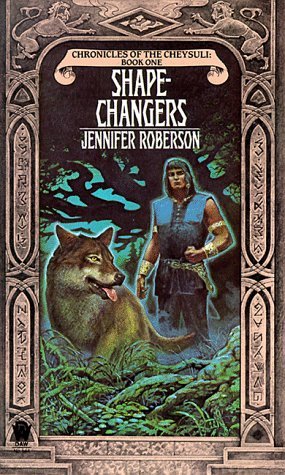
Chronicles focuses on the a race of shapeshifters who once were the honored allies of the King of Homana, loved for their dedicated loyalty. All that ended when the king’s daughter ran away with a Cheysuli liege man however. Thereafter, a war of genocide raged; one that came near to exterminating the shapeshifters. Yet the handful of survivors cling desperately to their ways and to a prophecy that foretells their part in the restoration of a magical race who once ruled the world.
From this beginning, the series progresses from generation to generation with each book allowing new characters to strut their stuff on center stage before passing the torch to the next generation. And as each book ends, a reader can feel that the ancient prophecy is so very close to being fulfilled.
Purchase the book at Amazon.
5) Dread Empire by Glen Cook.
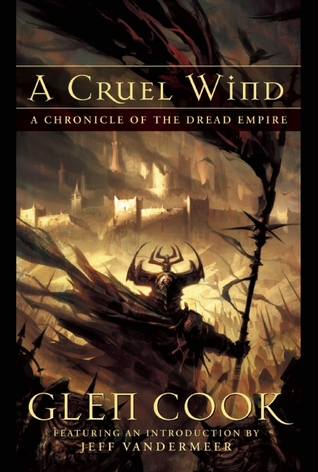
The Dread Empire novels are a precursor, if you will, of the gritty, no-nonsense Black Company series that would define Glen Cook as a fantasy writer. These books are written in Cook’s normal straightforward, unornamented prose, shift viewpoints from present to past frequently, and are filled memorable characters: Varthlokkur, the avenging wizard who destroyed an empire, yet begins to believe all his actions might be controlled by others; Nepanthe, the spoiled princess who grows up too fast and loses joy in her world; and Bragi, a north man, who has fled his home and become an adventurer, always striving against the odds and the personal costs to achieve victory. Each of these characters coming to life, gifted in some way, yet totally unprepared for the struggles they must face, and it these flaws which make each one of them seem so very alive and realistic.
Naturally, since this is Glen Cook, you can also count on well thought-out and engaging military tactics, because with Cook that is the norm. War here is full of gritty realism and utter unpredictability. Military plans succeed or fail on the oddest bit of luck or bad timing, and every victory or defeat is not a certainty until you read that the battle is won or lost. Major characters die as well, so do not ever believe that someone is safe, because they are not!
Purchase the book at Amazon.
4) Chronicles of Corum by Michael Moorcock.

Now, I know Moorcock gets loads of love regarding his Eternal Champion series, but to me, Elric steals all the glory, and my favorite Corum is not given enough. For that reason, the Man with the Silver Hand is in the top five, and his two series(The Swords Trilogy and The Chronicles of Corum) are must reads for true fantasy fans.
Corum comes from the gentle, peace-loving Vadagh people, whose civilization is ancient in age, and who devote themselves to scholarly pursuits. And while their race might be slowly being eclipsed by the rise of men, or Mabden, the Vadagh do not seem to mind, as long as they are left alone to slip into extinction one dream at a time.
Horrible tragedy strikes however, stripping Corum of his family and his race! Finding refuge among strangers, he becomes intertwined with the meddling gods of chaos, visits strange and wondrous locals, and encounters other Eternal Champions. And that is just the first trilogy!
Purchase the book at Amazon.
3) Tyrants and Kings by John Marco.

In Jackal of Nar, the tale focuses on Richius Vantran and his war with another religious faction; the villains being treated as standard “bad guys” in classic fantasy storytelling (though the ending pulls the rug out from under a reader a bit.) After book one, though, John Marco does something stupendous, shifting the remaining story to the viewpoint of these so-called villains and developing them into real people, who are more gray than black or white. Indeed, at the beginning of the series, I absolutely despised one Biagio, an evil piece of work if there ever was one, yet by the end of the series, the focus of the tale is that same Biagio, whom I now found myself rooting for — against my better judgment, I must add. And while this subtle shift in focus took place, Mr. Marco beguiled me with epic battles, grand intrigue, love triangles, and twists and turns galore. If I told you anymore, I’d ruin all the grand surprises that await you in this series.
Purchase the book at Amazon.
2) Morigu by Mark C. Perry.
In this faery land, a horrendous war was fought against an evil god. Every creature and divine being taking sides — even mother earth herself. The forces of good only triumphing when they did the impossible and infused the remaining magic of the world into young King Fealoth, turning him into a living god. Fealoth then chaining the evil one in the darkness outside creation.
Joy and hope returned to the lands. Goodness and light had triumphed over evilness and darkness. An unrivaled age of tranquility was assured to last forever.
A generation lives and dies. History becomes legend. And, without warning, the long vanquished creatures of the dark arise, sweeping over everything. The atrocities they commit are staggering: vampires, goblins, and other vile creatures destroying mindlessly. The gods do not seem to care, even once mortal Fealoth. All looks lost. Destruction of the very world seems inevitable until mother earth sends out here lone champion: the Morigu. Yet even she does not know if the insanity laying behind his eyes will save the world from the evil one or deliver it to him!
Great story. Hopefully, one day the author will get around to finishing it.
Purchase the book at Amazon.
Morigu: The Desecration
1) Darwath by Barbara Hambly
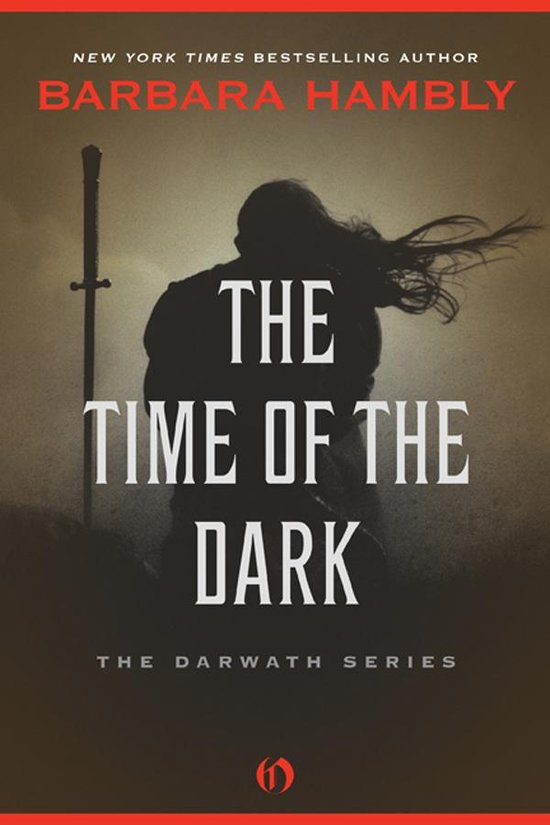
This “portal” series from the 80s has it all!
Gil Patterson, graduate student, is having horrible nightmares: Dark visions about terror and panic in the night-time street of a medieval-type city. Thankfully, they are merely dreams. At least, she assumes they are until she finds the strange, robed man from her dreams sitting in her kitchen drinking a beer one night.
Quickly, Gil discovers her dreams are actually visions of another world and the weird guy in her kitchen is the wizard Ingold Inglorion, the would-be savior of humanity. For Ingold’s world is threatened by the rising of the “Dark,” beings all but forgotten until they burst from the depths of the earth, devouring humans at night, and Ingold has come to Earth looking for a place to hide from his enemies until he can return home. But in saving himself, Ingold soon entangles Gil (and later a mechanic named Rudy) in his war against the Dark!
Fabulous story. One I read every few years. And a trilogy I would strongly encourage you to try.
Purchase the book at Amazon.
Those are my picks, please list other fantasy series that you enjoyed and believe are “overlooked” by readers.
BE SURE TO CHECK OUT MY OTHER BEST OF FANTASY LISTS.
Posted in Fantasy, Lists
Tagged 80s fantasy series, Ascendant Kingdoms, Barbara Hambly, Best fantasy list, BLOODSOUNDER'S ARC, Dave Duncan, Dennis L. McKiernan, Fantasy, fantasy series you should try, Gail Z. Martin, Glen Cook, Greatcoats, Harry Turtledove, James A. Moore, janny wurts, JEFF SALYARDS, Jennifer Roberson, John Marco, Lawrence Watt-Evans, Luke Scull, Mark T. Barnes, Michael Moorcock, overlooked fantasy series, Sebastien de Castell, Seven Forges, The Grim Company
24 Comments
Wounded Warrior Fizzled
My rating is 1 out of 5 stars.
A Vietnam vet lives alone in the country. He seems normal enough, but he has a secret you see: there is a door in his home that opens onto another world.
This portal to the other place is his most guarded secret understand.
Our Nam survivor once had numerous life-threatening illnesses. The kind that would eat away at you from the inside out, leaving a man a drooling shell of himself. He had beaten the odds and survived though, just like he had done in Nam. Except this time his survival was more than luck or caution, but the arrangement he made with those he had discovered on the other side of the door.
His part of their bargain is simple really: periodically someone must pass through the door into the other world.
Just a small thing. Not even hard to accomplish.
There are always those people confused about their place in this world, desperately seeking something magical. Those people respond to the advertisements he runs. Usually, they seem to be war veterans like him except from Iraq or Afghanistan, and many times they are addicted to the fantastical computer games indulged in by the younger generation. Every one of them eager to leave this dreary “normalcy” of the modern world for something fantastical.It is these people who find their way to his home and voluntarily go through the door, never to return again.
Who is he to say they meet a horrid end?
How would he even know.
But what he does know is that his latest victi . . . volunteer has arrived, eager to begin his journey, and once he steps through the doorway, the illness will be kept at bay for a while longer. For that miracle, a few strangers disappearing forever is not too high a price to pay.
Wouldn’t you agree?
Sounded like a pretty good story to me. At least, that is what I thought when I downloaded it. In fact, I got a bit psyched about reading it, hoping for a diamond in the rough discovery. When I actually tried to read this e-book however, I only got through the first couple chapters before I deleted it from my e-reader. The writing was atrocious. The plot was high on potential and low on delivery. A good story idea soon became banished to the refuse heap of my life.
Oh well. You win some you lose some I guess
Posted in Fantasy
Tagged Afghanistan, book of mourn, ebook, Fantasy literature, fantasy series, free e-books, Iraq, merrell michael, Veteran, Vietnam, Vietnam veteran, wounded warrior
Leave a comment
From Man to Man Great Introduction to New Series
My rating is 3 out of 5 stars.
When I sampled this short story, I was in the process of reading David Gemmell’s Troy series, so that type of epic fantasy writing was what I was accustom to. Imagine my surprise when I found “From Man to Man” as a free download and discovered an indie author writing a fantasy tale with that same sort of realistic action and characters. I was absolutely amazed and excited, especially since this was just a teaser for his upcoming series Wroge Elements.
The story here centers on Draven Reinhardt: an accomplished warrior, former mercenary (At least that was my assumption based on clues) and loving husband/father. Draven is attempting to abandon his bloodletting ways and settle down as an average, salt of the earth villager. Naturally, our former mercenary struggles to fit in, let alone hold down a job. I mean, he is great at cutting down trees with his axe, even though he swings it more like he is cleaving necks than branches, but how many trees does a small village really need cut?
Not enough for Draven to take care of his family unfortunately. So when a chance to make a little extra coin comes his way, our merc turned villager finds himself in a horrible situation. For on one hand, he has made a promise to his wife that he will never go back to his old ways, but on the other, he knows he will never be able to survive as a normal villager, because his best work skill is killing other men. That is the moral dilemma examined here.
Draven’s decision and its consequences progress on from there, and Mr. Emrys spins a very entertaining yarn out of it, twisting our warrior villager this way and that as he tries to be true to his promise but also take care of his family. Added to this a reader is presented with a realistic setting (though the world building is very short) as well as one action scene at the end of the tale, where Mr. Emrys excels at presenting a rousing and intense struggle without overdoing the details. So all in all, this is an entertaining short story as well as a great primer for Emrys’ Wroge Elements series.
Highly recommended!
Posted in Fantasy
Tagged D.E.M. Emrys, David Gemmell, Draven, e-book, Fantasy, Fantasy literature, fantasy realism, fantasy series, free e-books, short story, Troy Series, wroge elements
Leave a comment
THE GATEWAY (HARBINGER OF DOOM) by GLENN G. THATER
 My rating is 2 out of 5 stars.
This Beowulf-inspired tale begins near the city of Dor Eotrus, which lays in a northern land that is more than a little Viking-esque. These northerners are fiercely independent, believing their more “civilized” neighbors are weak and pride themselves on their prowess in battle. So when a strange mist begins rolling outward from a mysterious, dark circle in the nearby forest, the old king, his fast friends and their trusted, war veterans sally forth to investigate the bloodcurdling shrieks which are emanating from it every night.
No matter these heroes confidence in their battle prowess however, what they find within the watery enbrace of the night is more than they were expecting. Indeed, the horrors which await them have not been seen by men for many ages of the world, and when it’s presence is made known, can even the king and his friends vaulted might with steel and magic save the world from its dark embrace?
Who can tell, because the mist covers all, hiding the fate of the king’s party from his people.
As the king fails to return, those left behind in Dor Eotrus worry as to his party’s fate. They do not realize yet what lies concealed by the mist, and even though they prepare for the worst, they each cling to the faint hope that perhaps their beloved king and his warriors still lie within the misty shroud, lost or fighting the evil that must reside therein. And it is this thought which spures the princes to sally forth to their father’s rescue.
Naturally, this is when our mysterious Beowulf-like warrior named Theta appears.
Lord Theta, and his squire Dolan, ride into Dor Eotrus as if on cue. Theta is a mighty man of war with ancient armor, weapons and wisdom encompsing both forbidden knowledge and magic. Dolan is an average warrior, but one who has followed his lord through many strange conflicts and seen many mysterious things, which have made him greater than he otherwise would have been.
Upon arrival at the mist besieged city, these two strangers are immediately taken into the confidence of the king’s son and his remaining advisors without any questions or doubts. Once ensconced there, Theta proves himself to be the strong and silent type, and though it is obvious that he knows what his new friends are about to face, he never warns them of their danger. Thus, the group heads into the mist and unto the dark circle in the woods with no one but Theta and perhaps Dolan understanding what is about to tranpire.
The story that follows is a good, old-fashioned monster bash, as our group of heroes follow the enigmatic Lord Theta into the magical vortex powering the mist. Swords are blooded, skulls are bashed, and Lord Theta never has to say much of anything.
This e-book (novella) is okay at best. However, it has significant problems.
One, the author spends chapters and chapters in the beginning updating a reader on the history of the land and the buildings in Dor Eotrus; none of which is at all relevant to the story. Two, once the true plot begins to take shape, it just sputters out toward the end. Boom! Lord Theta kills a bunch of monsters, story is over, and we are ready for the sequels.
So be forewarned!
Posted in Fantasy
Tagged Arts, Beowulf, E-books, free e-books, glenn g thater, God, History, Lord, Mist, the gateway, Theta
2 Comments
Black God’s War Is Worthy
My rating is 3 out of 5 stars.
This novella is a great beginning to Mr. Siregar’s career. The Black God’s War has it all: interesting characters, mysterious gods, warring kingdoms, and twisting and turning plots. For those reasons alone, you should pick this book up and give it a try.
For me personally, my favorite parts of the novella resolved around Rezzia and her pantheon of gods, especially Lucia’s haunting by the Rezzia God of the Underworld. This plotline caught my attention from the first pages and held it throughout the rest of the work.
The other major conflict in this book is Rezzia and Pawelon’s eternal war with one another. Two, opposing cultures clashing together for generations at a mighty fortress. One nation bent on the annihilation of the other. While Mr. Siregar spends a great deal of novella presenting this conflict, the “war” serves more as a canvas upon which he can sketch the main characters personal conflicts, rather than a earth shaking struggle such as Lord of the Rings, so the battles before this Pawelon fortress never rise to the gripping drama of Tolkien’s Helms Deep. I personally believe the major problem here was that a reader is told the two nations hate one another, but you never understand why.
The only other complaints I had with this novella were that Pawelon magic was not explained sufficiently, and that the ending was too neat and tidy a wrap up of all problems. I personally hate plots or character conflicts left danging, but you can’t fix it all in two or three pages; life just doesn’t work out that neatly.
While I only gave this book a 3 star rating, I want to be clear that I enjoyed it. As is pretty evident by my ratings, I am stingy about giving 4-5 star ratings, so a 3 star rating is not a statement that a book is to be avoided. On the contrary, I would encourage people to read The Black God’s War.
Posted in Fantasy
Tagged ebook, epic fantasy, fantasy series, moses siregard iii, pawelon, rezzia, splendor and ruin, the black god's war
2 Comments
ROMULUS BUCKLE & THE CITY OF THE FOUNDERS
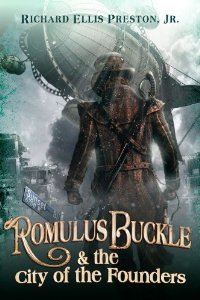
Romulus Buckle & the City of the Founders by Richard Ellis Preston, Jr.
Genre: Steampunk
Series: Chronicles of the Pneumatic Zeppelin #1
Publisher: 47North (July 2, 2013)
Author Information: Website | Twitter
Length: 446 pages
My Rating: 4 out of 5 stars.
Zeppelins!
The image of those huge, silvery-skinned dirigibles drifting above the earth with a cloud-filled sky as a backdrop has always captured my imagination. Honestly, I’m not ashamed to say I have purchased several books just because they had a zeppelin on the cover: Michael Moorcock’s The War Lord of the Air being one of them. So, when I ran upon Romulus Buckle & the City of the Founders, I knew I had to read this novel.
From the first sentence, Mr. Preston gave me what I had always longed for in a zeppelin story: an adventure where the dirigible is the star of the show. Now, do not misunderstand, there are many interesting characters, suspenseful plot lines, and intriguing historical tidbits in this novel, but the Pneumatic Zeppelin absolutely steals the show in my opinion.
Our steam powered lady drifts across the skies of this steampunk world in all her glory, capturing one’s attention in the same manner that the Starship Enterprise does in Star Trek. And as a reader learns how she is built, how she is flown, how her captain and crew adore her, and how she fights, the Pneumatic Zeppelin blazes brighter than a hydrogen balloon on fire!
And like her spacefaring counterpart the Enterprise, this mighty ship also has a man who cherishes her above all mortal caresses; this man being one Romulus Buckle, who is cut from the same swashbuckling cloth as one James Tiberius Kirk. Indeed, from the first page, a reader understands that ”Romulus Buckle (i)s an airman, a zeppelin pilot, to be exact, or to be less exact, in the local slang, a gasbag gremlin, a dirigible driver, a balloon goose, an air dog, or whatever moniker any lazybrat might cook up in his gin-stewed cerebellum.” He is young, dashing, handy with a saber, and without a doubt married to the lady of his dreams: the Pneumatic Zeppelin, and as the story begins, he is a man on a life-and-death mission with his trusty crew in tow.
For in this post-apocalyptic world, the men of the Snow World – the old California – are divided into clans, fight never-ending skirmishes against each other, and attempt to live their short lives to the utmost before a quick death descends upon them. But now, something unheard of has occurred, as the “fogsuckers,” or the Founders if you will, have kidnaped Balthazar Crankshaft and several other clan leaders from a peace conference. This upsets the delicate balance of power in the Palisades, leaves all the clans feeling vulnerable, and has brought the Snow World unto the brink of all out war.
With the Founders not explaining their actions, the other clans are left to assume that their mysterious neighbors intend to finish what they began decades before: bring to heel all the clans around them and thereby fulfill the original “Founders” ancient desire to reshape human civilization.
But wait!
Before the “fogsuckers” can unleash their dreadful plans, Romulus and the Pneumatic Zeppelin are dispatched to set things right. They will attempt the impossible: pass through the walls of poisonous gas that surrounds the Founder’s city of old Los Angeles, breach the Founders’ legendary defenses, and snatch Balthazar out from under their very noses. The whole of the Crankshaft Clan believes the Pneumatic Zeppelin can accomplish this; the zeppelin’s crew is ready to lay down their lives for this task; and Romulus Buckle is willing to sacrifice everyone – including his own dearly loved airship – if that is what it takes to rescue Balthazar!
The adventure that follows is well-worth a reader’s time. There are “blackbang powder” musket battles, sword fights, dirigible combat, not to mention a fascinating crew (whose personalities and camaraderie remind you of Jim’s spacefaring group) as well as all the usual elements of the steampunk genre. Without a doubt, Romulus Buckle and the City of the Founders” is an exciting ride, yet as I said, the zeppelin is the star here, whether the author intended it or not. For as Romulus Buckle himself points out: “The sky (i)s the place to be.”
Yes, it is Romulus. Can I go ahead and sign up for the next novel right now?
I received this book from 47North and Netgalley in exchange for a fair and honest review. I’d like to thank Netgalley for allowing me to receive this review copy and inform everyone that the review you have read is my opinion alone.
Purchase the book at Amazon.


 bookwraiths.com