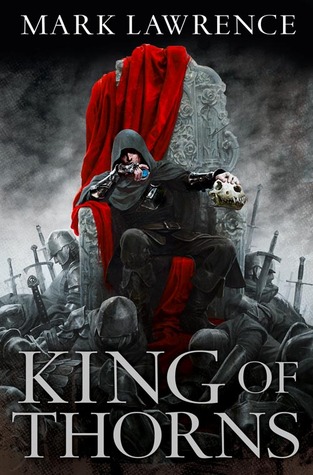
KING OF THORNS (THE BROKEN EMPIRE #2) by MARK LAWRENCE

17999884
King of Thorns by Mark Lawrence

Genre: Fantasy – Grimdark

Series: The Broken Empire #2

Publisher: Harper Voyager (April 25, 2013)

Author Information: Website | Twitter

Length: 597 pages

My Rating: 3 out of 5 stars.

THE SOCIOPATH IS AT IT AGAIN!

While I despised Jorg in Prince of Thorns, the story itself was highly entertaining and kept me turning pages as quickly as I could read them. However, I did not find this novel as engrossing, perhaps because I’ve grown somewhat use to the main character’s sociopathic behavior.

In any event, since the “shock” value of Jorg didn’t overwhelm me this go round, I found myself focusing a great deal on the story itself, which quite honestly was a bit underwhelming. I could write a multi page review about everything I disliked about this book, but in short, the storytelling was lacking, the character growth was non-existent, the plot had glaring holes, and Mr. Lawrence continued his trend of what I like to call: the superpower of the day solution to problems.

Please allow me to explain.

In the first book and now the second, Mr. Lawrence writes our favorite sociopath into situations where no reasonable person can expect success. Things look really grim for Jorg many times. However, whenever he needs it, Jorg miraculously discovers some new superpower (magic, science, math, or whatever) to save his ass. To be specific, in Prince of Thorns, Jorg was given necromancer power that kept him alive when a normal man would have died. In King of Thorns, Jorg gets new, updated necromancer powers, fire-magic skill and Builder tools exactly when he needs them to SAVE HIS ASS YET AGAIN!

Of course, the negative issues with those powers – as shown clearly by their affect on other characters in the novels – miraculously leave Jorg unaffected. And don’t even bother to ask how he actually gets a thousand year old Builder’s tool in book two, or how a thousand year old tool would still even work. Who knows, because Mr. Lawrence never tells the reader either of those things. Just poof, Jorg has this thousand year old tool, and it works and SAVES HIS ASS AGAIN!

Damn, it is good to be Superman in a Superman comic, isn’t it?

But I digress.

Like I stated earlier, I felt this story had glaring holes in the plot. They ranged from unexplained entities controlling everyone to Jorg traveling to seek a fire-mage for no apparent reason to the sheer unbelievability of the battle for Renar and finally the impossible ending. Honestly, I cannot thing of a single thing in the novel which did not just leap out at me as unbelievable and obviously yet another way for Jorg to be provided with a new “superpower.”

Now, Mr. Lawrence attempted to minimize these problems, glossed over them as much as possible, and his usual method appeared to be mayhem or gore whenever the story was not really working. However, this time around all the blood and brains Mr. Lawrence splatters across your reading eyes doesn’t conceal that this story is not making any sense at this point. Because, unfortunately, too much of King of Thorns is isolated incidents of horrendous gore or ghostly undead or sociopathic musings without any of it coalescing into a coherent story.

Another major issue in this novel was the format, specifically the flashback chapters. I loved the whole flashback concept in Prince of Thorns, as I experienced Jorg’s sociopathic behavior played out in present day yet was able to slowly understand how he reached this depraved state when younger, but the “Four Years Earlier” chapters in this book did not work at all. Indeed, the flashbacks in King of Thorns merely interrupted the flow of the story when there was no need to do so, because – other than the one detail contained in the box about Jorq’s new, baby brother (which honestly didn’t amount to much) – nothing in the back story would have prohibited Mr. Lawrence from beginning at the end of Prince of Thorns and detailing this next four years of Jorg’s life in a linear fashion.

And before anyone mentions it, I do not want to hear about Sageous, because he is only trotted out a couple times in the book and is basically a non-entity – except when Mr. Lawrence wants to somehow blame him for every horrendous thing Jorg has ever done in his life. This one, minor character is not a reason for a flashback story.

As for the Katherine diary chapters, they can be summed up as boring and not relevant to Jorg’s tale at all. Sorry, they did do one thing: give Jorg unexpected help of exactly the right sort at exactly the right time to SAVE HIS SOCIOPATHIC ASS YET AGAIN!

Did I mention it is good to be Superman in a Superman comic?

Oh, I did, didn’t I. Sorry.

I realize most fantasy fans absolutely adore this book. It is hailed as the best thing since sliced bread or the internet or whatever. But, honestly, just like the Emperor didn’t have on any clothes, King of Thorns is just an okay novel. Sure, it is entertaining, but it really isn’t more than that.

I suppose if you idolize Jorg, it’s great fun to see him rise above impossible odds to gain his desired goal. (Of course, you have to overlook the superpower of the day problem, but fanboys don’t really care about that anyway.) But even in fanboy land, it is obvious that this novel does not rise to the shocking brilliance of Prince of Thorns, which – even with its obvious weaknesses – grabbed hold of your throat on the first page and pulled you through its gore coated world whether you wished to follow or not.

And, you know, maybe it was wrong of me to expect Mr. Lawrence to write that sort of book again, because there is only so much raping/killing and other sociopathic behavior one can throw at a reader before he or she grows numb to it. Though the sadistic torture of the innocent dog in this novel was a great try.

However, what I had truly hoped for in King of Thorns was some growth in Jorg’s character, and for a while there, I truly believed Mr. Lawrence was providing us that. The encounter with the ghosts of Gelleth and the trip to find his mother’s family along the Horse Coast – while out of character for the Jorg portrayed in book one – seemed to hold out the promise of a maturing sociopath. But alas, I was mistaken, because by the end we discover that Jorg’s touch of humanity was all an illusion caused by a “magic” box, and now we are back to the same Superman Jorg who knows all, has all the luck, and has all the powers at just the right time with the same old, sociopathic outlook on everything. Zero growth. Same old same old.

And that stupendous post-apocalyptic setting that Mr. Lawrence teased us with in the first book. Great idea. Very intriguing. Not developed at all in this novel. There is a short bit about a holographic projection of a long dead “Builder,” but even that doesn’t really add anything except a vague explanation of where magic came from. In fact, the main role of this mysterious “Builder” hologram in the story is to give Mr. Lawrence an excuse as to how Jorg finds two Builder toys to (drumroll please) SAVE HIS ASS YET AGAIN!

Quite frankly, this great post-apocalyptic setting is going to waste, used more as a grab bag for weapons for Jorg than anything else. And since we are talking about this, why don’t we the reader know anything about the history of this place?

This series is called The Broken Empire, right?

Jorg Ancrath is trying to reunite it as emperor?

Wouldn’t it be useful for a reader to actually know what Empire we are talking about, or maybe why it split apart? Perhaps some history about the last thousand years of human existence since the big apocalypse. I mean, we get lots of talk about ancient Greek legends or ancient philosophy but nothing about this world’s history at all.

Are there no legends or stories about the last thousand years?

Guess none of that is as important as watching a sociopath murder or maim someone else.

I realize that as I published this criticism of the beloved sociopath Jorg that I will have offended the pride many of you have in this character. I’ll most likely get so much negative feedback that I could drown in it all and that my pride might suffer immensely.

A time of negative comments might come. Bad times for me. The fanboy universe opens up and all the haters come out to get me. But the world holds worse things than pissed off fans, because I’m a hater too. So, the time of haters can come.

It will be my time.

If it – and my dislike of Jorg – offends you.

STOP ME!

Damn, I do love me some Jorg quotes though. 😛

Buy King of Thorns (The Broken Empire Book 2) at Amazon.

Below are some other reviewers of this book. Read them and make your mind up yourself.
FantasyBookCritic

AFantasyReader

FixedOnFantasy

TheTatteredScroll

Posted in 3 Stars, Fantasy, Grimdark | Tagged , , , , , , , | 9 Comments

50 Sci-Fi/Fantasy Novels That Everyone Should Read

Posted in Fantasy, Lists, Science Fiction | Leave a comment

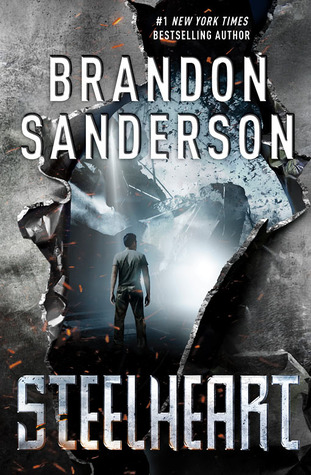
Steelheart by Brandon Sanderson

15704458
Brandon Sanderson is a fan favorite. One of those writers who can pen an epic fantasy yarn that excels at both world building and magic system construction, and this – along with his compelling storytelling style – has made him a “go-to” author for your fantasy fix. However, not happy to rest on his laurels, Sanderson has shown great ability to adapt his style to different genres, especially the young adult area. His latest foray into this genre is Steelheart from the new YA series “Reckoners.” Since I’ve, unfortunately, not had the pleasure to read this work by Mr. Sanderson’s, I’ve scoured the internet universe to find some of the best reviews about Steelheart; ones that not only inform you about the story itself but also give you different points of view on this work by one of the most prolific writers of his generation.

Take a look and enjoy!

FantasyBookCritic

The Founding Fields

AVClub

Geekadelphia

MyFriendsAreFiction

PassTheChiclets

Posted in Young Adult | Tagged , , , , , | 1 Comment

Goodreads New Policy Censorship or Not?

censorship
Goodreads just changed their review and shelving policies, and this has enflamed a large majority of their users, who have labeled the change censorship. Indeed, these critics are arguing that the policy is nothing more than Goodreads’ attempt to shield authors and publishers from criticism regarding their bad behavior or personal activism.

Naturally, Goodreads is defending this change, but is it censorship or merely a minor policy change? Read an interesting article by Emma Sea and decide for yourself. Goodreads Censorship Policy

Posted in Reviewer News | Tagged , , , , | Leave a comment

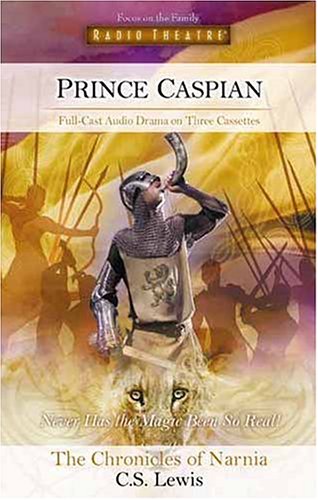
PRINCE CASPIAN by C.S. LEWIS

caspian
My rating is 3 out of 5 stars.

Prince Caspian is the second book in The Chronicles of Narnia.

C.S. Lewis begins this tale by revisiting the Pevensie children, who have survived WW II and are at a train station waiting to head off to boarding school. While discussing their concerns about being separated, they are suddenly pulled into another world, which they do not immediately recognize as Narnia. Indeed, the land has changed to such an extent that it is only after finding several relics from the past that they even begin to suspect that they are not only in Narnia but actually camped in the ruins of Cair Paravel: their former capital and home, where they reigned as high kings and queens of Narnia.

Quickly, the siblings begin to understand that while only a small amount of time has passed in their world, many centuries have rolled by in their former home, which has resulted in the ruination of the castle and a changing of the very land itself. This new state of affairs is soon confirmed for the Pevensie children by one Trumpkin the dwarf, who they rescue from the Telmarines: the overlords of the new Narnia.

What transpires after Trumpkin’s rescue is what I call the flashback story. Through Trumpkin, C.S. Lewis basically tells Peter, Edmund, Susan, and Lucy (and by default the reader/listener) all about the new Narnia and our title character, Prince Caspian. We hear about the invasion of the Telmarines, the fading of the old ways, the disappearance of the talking animals of Narnia, and the slow waning of all things magical in Narnia. But we also are told about the rightful heir of this new Narnia, Prince Caspian, who wishes to restore the land to its Golden Age when Peter, Edmund, Susan and Lucy ruled from Cair Paravel and who is even now in hiding with the Old Narnians, trying desperately to restore overthrow his wicked uncle and bring peace, prosperity, and magic back to the land.

Only after hearing all this back story, does C.S. Lewis allow our four children to head out into the world on their grand adventure to aid Prince Caspian and thereby restore Narnia to its former glory.

I enjoyed this book via audio book (which is a fairly new “reading” medium for me) and found the experience enjoyable and the actors’ performances well done. Specifically, this audio book did a great job of presenting the ambiance of Narnia’s different locals by description as well as sound effects, which on the whole livened up a fairly straightforward tale.

As far as the story itself, I found myself conflicted on it: liking some things about it yet disliking others.

LIKES

1) C.S. Lewis did not try to just rewrite The Lion, the Witch, and the Wardrobe but gives the reader a whole new Narnia experience. While the old Narnians – fauns, centaurs, talking animals, nymphs, living trees – are still around, they are now in hiding; driven to the edge of extinction by the Telmarines, who have not only conquered the land but turned it into a near non-magical world. This leads to a darker feeling to the story and allows a reader to see Peter, Edmund, Susan and Lucy both overjoyed at being back in Narnia but aghast at its desecration.

2) Lewis allows the Pevensie children to actually grow up. Peter and Susan are shown as near adults, who are becoming blind to the magic in Narnia, while Edmund and Lucy rise to the forefront as the keepers of that magic. Especially illustrative of the “growth” of the characters were Lucy’s struggle to rediscover Aslan and Edmund’s stance as her steadfast supporter.

DISLIKES

1) There just isn’t much suspense in this story. The children show up, rescue Trumpkin, get told all about what is going on then head out to join up with Prince Caspian. The majority of the story Peter, Edmund, Susan and Lucy really do not do anything, and even at the climax of the adventure, they are more bystanders than participants. Honestly, all the suspense and actions, which is described in the story, deal with Caspian and are “told” to us in flashback, not experienced as Caspian is living them. While I understand why C.S. Lewis crafted the story this way (The four children are a reader’s link to Narnia) I believe Caspian’s story itself would have been a more rousing tale.

2) Things just work out too easily, even for what is obviously intended as a children’s story. For instance, Caspian grows up, becomes enamored with stories of ancient Narnia and up pops a half-dwarf tutor, who can provide all the lore Caspian needs. When he seeks refuge, the mysterious and little seen “old” Narnians turn up and take the Telmarine Prince into their hearts almost immediately. Each of these things seemed a bit rushed to me, but then again, it could be yet another draw back of flashback stories.

All in all, this was an enjoyable listening experience, and much better than the movie – at least in my opinion.

Purchase this audio book at Amazon.

Posted in Audio Books, Fantasy | Tagged , , , , , , , , | Leave a comment

Author’s Online: How Much Is Too Much?

Author John Marco wrote an interesting blog regarding the importance publishers are putting on their authors being social media darlings these days. You can read the article here: The Happy Nerd

That got me thinking: how do you guys view an author’s social media presence? Take my unabashedly, unscientific poll and let me know.

Posted in Writer Resources | Tagged , , , , , , , | Leave a comment

Book Review – Speaker for the Dead

Jay Dee's avatarI Read Encyclopedias for Fun

speakerforthedeadSpeaker for the Dead by Orson Scott Card is the second book in Ender’s Saga. What we have here is the sequel to the popular Ender’s Game, where Ender Wiggins has defeated the Buggers and promptly disappeared.  This takes place around 3000 years after the Bugger War, and Ender is back.  If you’re expecting more of the same as Ender’s Game, you have a big surprise coming.  It’s nothing like the original book.  It may even be better.

Ender Wiggin is now a Speaker for the Dead, a non-denominational non-religious person who digs up information about the recently dead and publically gives their life story from an unbiased position.  That means the good and the bad are laid out for everyone to hear.  He’s older than he was in Ender’s Game, and his sister Valentine is also older, having travelled with him, and so they are…

View original post 378 more words

Posted in Science Fiction | 1 Comment

Wizard’s Coming Made Me Want to Leave!

12646578
My rating is 2 out of 5 stars.

This was a decent short story, which introduces readers to Juliet E. McKenna’s The Hadrumal Crisis fantasy series. The Wizard’s Coming might actually be a true prequel to that series, but since I’ve not read it, I’m not sure. The focus of the tale, however, is on Lord Halferan, who has contacted a wizard from the wizard isle to come to his small realm’s aid against the corsairs from the sea.

McKenna starts things off by introducing a reader to a group of warriors waiting by the sea for sign of the approach of ships, and then their desperate flight back to their lord to give him word of the arrival of said ships. From there, the viewpoint shifts to Lord Halferan himself as he attempts to save his people from the corsairs only to find himself confronted by a danger he should have been expecting but blinded himself to.

Whenever I read a short story or novella that is an “introduction” to a fantasy series, I always worry that the author is not going to be able to pull it off: i.e. make me want to read their series. Honestly, it is difficult to write a gripping intro story that sets up a trilogy. It can be done, but it is difficult. And usually, the writers who fail make one of two glaring mistakes: either they do not give me enough details about the world to make it interesting, or they info dump me to death in order to let me know how great their fantasy setting is. Unfortunately, McKenna makes the former mistake.

In The Wizard’s Coming, a reader is thrown into the action from the beginning with little understanding of what is going on. Even when Lord Halferan makes an appearance to begin clearing up the confusion, the story rapidly speeds up, hurtling toward completion with the reader still scratching his or her head as to why any of this is occurring. When you add to this the minute world building, you could probably understand my reservations about this story.

Now, is The Wizard’s Coming a horrible read?

Not at all. It is entertaining. Unfortunately, it did not excite me or make me desire to try out the fantasy series, which is disappointing. So keep this in mind if you try this one out.

Posted in Fantasy | Tagged , , , , | Leave a comment

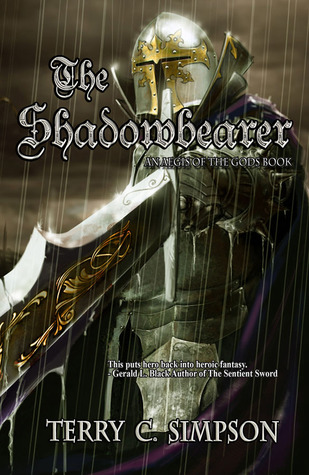
Shadowbearer Is Good

16044160
My rating is 3 out of 5 stars.

The Shadowbearer is a prequel to Terry C. Simpson’s Aegis of the Gods fantasy series, and while it has some shortcomings, it does an excellent job of introducing a reader to this world of Mater (magic) while telling a tale filled with warfare and politics, intrigue and treachery, heroic characters and vile creatures. Throw in a bit of world building and magic system description and you have a story that is well worth a try.

The novella is told through the eyes of one Stefan Dorn “the Steadfast”, Knight Commander of the Setian Empire and beloved friend to King Nerian the Lightbearer. Stefan has led the Setian warhost for years; his warriors having waded through rivers of blood for him and their people, carving out an empire for their king, and in doing so having become immortalized as The Unvanquished. And now, they find themselves on the cusp of final victory; their endless wars complete with one final victory. Peace and glory almost within their grasp.

But like all things, Stefan and the Unvanquished’s well earned peace begins to slip away even as they reach for it, because things are not well with their beloved King Nerian. Stefan himself can sense it upon his return home, but soon, he learns things are even worse than he had feared: suspicion, accusations, and intrigue disrupting the once tranquil landscape of the capital. And so Stefan finds himself caught between his lifelong love and respect for Nerian and his growing suspicions that madness lurks behind the eyes of the Lightbearer.

Never having read Mr. Simpson’s Aegis of the Gods, this was my introduction to that fantasy world, and I enjoyed my time there. But as I alluded to earlier, there were a few problems I had with the novella as a whole and would feel remiss without pointing out.

One, the magic system was very difficult to actually understand, not because Mr. Simpson did not attempt to explain it but rather that it was too convoluted, too complex perhaps.

Two, the world of Denestia is large, filled with history and lore, but in a novella, there was just not enough room to world building effectively, and so Mr. Simpson was forced to throw too much information at a reader, which – at least in my case – caused me to flounder around wondering who was who too many times.

Third – and lastly – there is a time shift about halfway through the novella, where the tale of Stefan jumps ahead in time over a decade. Now, while I understand that the author was forced to do this to finish the story, it ruined what had been developing into an intriguing plot for me.

To summarize, this is a novella well worth a try, even with its flaws, and it did intrigue me enough to consider downloading the first book in the series Etchings of Power and giving Aegis of the Gods a try.

Posted in Fantasy | Tagged , , , , , , , , , , , | 2 Comments

9 Things Authors Should Never Do on Twitter

ebooksinternational's avatarSavvy Writers & e-Books online

.
Twitter-Social-Network

.
If you want to become popular on Twitter and have your tweets go viral, avoid these errors, and check out the small, but significant issues you might not be aware of, and change your Social Media approach for the better.
.

Having no Avatar – Instead an Image of your Pet
Who wants to talk with an egg, or a cat, child or your dog? OK, if you have a company, you can use the company logo, but for everyone else: get a great studio photo once in ten years and use it for all your marketing needs including your book cover or on your website. Would you send a potential employer a photo of your house pet, your book or a toddler’s image? No? Why then show these annoying images to your potential customers? Be professional! Sometimes I am inclined to publish a book with the worst…

View original post 1,040 more words

Posted in Author Spotlights | Leave a comment