DARK DISCIPLE by CHRISTIE GOLDEN

dark disciple

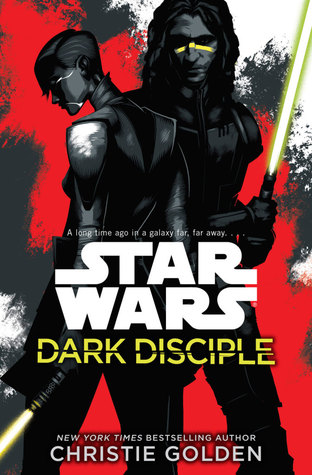
Dark Disciple by Christie Golden

Genre: Science Fiction

Series: Star Wars Canon

Publisher: LucasBooks (July 7, 2015)

Author Information: Website

Length: 336 pages

My Rating: 3.5 out of 5 stars

A long time ago in a galaxy far,
far away . . . .

TheCloneWars-logo

The Clone Wars rage across the galaxy.
Republic and Separatist forces continually clashing.
World after world destroyed in this brutal conflict.
Even the wisest of the Jedi seeing no end to the war.

On Coruscant, a desperate plan is formulated.
A plan that the Jedi Council hates,
but one they are desperate enough to try.
A plan to send a lone Jedi to assassinate Count Dooku.

Jedi Master Quinlan Vos is chosen for this task.
Before he faces the Count, he must seek out the aid
of an unusual ally who doesn’t have any love for Jedi.
For in this quest, Asajj Ventress’ help Master Vos must have!

This book is a welcomed return to the Clone Wars television show so many Star Wars fans adored. Based upon unproduced episodes, Dark Disciple is co-headlined by two show favorites, Quinlan Vos and Asajj Ventress, features many other Star Wars faces (both minor and major), and adds yet another layer to the ever expanding history of this Clone Wars era in Star Wars.

As the story gets started, the Jedi find themselves in a moral dilemma: should they attempt to end the war by assassinating Count Dooku? While it might seem like a simple decision, it isn’t for the Council, who find themselves split on the question. For those against, assassination goes against everything the Jedi stand for, and it reeks of the dark side of the Force. For those in favor, their moral obligation to end the war quickly and prevent the death of millions of innocent creatures across the galaxy trumps their personal distaste for such a mission.

In the end, Master Yoda weighs in on the question, and eventually, the Council decides to roll the dice on an assassination of Dooku. The lucky Jedi tasked with this deed none other than Quinlan Vos.

Quickly, Vos is briefed about his mission by Obi-wan Kenobi. While the assassination itself doesn’t phase Vos as much as it did the Council, the order to seek out and befriend Asajj Ventress startles him, causing him to question why he needs to do such a thing. Inevitably though, Obi-wan talks him into it, and Vos does as he is instructed, assuming the role of a bounty hunter, and hunts down Ventress, attempting to befriend her before she discovers that he is a Jedi.

The story that follows is really all about Quinlan Vos and Asajj Ventress’ friendship. Sure, there are lots of fights (regular blaster battles, lightsaber duels, and space battles), more than one encounter with dear old Count Dooku, and a descent into the depths of the dark side of the Force, but at its heart, this is a tale of two people and the journey they travel together. Naturally, they learn many things from one another, and Ventress, in particular, finally fully emerges from her Sith shadow to fully reveal herself to the Star Wars world.

Is this the best Star Wars novel I’ve ever read?

No, I have others that are higher on my personal list.

Are there any glaring issues with it?

Nope.  It is good Star Wars fun from cover to cover.  Sure, I have personal dislikes about certain things that occur in the novel, but I always suspend my disbelief when reading Star Wars and try to enjoy the pure sugar-coated fun of it all.

What is the best part of the story?

As a self-confessed Ventress lover, she was the highlight of the story for me.  From the tough-as-nails bounty hunter to the determined mentor to the loving woman, Asajj stole the show for me personally.  And while there were times when her gentleness and caring for Quinlan Vos startled me, I’m also old enough to know that even the most cynical, most bitter person has someone who can reach their heart no matter how hard they try to stop them from doing so.

All in all, I thoroughly enjoyed my return to The Clone Wars and these characters.  And while I’m not a Clone Wars fanboy (though I did spend A LOT of time watching the first few seasons over and over again with my now teenage son back when he was small), I have a feeling dedicated fans of the show will enjoy this one even more than I did.  So give it a try, and may the Force be with you when you do!

LucasBooks and Netgalley provided this book to me for free in return for an honest review. The review above was not paid for or influenced in any way by any person, entity or organization, but is my own personal opinions.

Buy the book at Amazon.

Posted in 3 Stars, Science Fiction, Space Opera, Star Wars | Tagged , , , , , , | 10 Comments

LOBO: TARGETS

LOBO COVER

Lobo: Targets by Cullen Bunn

Genre: Superhero Comics

Series: New 52 Lobo

Publisher: DC Comics (August 18, 2015)

Author Information: Website

Length: 144 pages

My Rating: 4 out of 5 stars

I first discovered Lobo in an issue of my favorite sci-fi comic of the time, Omega Men(Vol. 1 1983-1986.) Yeah, he had funny hair and a ridiculous leotard costume, but you just got the vibe that he was a total badass. So much so that I considered myself fan (though it was a closely guarded secret due to his stupid look) until his persona started to be revamped in Justice League International and L.E.G.I.O.N. back in the late eighties.

Omega_Men_v.1_03lobo legion

Fast forward to 1990, Lobo: The Last Czarnian hit the stands, helmed by Keith Giffen (plot), Alan Grant (writer), and Simon Bisley (art). This new “Main Man” jumped off the pages as a caricature of all the tough guy, ass kicking, smack talking comic characters of the day. With his dreadlocks, biker gear, skulls, chains, and space hog, this new Lobo went around killing people at will, including every other member of his species. And it was all good fun. Violent fun obviously, but with a demented touch of grizzly humor in it all.

lobo-comic-1OldLobo

Since that mega mini-series, Lobo has popped up all over the place since. For twenty-five years, he has kicked the hell out of all comers. Superman? Check. Santa Claus? Check. Lobo? Yeah, he even killed his own ass. But the powers that be over at DC Comics felt The Main Man needed a fresh start; a reboot if you will. And since it is Lobo, you gotta do that in classic morbid style.

lobo dies 2

You gotta admit that is a damn good way to reboot Lobo. A classic send off to the Main Man. And wham-bam, the cool, collected sci-fi bounty hunter from back in the 1980s is reintroduced to the reading world. The guy who didn’t waste time talking crap, he just did crap . . . usually of a not so nice nature to his intended targets.

And this comic collection is all about the clean cut Lobo going about his business. Sure, his back story is retold through flashbacks. Yeah, that past might make him less of a wild, lunatic killer and more of a sympathetic figure, but this new Lobo is still all business. His thought process going something like this. “I’m suppose to kill Bob; Bob is gonna die. If anyone gets in between me and Bob – including my supposed allies – they are gonna die too.” The dude is methodical and relentless. I definitely know I wouldn’t want him looking for me, I can tell you that for sure.

But the story did have missteps. Not in the art department, because Jack Herbert does an outstanding job on the comic, but in the story department, because there really isn’t anyone that matters in this narrative other than the new/old Lobo. Everyone else is pretty much window dressing for him to slice and dice, explain away his fate, or very coolly hold in contempt. And while that is fine for a comic or two, it doesn’t work for a whole story arch; I mean, there has to be something interesting about the main character other than he is a ruthless killer, right? Laughter. Angst. Something. Here there isn’t anything else really.

Does that mean I didn’t enjoy this reboot of Lobo?  Naw, actually I liked it. As an old school guy, I’ve seen this character morph several times over the years.  It never upsets me, cause I just roll with the punches, I guess.  Look for the bright side and all that other fragging crap.  And let’s face it, since I was a closet fan of the early 80s Lobo, this take on him is more similar to that version of the character than the recent versions, so it’s like going back to middle school for me, which isn’t as bad a place to be as I thought back then. So, yeah, I understand why people don’t like this one, but I’m not among them.

Now, I realize I’m in the minority in my acceptance of the new Lobo. Most fans hate this New 52 guy. But if we asked him what he thought about all the fan boy hate, I think he’d sound eerily similar to our favorite dreadlock Main Man.

Wait I think I hear this new guy talking now. “So to be the Main Man you gotta beat the Main Man, huh?  Well, I cut his fragging head off. So whose the Main Man now? Me! You don’t like that . . .

lobo_new52

Buy the book at Amazon.

Posted in 4 Stars, DC, Graphic Novels, The New 52 | Tagged , , , , , | 3 Comments

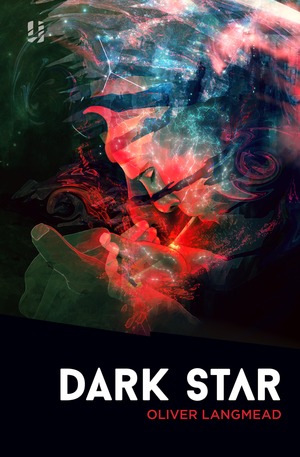
DARK STAR by OLIVER LANGMEAD

dark star

Dark Star by Oliver Langmead

Genre: Science Fiction

Series: Standalone Story

Publisher: Unsung Stories (March 30, 2015)

Length: 224 pages

My Rating: 4 out of 5 stars.

I have to admit epic poems like the Iliad, the Odyssey, the Aenid, Beowulf, Paradise Lost, and The Divine Comedy have never been my favorite reads. In fact, I pretty much hated them back in my college days. So when I first discovered that Dark Star utilized that same metered writing form, I was concerned. Terrified almost. But, after giving Oliver Langmead’s sci-fi verse a try, I found Dark Star a fresh, and easily readable novel.

The story itself begins as a moody, noir tale focusing on Detective Yorke. This downtrodden and gloomy fellow is a cop in the city of Vox. What makes his life so unusual is that upon his world there is no light. Instead Yorke’s world is covered in perpetual darkness; an all encompassing and smothering blackness of both the senses and the spirit. Naturally, light is treasured above all else: it is money; it is happiness; it is a recreational drug worth dying for!

A fact that Yorke already knows, but which is reinforced when he and his partner arrive at a murder scene, discovering a young woman’s corpse; her cold body on fire with light; her veins pulsing like a human light bulb. Her state announcing to all that a new light drug has hit the streets; one of such power that our detective is both terrified and tantalized by. But as powerful people try to sweep this death under the rug, world weary Detective Yorke doubles down, determined to investigate the crime even if it entangles him in an even bigger conspiracy – one so massive, so unbelievable that he could never have envisioned it!

As other have already observed, Dark Star is an intensely visual experience told in rhythmic language. Yes, it has many characteristics of a cyberpunk noir, but that is not what it is. Rather it is a science fiction story that folds more than one literary genre into its concoction, using the perfect flow of its lyrical narrative to take a reader into the haunted life of Detective Yorke, deep into the grimy alleys of the city, through the halls of the mighty, and ultimately to an ending that asks many deep philosophical questions.

Even with that being said, this isn’t a novel that every sci-fi fan will warm too. Its epic verse narrative will put many off. Its philosophical quandaries will infuriate some. The limits to the characterization will disappoint others. But instead of focusing on the dislikes that I personally had with it, I prefer to recall the positives. For without a doubt, Dark Star is a truly fresh and original science fiction story that is entertaining, visually compelling, and lyrically engaging. Oh, poetry starved fans will love it more than others, but everyone can appreciate the slightly different path that Oliver Langmead traveled with his sci-fi epic in verse. And I for one applaud his herculean effort.

Buy the book at Amazon.

Posted in 4 Stars, Science Fiction | Tagged , , , | 2 Comments

INTERVIEW WITH OLIVER LANGMEAD, AUTHOR OF DARK STAR

authorspotlight

Oliver Langmead has burst onto the science fiction scene with a captivating novel entitled Dark Star, which is told in epic verse form. This hauntingly beautiful story of a world living in eternal darkness, whose inhabitants are addicted to light in all its varied forms, begins as a sci-fi noire story, but slowly turns into something so much more.

Hi, Oliver, since I know my blog readers want to get right to the questions, we will skip the customary words of admiration for each other and jump right into the good stuff.

Who was your favorite science fiction author when you were growing up?

This is actually a pretty tough question to answer. I think the first author that grabbed me as a child was Brian Jacques, and then others, like Terry Pratchett and Philip Pullman, who, if you haven’t noticed already, have very little to do with science fiction. It’s not that I didn’t try and read science fiction. I certainly did, with authors like Frank Herbert and George Orwell. It’s just that… I never seemed to find a science fiction author who resonated with me in the same way. As if, none of them quite had the sense of adventure I was looking for. Not that they weren’t great books. Just not the kind of stories I was looking for.

The best book you have read lately is ______? Why did you love it?

Easily Michel Faber’s Book of Strange New Things. It’s sitting on my windowsill nearby, and it’s such a pretty book that it glitters every morning in the sunrise, and I am drawn to remembering how brilliant it was to read. Truth be told, I’m a slow reader, and sometimes I get so caught up rereading books I love that a lot of new books pass me by. But this one was something special – filled with such vivid characters, and a very brilliant relationship as it’s tested to incredible limits.

Your first novel probably taught you a lot about the industry; what was the most important lesson you learned and can pass on to others?

You’re absolutely right about that! Probably the best thing I can tell others is to be patient. The world of publishing is glacially slow most of the time. It took me about six months, from the first point of being noticed by an agent, before that agent finally got back to me with good news. And that good news was that he was going to recommend me to another agent. It’s a lot of waiting, and refreshing your inbox. But it’s worth it, in the end. Your best bet is to find someone in the industry who really likes your stuff, and will champion it for you, be it an agent, a publisher, or maybe even another author.

What was the inspiration behind Dark Star?

This is an enormous question! I think that the book is probably a combination of all my influences, of which there are a lot. And then, one day, ruminating on the idea of having a dark world to write in, I had this vivid image in my head, of a dead girl down a dark alleyway, with glowing veins. I’m not quite sure where that image came from. Perhaps a film, or something else. But it was enough of a burst of inspiration to get the book rolling. I’ve written quite a lot about my influences elsewhere, however, were you to be interested in having a look here.

How long was the idea for this story floating around in your head before you actually put it down onto paper?

Somewhere close to two years. It began from the small seed of an idea – light based technology, and what influence it might have on people. And from there, it slowly grew. The dark world, under its dark sun. And the mystery element: the detective. Then, just before I sat down to write it at last, I read through Paradise Lost, and decided to try writing it in verse. Just to see. The rest is history. But this one spent a long time simmering away in my head before it ever saw the page.

Why take on the herculean task of writing this book in verse?

You know, it started off as a sort of experiment. I had this idea for a book I thought was pretty great, and I’d just been learning about the old epics (written by Homer and Dante and Milton and the such), and I thought: why not? So I sat down and tried it out, just to begin with. My first attempt sucked. Well, it was all right… but it didn’t quite seem to work. But I still showed it to a couple of people, and they gave me a lot more encouragement than I was expecting. So I gave it another shot. A better shot. And I ended up with a prologue I liked. I guess by that point I was hooked. It’s a strange way to write, but it’s also nice to really test yourself, see what your limits are. Turns out, my limits don’t end at prose. I’m not sure it’s something I’d do again, though. Just an experiment that turned out well this time.

Favorite sci-fi movie ever? Why?

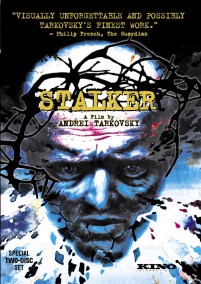
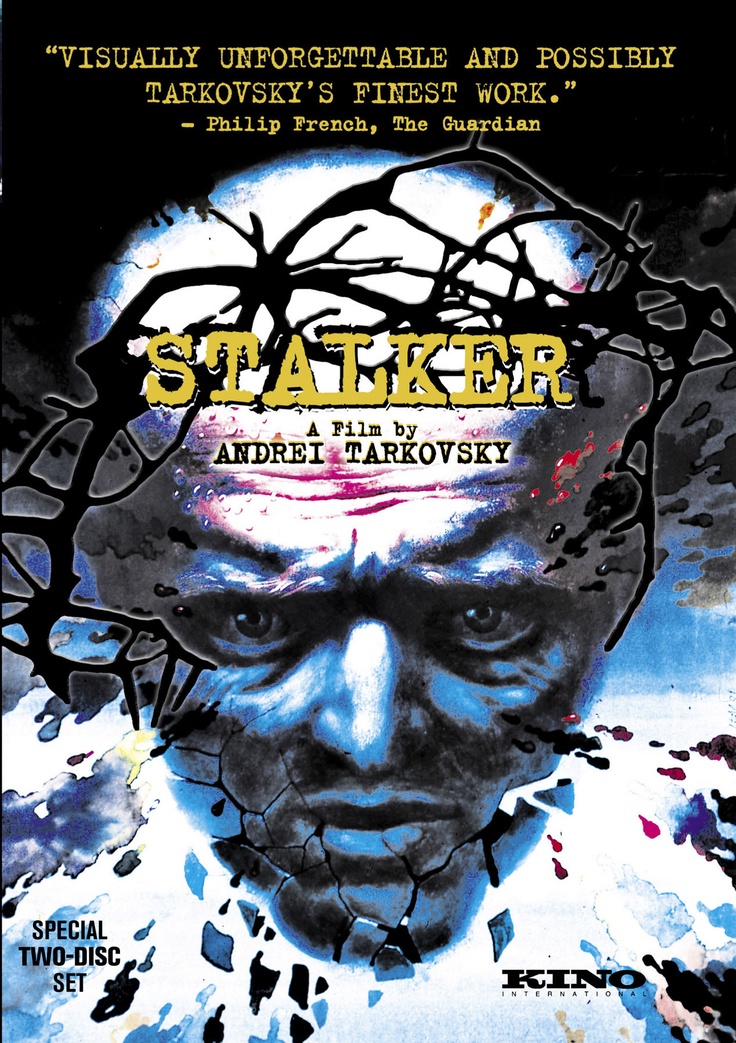
Ah, an easy question! Tarkovsky’s Stalker. A film so ridiculously good-looking and ahead stalkerof its time that it could have been filmed yesterday. I’ve seen it twice, and both times I was absolutely enraptured by it. It’s a slow burner, definitely, but the characters are brilliant, and the dialogue is brilliant, and the setting is brilliant, and just… the whole package makes for one of the most wonderfully realised films I have ever seen. Tension created from nothing! It’s a film that plays on your imagination with the simplest of tools. A nut tied to a piece of bandage. An empty tunnel. An open doorway in the distance. And all balanced on the question of whether the science fiction element is at all real. Watch it! I implore you.
Dark Star is set on a world orbiting a dark star, which means there is no visible light. Did you do very much research on such stars, and what did you learn that did not make it into the novel?

Funnily enough, I did a lot less research on stars than I did on the effects of light deprivation. I could go on for hours about what a lack of light does to a mind, but I can still tell you very little about stars. From what I did find out, the very idea behind Dark Star‘s local sun – that it does emit light, just not on a visible spectrum – is… highly unlikely to ever happen. It would be one hell of an anomaly. Which I guess in a way is reassuring. I went through a lot of different variations on the theme, though: perhaps using a cold sun, or no sun at all, and warming the planet using subterranean heat. But what I ended up with seemed to suit the story the best, in the end, which is what mattered the most.

Some readers have described this novel as a detective story that just happens to be set in space. True or false? If true, was this by design, or is there some deeper meaning we need to know about?

Well… that isn’t what I set out to do. Indeed, by the book’s conclusion, I’m hoping that it no longer reads just as “a detective story that just happens to be set in space.” By that point, the mystery is deeply involved in the city’s background, and the concepts behind the book; it’s no longer the 1920s style procedural it begins as. But let me explain the mechanics behind the detective elements of the book.

Basically, I started out with the idea of the dark world – a society filled with light-deprived people. And that idea felt very noir, as I’m sure you can imagine: the endless gloom and rain and shadows. A bit like that film, Dark City, or even Sin City, films set in a permanent night. So I thought, why not write Dark Star as a noir myself? And from that, the detective elements were born. It suited the setting perfectly, and it worked really well for setting up the technology in Vox to be quite backwards – to give the city the feeling that the lack of light, and the greed around light, was slowly putting humanity back to the stone age. So when it has the 1920s prohibition New York feeling (and happens to include a lot of the tropes based around the noir genre: the cigarettes, and the clipped language, and everything else), it’s designed to hark back to that era deliberately, to add bucket-loads of atmosphere to the story, and to give characters a familiar edge. This also helps with introducing the more unfamiliar elements of the book – the science fiction – as it makes them a lot easier to digest, set against a backdrop of such familiar ideas.

I’m not sure that I like the idea of Dark Star being interpreted as “a detective story that just happens to be set in space.” I wrote the book to be a love story for three different genres: epic, science fiction, and noir, with the idea of blending them as seamlessly as possible, and I dearly hope that I have not failed in that regard.

Being a musician (Surgyn is your band, I’ve read) who are your favorite musicians? And do you listen to music when you write sci-fi? If so, what albums/songs seem to be your favorite mood music?

I tend to listen to a lot of quite experimental musicians (which probably makes me a massive hipster). Having a glance through recent playlists, I’ve been listening to a lot of Purity Ring, and Mew, and Health, and Gessafelstein recently, which says even less. I don’t particularly tend to listen to music when I’m writing, however, science fiction or not, but I can definitely recommend some mood music. I really enjoy the soundtracks put together by Jessica Curry (for various games. She recently released a song called Liquid Light, which was a marvellous coincidence), and Trent Reznor with Atticus Ross (for various films). Oh! Also Cristobal Tapia de Veer’s soundtrack to Utopia, which is so great. I’ve written about the music surrounding Dark Star specifically over here.

What is your favorite sci-fi book/series of all times?
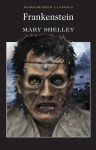
frankensteinAnother tough question! But I am tempted to say Frankenstein. There is no underselling its importance to the genre, and in that manner I would call it revolutionary. But more than that, it’s a really, really great book. The ideas! The execution of them! The language! And yet, disappointingly, there is a great deal of debate surrounding whether is even science fiction at all. Sounds strange, right? But it’s a book I can turn to again and again for that raw feeling of inspiration.

The main character in Dark Star is a pretty downtrodden fellow by the name of Virgil. Did you write him to be a hero, anti-hero, villain in sheep’s clothing, or just an ordinary guy doing the best he can? Any deeper symbolic meaning behind your choice?

I wrote Virgil to be the embodiment of his dark world – consumed by his own darkness, and addicted to light in all its forms. He is definitely downtrodden. From the start of the book, he’s called a “hero” by a lot of people, including himself when he uses the word sarcastically, and I really wanted the reader to question whether Virgil is really a hero at all, just like he’s doing. I think that the answer lies in the flashbacks that play out at the end of each cycle, which show what happened in his last case – the one that brought him all his fame. In fact, my own interpretation of whether or not Virgil is a hero lies entirely in the very last flashback, right at the end of the book. I know it’s a tough one to interpret. A lot of people ask me about it. But maybe you’ll find the answer there as well, if you look closely enough.

I’ve read that you did not intend to convey any message about drugs or addiction in the novel, but obviously, some readers are seeing that in the narrative. Does that bother you at all?

Not in the slightest. The drugs in Dark Star are simply one layer out of many that explore the theme of addiction. The characters you meet in Vox are addicted to drugs, and cigarettes, and light. And perhaps there is an argument that a lot of them are addicted to the dark, as well. I certainly didn’t write any particular message into it, but I know that people read a lot into it, and that’s okay. Once your book is out there, being read, then you, as an author, no longer have much control over it. You can say what you intended… but in the end, the book’s message is open to interpretation.

Coolest concert you’ve ever attended and why? Coolest concert your and/or your band have ever played and why?

Last year I finally got to see my favourite band ever, Cult of Luna, play live, and it was everything I wanted from the performance and more. It was just before they released their newest album (called Vertikal – inspired by Fritz Lang’s science fiction masterpiece, Metropolis), so almost every track they played was new, and it was all so… perfect. The musicianship was beyond almost anything I’ve seen before, and they blew me away.

As for the best concert I’ve played… It would probably have to be the second time we played Resistanz festival in Sheffield. There was something special about that night. The audience sang along to every song, and shouted, and jumped, and just had a really great time with the music. Which is what it’s all about in the end, really – making a connection with someone. We just had a good night, and managed to connect with a thousand instead of just one, and there’s nothing else quite like it.

As a self-professed gamer, how have those gaming experiences integrated themselves into your writing?

This is a cool question, because gaming actually helps with my writing a lot. I do a lot of pen and paper role-playing (you know, like Dungeons and Dragons), but instead of using a pre-existing universe, I’ll use one of my own, and really test it to its limits. I did this with Dark Star: I got three players together, and let them loose in my world, and in doing so found out quite a bit about it. I remember a moment when we were all surprised to find that there would be no muzzle flash in Vox. Sometimes, getting a few people to just run around in your new universe can enrich it substantially.

What are your writing plans now? Any more science fiction noir poems in the future?

I am writing something new, but I’m keeping it under my hat for now. It’s another hugely ambitious book, but this time, not in verse. I’m not sure that I have a sequel for Dark Star in me quite yet. That’s not to say I don’t have any ideas. I think I know where I’d go with it. Just… that I’m not quite ready to revisit Vox yet. Dark Star was a hugely difficult, but hugely rewarding book to write in its own right. However! My publisher was clever enough to release Dark Star on the same day as the solar eclipse this year, and I have been informed that there is another one coming up in just over a decade, and maybe it would be quite the opportune moment to return to the story.

Sci-fi movie you hated the most growing up?darth maul
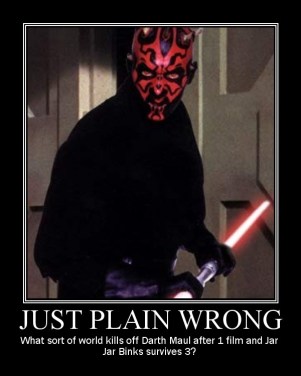
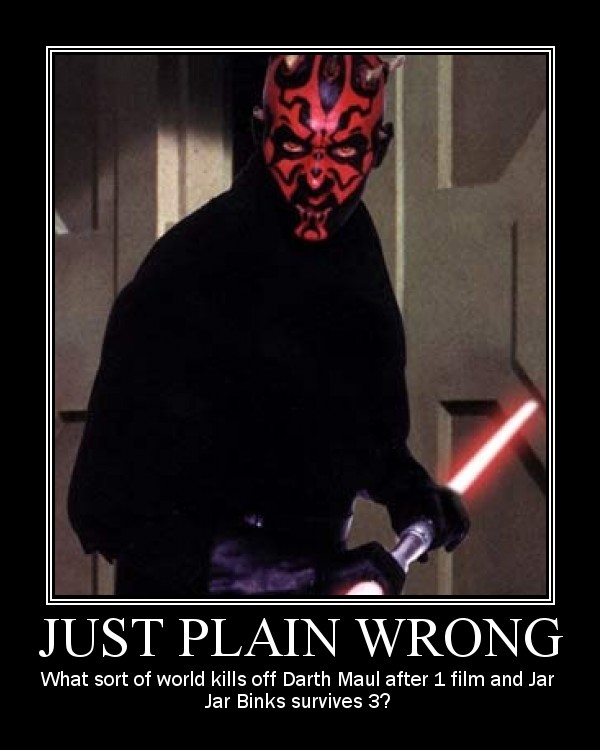
For me, the Phantom Menace didn’t quite live up to the hype. Don’t get me wrong, Darth Maul was great. But the rest… it felt a little flat to young me. As if I had missed the part of the film that made it really great. But I’m glad that general opinion seems to have caught up with me on that one.

These days, I run Beer and Bad Movies nights, so that we can all get together and really tear into terrible science fiction films. That’s not to say anything from the Syfy channel, which would be a bit like shooting fish in a barrel. But rather, those classics that took themselves a bit too seriously. Plan 9 From Outer Space! Space Mutiny! And, of course, modern classics that do the same. I’m sure you’ve heard of the incredible Birddemic

So, would you say your taste in science fiction has changed over the years?

In a manner of speaking, I think so. Not so much as regards literature – I seem to be quite picky when it comes to science fiction books that I really like instead of just appreciate – but more as regards cinema. I’m massively into science fiction films. From thoughtful science fiction like Primer, to big spectacles like Sunshine, and artistic masterpieces like Stalker, I just can’t seem to get enough. If there is something to be said for technology, then it must be that it is doing a lot for science fiction films. I mean, just look at how absolutely gorgeous Interstellar was. More of that please. But… at the same time, I am slowly coming to understand that I am not the biggest fan of space opera. Specifically, Star Wars. It’s another one of those series that I really do appreciate, but that I’m not altogether sure I enjoy quite as much as everyone else. Peculiar, perhaps, or maybe just a side-effect of having grown up with the prequels.

Is there anything you cut or changed prior to publication that you now kick yourself for doing?

Looking back, I can’t think of anything I cut which should have been in the final book. I wrote plenty more than is in there, of course, and even that final product differs in some substantial ways from the manuscript I originally submitted, but I don’t think I’d turn back time and change anything. Perhaps the only really interesting bit I cut was a very, very surreal scene, from the end of the first cycle, where Virgil, in his drugged-up stupor, hallucinates walking the black sands of a desert, and meeting Phos. In the traditional epic story, the protagonist tends to be visited by the Gods, and I wanted the same for Dark Star. In the end, however, it just didn’t quite work.

Which one of the characters in the book is most like you?

This is tough to answer, because hardly anybody in the book is particularly pleasant. Maybe Pastor Michael, though. Not for his belief in Phos, or for his rural ways, but more – for that single scene, where Virgil finds him in his workshop. For the way that Michael tells Virgil, in his own way, that everyone has a gift for something. And while I’m hardly a carpenter, like Michael, I can relate to how Michael feels in that scene. If I have one thing that I define myself with, then it’s my writing.

Do you love, hate, or feel indifferent to the major role social media seems to play in the success of novels in this era?

I have mostly fallen out with social media. I used it for years to help promote my band’s music, and while it was effective, it was also irritating to use. So, you might have noticed that I haven’t set a page up for my writing anywhere. I don’t have an official twitter, or an official facebook page, or anything like that. Instead, my wonderful publisher seems to have it all in hand. Their twitter is a bustling hive of activity. This is great for me, because I can just sit back and do what I really want to do: write, without having to worry about sending out so many messages every day, and updating everything. It’s a surprising amount of work. But you know what’s really interesting? Despite not having a twitter or facebook page for my writing, I have noticed absolutely no difference as regards outreach. It doesn’t seem to have made the slightest bit of difference. So, while I’m sure, one day, I will be asked to make all of these social media pages up, for now, I’m perfectly happy living the life of an internet hermit.

How do you define success as a writer? Sales? Adoration? Creative satisfaction?

I think that this changes from artist to artist. Personally, all of the above are really great, but I get the most excited when I get good feedback (or a good review) from someone whose opinion I really respect. For instance, the first time I knew I was really onto something with Dark Star, was when the mighty Kirsty Gunn herself really took to the idea – this meant a lot because, traditionally, I know that she does not read much in the way of science fiction. It’s also really nice to just stumble across nice comments about your book on the internet every now and then, in some really unexpected places. For instance, Dark Star just got short-listed for the Guardian’s Not the Booker prize, which is done through popular vote – a brilliant feeling.

Any words of wisdom for aspiring authors – besides writing as much as possible?

I think the best bit of advice I can give off the top of my head is that whoever said “write what you know” was wrong. If anything, the opposite is true. Write what you don’t know! Make your book a journey of discovery for yourself! That way you’ll always want to keep writing, just so you know what happens next. This advice doesn’t mean that you should write blindly, though. Definitely plan for how your book is going to start and end. Just… enjoy the journey along the way. Sometimes it’s a lot of fun to not know what’s going to happen next.

Besides yourself, your favorite science fiction author now?

My favorite currently is probably Michel Faber. Considering that he is not best known for his science fiction, and has, indeed, only actually written couple of books that might be considered to contain some science fiction elements, I can understand why this might sound odd. But it is the very fact that the science fiction of his books is not their focus which makes them so appealing to me. One of the elements of the genre that has never really grabbed me (though I do understand and celebrate it for its importance) is the focus on the future – the questioning of what might happen next, and the ramifications of certain concepts. Whereas in books like Under the Skin, and, recently, The Book of Strange New Things, the focus is on themes far closer to home, and it somehow makes them all the more gripping.

Weirdest thing a fan of your books has asked you to sign? Did you actually sign it?

Signing books has been fairly normal, all things considered. I’m just learning to ask people how their name is spelt, no matter how mundane that name sounds. Some people spell their names very strangely. No… compared to signing an album, signing a book is pretty tame. Now, albums – there’s something peculiar. Once you’ve signed your stage name over your own face a few hundred times, you begin to question your sanity. Not to mention all the different patches of flesh over the years. My real name has found its way onto a lot of books, but my stage name has found its way on to a lot of strange places indeed!

Buy the book at Amazon.

Posted in Author Spotlights, Cross-Genre, Interview, Science Fiction | Tagged , , , | 7 Comments

BOMBS AWAY by HARRY TURTLEDOVE

BOMBS AWAY

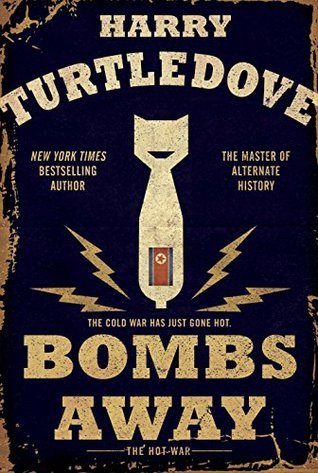
Bombs Away by Harry Turtledove

Genre: Alternate History

Series: The Hot War #1

Publisher: Del Rey (July 14, 2015)

Length: 432 pages

My Rating: 3 out of 5 stars.

The master of alternative history is back with his latest revisionary tale: Bombs Away, where he imagines a very different Korean War.

As history buffs already know, the Korean War was fought during a sliver of time where both the US and USSR had atomic weapons, but before the hydrogen bomb (aka thermonuclear bomb or “nuke”) was successfully completed. So it was a very real threat that the two super powers could fight a conventional WW II-style war over Korea where vintage WW II bombers would be the delivery system for the less powerful atomics like those which devastated Hiroshima and Nagasaki. Thankfully, in our reality, cooler heads prevailed and the war did not escalate outside of the Korean Peninsula, but in this book, President Harry Truman gives General Douglas MacArthur the go ahead to bomb China with atomic weapons, wrongfully believing that Stalin will never dare to retaliate against the US and its allies.

What follows after the US drops the first atomic bomb is the inevitable escalation of hostilities around the world between the US and its allies and the USSR and its allies. Each side scorching the earth with both conventional weapons of war, and dozens upon dozens of low yield atomic bombs that send the major cities up into flames. Neither Stalin nor Truman willing to back down, and so the horrible destruction of civilization continues to escalate.

nuclear-explosion-chicago-illinois

Like all Turtledove novels, this one uses the TFD (Turtledove formulaic doctrine.) What is that you ask? Well, let me tell you.

Basically, the “TFD” is the author’s finely honed and rarely varied story telling method, whereby the narrative moves along with successive snapshot glimpses of a mixed cast of characters from all over the world, who are largely ordinary people caught in the crossfire of a war they do not want. None of these characters are very well developed; they can die at any time; and their main purpose seems to be in giving a brief view of the situation at different locals. None of the locals themselves developed above a rudimentary level, because all that is needed is an idea that this person is in West Germany; this soldier is in Korea; or this nuclear strike survivor is in Seattle, Washington.

Like all Turtledove novels, what is absolutely amazing in Bombs Away is the unique historical premise, which tweaks our past ever so slightly to create an intense story. Sure, this new history is depressing. Yeah, it probably will ruin your opinion of humanity in general. Hell, it might even make you realize how limited your historical knowledge really is. But, no matter all that the story is well-thought out and realistically portrayed, delivering a Korean War that I personally could never have envisioned.

Now, what is absolutely not amazing in Bombs Away is the total lack of any characters to become invested in. Something that seems odd for me to say, considering there are dozens of main characters whose life we jump in and out of, but due to the brief time we spend with them, no one really pops off the page. In fact, there really isn’t anyone to rout for at all. Rather the book feels like a parade of survivor stories; each episode showing our survivor attempting to get through another day in a world gone hellish wrong. This one is getting ready for a bombing run. That one is commanding a tank. The lady over there survived a nuclear attack and is living in a refuge camp. The Russian guy speaking Chinese is trying to make a living and stay out of harms way. And anyone of these individuals can be killed at any time for no real reason. I know that is very realistic, exactly how warfare is, but if you’re a reader who likes characters to become invested in, then this novel really disappoints in that regard.

Now, I’m a long time fan of Mr. Turtledove. (I first began reading him in the 1980s when he published his Videssos Cycle fantasy series.) So I am familiar with his writing style and have seen it work beautifully and not so beautifully, and I have to say Bombs Away is somewhere in the middle. It has an intriguing premise, an eye opening look at the aftermath of limited atomic warfare, and enough viewpoints to tell the story from most angles. What it lacks, however, is any characters to really connect with and rout for.

Would I recommend this novel? If you’re a fellow alternate history lover, who finds most of their reading enjoyment from close-to-reality worldbuilding, then absolutely. If that description isn’t you, then my answer would be no.

Buy the book at Amazon.

Posted in 3 Stars, Alternative History | Tagged , , , , | 5 Comments

Guest blog: A Wandering Ramble By Michael R. Fletcher, author of Beyond Redemption.

Michael R. Fletcher gives readers some insight on the crazy life of a musician turned writer in his guest post over at mightythorjrs !  Check it out, you will enjoy it.  Really!
23287202
Beyond Redemption by Michael R. Fletcher

Genre: Fantasy – Grimdark

Publisher: Harper Voyager (June 16, 2015)

Author Information: Website | Twitter

Length: 512 pages

Buy Beyond Redemption at Amazon.

Posted in Author Spotlights, Fantasy, Grimdark, Guest Post | Tagged , , , , | Leave a comment

ACTION COMICS: SUPERMAN AND THE MEN OF STEEL

ACTION COMICS
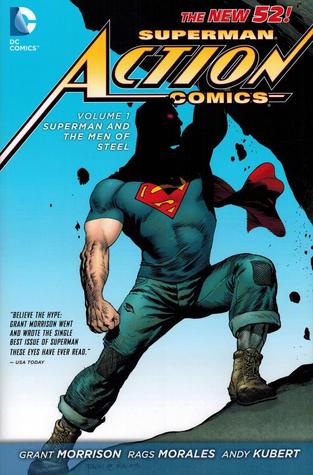
Action Comics: Superman and the Men of Steel by Grant Morrison

Genre: Superhero Comics

Series: New 52 Action Comics

Publisher: DC Comics (August 7, 2012)

Author Information: Website | Twitter

Length: 256 pages

My Rating: 3 out of 5 stars

Up in the sky, look: it’s a bird. It’s a plane. IT’S SUPERMAN! And he is faster than a speeding bullet, more powerful than a locomotive, able to leap tall buildings in a single bound.

When I was a kid that is how I always thought of Superman. He wasn’t omnipotent or superhumanly brilliant or god-like. He was just a guy from another planet who was gifted with some amazing powers by our sun. Powers he tried to use to help other people.

Somehow, though, that simpler Superman got lost, as writer after writer made him more and more powerful until he was basically god flying around Metropolis saving the planet every other issue. And, to be honest, I got fairly bored with that guy.

In this revamped New 52 Action Comics, Grant Morrison tries to take Supes back to the good old days of yesteryear. First, he makes Superman more relatable by stripping him of his god-like omnipotence. Sure, he is still superhumanly fast, strong, and can leap tall buildings, but he also gets hurt and can’t fly away into the sunset. Second, Clark isn’t amazingly wise and all knowledgeable. Rather, this young Supes acts like exactly what he is: a young man on his own in the big city for the first time, who is realizing that his abilities can make a difference in the world. And lastly, Clark doesn’t have some master plan. He is making it all up as he goes along, saving the day in his blue jeans and t-shirt.

action comics supes

Besides Supes, Morrison also does a lot to freshen up the supporting characters. Lois is still the ambitious reporter, but now she barely notices Clark and doesn’t fall in love with an unknown vigilante jumping buildings or need him rescuing her all the time. Jimmy has turned into Clark Kent’s friend, not a Superman fanboy. The Daily Planet is put more in line with today’s entertainment reality. And the villain Brainic is livened up by becoming “the Internet.” Hell, even the Legion of Superheroes is reintroduced in a pretty cool way.

Unfortunately, with Morrison’s brilliance comes his foibles, and they definitely make an appearance here. Lots of unnecessary stuff goes on in the story for the sole purpose of making things more confusing. Story arcs are left at cliffhangers while the writer takes us off on a side trip to no where. And important parts of the narrative (Like why everyone hates the alien Superman when no one knows he is an alien or have any reason to hate him?) are glossed over so that Morrison can tell the story he wants, reason be damned.

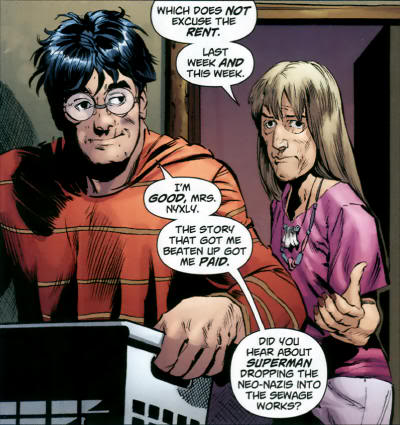
One thing that Morrison’s foibles didn’t affect was the art. Overall, it was very good, and the whole blue jeans and t-shirt costume of this younger Supes is executed very well. Sure, Clark looks like Harry Potter at times, but it didn’t ruin the story for me or anything.

ActionComics1ClarkKent

As you can probably tell, I liked this book. It was a very creative devolution of Superman the character, introduced some much needed humanity back into him, and did a great job of entertaining as Morrison did the former things. Ultimately, though, the writers foibles kept me from loving it as many others have.

Buy the book at Amazon.
Posted in 3 Stars, DC, Graphic Novels, Superman, The New 52 | Tagged , , , , , | 2 Comments

SHADOW’S MASTER

shadow's master
Shadow’s Master by Jon Sprunk

Genre: Fantasy

Series: Shadow Saga #3

Publisher: Pyr (March 27, 2012)

Author Information: Website | Twitter

Length: 390 pages

My Rating: 2 stars

Jon Sprunk has taken the readers of Shadow Saga on a wild ride. First, in Shadow’s Son, there was the action-filled, pulse-pounding introduction of Caim the assassin, as he fought his way through the ancient city of Othir with a young woman named Josey in tow. In Shadow’s Lure, the story morphed into an epic fantasy; Caim journeying north through war torn lands to undercover his past, while Empress Josephine (Josey) of the Nimean Empire fights to maintain her newly won crown. And in Shadow’s Master, the tale of these two star crossed lovers and their individual quests comes to a final conclusion.

As the finale begins, the war weary and emotional drained Caim is about to enter the far north (Arctic Circle-like setting), where the sun never shines, winter never ends, and the war-like clans bend their knees to the mysterious power of the Shadow realm. His confrontation with his Aunt Sybelle in the previous book has also opened his eyes to exactly who and what he is: the half-breed spawn of a human father and a Shadow mother, but the truth did not liberate him as he anticipated, because now he also knows his mother was not killed when he was a child, but has languished as a prisoner of her own father all these years. And so Caim squares his shoulders, sharpens his blades, and trudges ever onward, determined to confront the Shadow powers and rescue his mother, or die trying!

Fluttering along behind Caim is Kit the disembodied spirit who has watched over him since childhood. While their relationship was strictly platonic in Shadow’s Son, it rather quickly transformed into a steamy affair in book two, as Kit made known her desire to have a romantic relationship, demanding that Caim forget Josey and help her find a way to be together. But while she is absolutely sure of her feelings for him, the young assassin is not; his feelings for her and for Josey pulling him in opposite directions, and so Kit begins a desperately search for a way to be with her beloved in the flesh at last – no matter the cost!

Far to the south, Caim’s one time lover Empress Josephine has found her campaign into the northern marches of Nimean beset by immediate trouble. Brigands rape and pillage at will; her own nobles ignore these incursions in favor of waging personal crusades against rivals; and all her attempts to discover news of Caim continues to meet failure. With her former lover’s child growing in her womb and enemies circling around her, Josey attempts to set aside her fears and measure up to her illustrious ancestors, but even with old allies and new protectors aiding her, things look bleak, as an army of Shadow spawn begin their invasion of the Empire!

Make no mistake, Shadow’s Master is a classic quest novel. Caim’s quest is obviously one to rescue his mother and confront his mixed heritage. Josey’s begins as a mission to fight her way to the father of her unborn child, but soon turns into a personal mission to prove to herself that she is truly worthy of being Empress of the Nimean Empire. And Kit’s quest is simply to find a way to become real for Caim and make him love her as she loves him. Intermingled into all of this is Sprunk’s trademark sword and sorcery action with dazzling sword fighting and buckets of blood and gore; loads of back story about the Shadows: where they come from and why they are attempting to conquer the world; and a final conclusion to the trilogy, which might not tie up all the loose ends, but tries to bring everything to a fitting ending.

There were a few elements of the story that didn’t measure up for me however, and I’d feel remiss if I didn’t at least touch upon them for prospective readers of the series.
First, Caim’s interaction with other characters is almost non-existent in this one. Yeah, he does have three traveling companions: Aemon, Dray and Malig, but there really isn’t any camaraderie between them, nor do Aemon, Dray, and Malig grow into anything more than standard “red shirts.” Obviously, Caim’s constant guardian angel Kit is still floating around, but she deserves her own paragraph.

Kit. Oh, Kit. Where do I begin? I could mention how increasingly annoying she has become. The fact that she is so obsessed about having her feelings reciprocated – no matter the costs – has grown into stalker-like behavior. And the way she disappears for extended periods of time, leaving Caim in dangerous situations while she is off looking for a way to make him love her, didn’t put her in a good light. Honestly, I just could have done with less Bella Swan-like “We can’t be apart. You can’t leave me. Ever!” nonsense.

Third, Caim’s powers continue to grow. They even morph into vampire-like monstrosities where he begins to lose strength unless the shadows feed off death. While in past books Sprunk did mention Caim’s shadows descending into feeding frenzies, this whole vampire thing was so unexpected, so jarring, and so head-scratching that it distracted from th story more than added to it.

Fourth, the resolution of Caim’s quest to save his mother falls flat. There is all this build up to his arrival at Erebus, his confrontation with his grandfather, his reunion with his mother, and the final revelation of what the Shadow denizens are really after, but when each one materializes, they fizzle rather than sizzle, in my opinion anyway.

Lastly, the way the Caim-Josey-Kit love triangle ends is rather disappointing. Not how they pair off necessarily, because I felt that was inevitable, but the way it is done. Just left a lot to be desired.

The Shadow Saga has been quite the adventure. From Assassin’s Creed-like beginning to epic fantasy ending, Jon Sprunk steadily flexes his storytelling skills, crafting an action packed trilogy that will remind sword and sorcery lovers why they first fell in love with the genre. At least, it did for me, and I’m really hoping to see Caim return sometime in the near future.

Buy the book at Amazon.
Posted in 3 Stars, Assassin, Epic, Fantasy, High, Sword and Sorcery | Tagged , , , , , , , , | 3 Comments

SHADOW’S LURE

SHADOW'S LURE
Shadow’s Lure by Jon Sprunk

Genre: Fantasy

Series: Shadow Saga #2

Publisher: Pyr (June 21, 2011)

Author Information: Website | Twitter

Length: 391 pages

My Rating: 3 stars

In Caim of Shadow’s Son, Jon Sprunk created an assassin worthy of standing beside the likes of Brent Weeks’ Kylar Stern of the Night Angel Trilogy, Brandon Sanderson’s Kelsier of Mistborn, and Michael J. Sullivan’s Royce Melborn of the Riyria series. His story quickly becoming a sword and sorcery delight, filled with non-stop action, intense fighting, shadow magic, and thrills galore. And as the fiendish fun of devious plots, personal tragedy, and long denied revenge converged to a satisfying ending, it was good to know that Shadow’s Lure was waiting to continue on with Caim’s story, as he heads off into the Northlands to uncover the truth about his mysterious past and leaves behind his new love Josey, who has been crowned Empress Josephine of the Nimean Empire.

Immediately upon beginning Lure, however, it becomes clear this book is going to be a different type of story. Yes, Caim the master assassin is still wielding his twin blades to devastating effect, but now, the frenetic pacing, which was the dominate trait of Shadow’s Son, is turned down several notches, while the world building and character development take much more prominent roles in the narrative. And when I say “character development,” I should say “characters,” because the narrative seamlessly shifts back and forth between four of them: Caim, Josey, Kit, and a vile villainess from the shadowlands.

Naturally, Caim’s part of the tale involves lots of fighting. His quest leading him into the teeth of a raging civil war in his childhood homeland. New companions and enemies appear in his life, entangling him in an epic battle to determine the fate of the land. One fight leads to another, (Each one amazingly choreographed and depicted by Mr. Sprunk, who seems to have a real knack for writing engaging and sensible combat.), but during the interludes, Caim also finds himself struggling with revelations about his heritage and wondering if he made the right decision in leaving his life in Othir and his growing relationship with Josey.

Meanwhile, back in Othir, Empress Josephine is dealing with troubles of her own, mainly political machinations. She has nobles who view her as nothing but a silly young woman; she has the Church of True Believers plotting to overthrow her; Othir’s populace is primed to revolt at any minute; enemies are invading Nimean from all directions; a mysterious assassin is trying to kill her; she has trusted counselors demanding that she take a husband to reinforce her position; she is pregnant with Caim’s baby; and she has no idea if her lover ever intends to return to her, or if there brief relationship meant nothing to him.

The third member of our evolving love triangle is Kit. This disembodied guardian alternated between nagging Caim in Shadow’s Son and aiding him, but exactly who and what she really is begins to be revealed here. Not only that, she plays a huge role in opening up the world of shadow for a reader’s view. Yet all the while, Kit’s main focus seems to be expressing her true feelings for Caim, as she completely befuddles him with her sudden shift from mocking friend to inflamed suitor.

Rounding out our main characters is Sybelle. This formidable denizen of the Shadow realm is the true power behind the forces seeking to overthrow Caim’s childhood home and swarm into the Nimean Empire. No matter her horrid evilness (because she is a nasty thing) she is far from one dimensional, and Jon Sprunk shows all her amazing characteristics: the good, the bad, and the ugly.

Through these four viewpoints, Sprunk weaves a most intoxicating epic fantasy, filled to brimming with plots within plots. All of them whispering the timeless themes of past and future, despair and hope, love and hate, vengeance and justice, good versus evil. It is dark. It is gritty. It is blood soaked. It is sword and sorcery to its core.

But . . . (Yeah, I set you up for the “But” guys.) there were some things about the story which did not work for me and caused it to receive a lower star rating than Shadow’s Son.

The least of these was the sudden infatuation of Kit for Caim, and our heroes confusion about his feelings for her and Josey. To me, the shift from Kit the mocking friend in book one to the enamored suitor in this story was too abrupt. There really wasn’t any hints that this was coming, so when Kit gets all hot and bothered, it was a bit of a weird shock that Caim was so torn about his love for both women, since he’d never seemed to have anything but a friendship with Kit up until this point.

A moderate issue for me was our heroes (Caim and Josey) always having the very best of luck. Josey bumbling from bad situation to worse situation almost constantly, but somehow squeaking by or being saved by the perfectly timed intervention of the absolute correct individual, gradually grew to a distraction and not a relief. And Caim himself – though wounded and unknown in this northern land – managing to attract ally after ally, becoming the leader of a rebellion, and easily learning to use powers it takes other lifetimes to master was a bit hard for me to swallow.

However, the Shadow villains were my biggest disappointment. While Sybelle was fascinating in many ways, she and the other villains never really grew into anything other than obstacles for Caim to overcome. With Mr. Sprunk actually developing their story, I expected some attempt to make them empathetic or, at least, explain their cruelty, but it never really materialized, as they remained Bad Guy #1, Bad Guy #2, et cetera.

Even with my dislikes noted, I’d like to encourage assassin lovers and sword and sorcery aficionados to pick up this very entertaining series. Where Shadow’s Son was an action tour de force, Shadow’s Lure begins the transformation of a simple assassin tale into a grand epic fantasy. Sure, it stumble a little along the way, but it never fails to entertain, keeping your pulse pounding with each swing of Caim’s deadly blades.

Buy the book at Amazon.
Posted in 3 Stars, Assassin, Epic, Fantasy, High, Sword and Sorcery | Tagged , , , , , , , , , , | 6 Comments

The Most Important Interview of All Time, with Michael R. Fletcher and mightythorjrs.

The Most Important Interview of All Time, with Michael R. Fletcher.

23287202

Read as Michael R. Fletcher turns the table on  Fantasy blogger mightythorjrs, grilling him on everything from his taste in music to does he blog just for the free books!

Posted in Interview | Tagged , , , , , | 1 Comment