
Last week, I was honored to spotlight Charles E. Yallowitz’s newest installment in his Legends of Windemere series, and today, he has been nice enough to return with a guest post. So without any of my infernal babbling, we will get to the post.
A big thank you to Wendell for having me for a guest post so soon after being part of the promotional tour for my latest book, Tribe of the Snow Tiger. An important part of this story involves rivalries, which drive many of the events. In fact, the idea of rivalries is one of the core pieces of the overall series. With a group of heroes and a separate group of villains, it’s hard not to pair them off and have grudge matches turn up from time to time. So, what are some things to consider when using a rivalry? Keep in mind that I’m talking as a series author.
1. A rivalry requires more than one encounter or at least the mention of previous run-ins between the participants. This helps the characters to evolve through their encounters and use each other to improve. For example, Luke Callindor has an early rivalry with a demonic assassin. They have several encounters, which is what helps him evolve from the inexperienced warrior to a blossoming adventurer. If it was only one fight then it would be closer to a random encounter like you find in video games.
2. Not every encounter should be won by the hero. That makes the villain appear to be weak and that can also make the hero seem weak. On the other side of things, you can’t have the villain repeatedly win. A big reason is because that usually results in the hero dying or being horribly maimed. The trick is to have it be a victory that doesn’t end the rivalry and maybe even has both characters claim a success.
3. I might be alone on this, but a series rivalry should become personal. Maybe it starts as business or a spur of the moment encounter, but a deep rivalry goes beyond the quest and overall story. It is a key component of the characters’ evolution as they play off each other and strive to be the final winner. This could be a one-sided personal thing too. For example, a villain keeps attacking because of a previous loss while the hero is simply trying to get the quest done. One fights for wounded pride and the other fights because he/she doesn’t really have a choice unless they keep running.
4. Depending on the length of the series, you do not need a rivalry encounter in every volume. Short series can allow for this, but doing it in a long one can make the dynamic grow stale. Readers will roll their eyes at ‘another fight’ that will solve nothing other than upping the word count. The rivalry is like a delicious scoop of ice cream. Great once in a while, but many people will get sick of it if it’s always around. (Not the best analogy, but I’m hungry and ran out of ice cream.)
5. Characters need to grow and evolve from the rivalry. This is in terms of personality, physical abilities, belief systems, and whatever else gets called into question whenever the adversaries meet. There is a reason such a thing is in your story and that is to drive the characters to become stronger because of or in spite of each other. This can manifest in developing new combat moves, a change in the willingness to kill, physical scars, and any number of changes. My point is that neither character should come out of a good rivalry in the same condition as they went in.
6. Know when to stop a rivalry. Seriously, an author needs to look at every meeting and consider it is the last one. Think about how the encounter will end and if it makes sense for the characters to continue. As previously stated, you always run the risk of a rivalry getting stale. Making it feel like the fight will never end is a surefire way to do this.
7. Connecting to the previous point, the rivalry should end with some closure. Having the two battle, walk away, and never settle the dispute is only useful when you plan on them meeting up again. An ending to a rivalry is a reward for the characters, the author, and the readers.
Now Available on Amazon!

Cover Art by Jason Pedersen
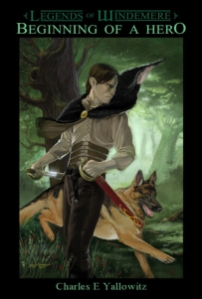
Need to catch Legends of Windemere from the beginning? Then click on the covers below!
You can start for FREE . . .
Cover Art by Jason Pedersen
Or grab the $4.99 ‘3 in 1’ bundles!

Cover Art by Jason Pedersen
3D Conversion by Bestt_graphics

Cover Art by Jason Pedersen
Also Available:

Cover Art by Jason Pedersen

Cover Art by Jason Pedersen

Cover Art by Jason Pedersen
Interested in a new adventure? Then grab your Kindle & dive back into the world of Windemere! Don’t forget an apple for Fizzle.
 About the Author:

Charles Yallowitz was born and raised on Long Island, NY, but he has spent most of his life wandering his own imagination in a blissful haze. Occasionally, he would return from this world for the necessities such as food, showers, and Saturday morning cartoons. One day he returned from his imagination and decided he would share his stories with the world. After his wife decided that she was tired of hearing the same stories repeatedly, she convinced him that it would make more sense to follow his dream of being a fantasy author. So, locked within the house under orders to shut up and get to work, Charles brings you Legends of Windemere. He looks forward to sharing all of his stories with you, and his wife is happy he finally has someone else to play with.
Blog: www.legendsofwindemere.com
Twitter: @cyallowitz
Facebook: Charles Yallowitz
Website: www.charleseyallowitz.com
 Welcome to my monthly wrap up! A final tip of the hat to the month behind and all the great (at least, we hope they were all great) books that have been reviewed as well as anything else exciting that happened.
 BOOK REVIEWS THIS MONTH








 All Fixed Up



 5. BIAGIO (
 4. SA’BA TAALOR (
 3. LADY (
 2. JORG ANCRATH (
 1. THOMAS COVENANT (



 The Waking Fire


 10.
10.  at Amazon.
 9.
9.  at Amazon.
 8.
8.  at Amazon.
 7.
7.  at Amazon.
 6.
6.  at Amazon.
 5.
5.  at Amazon.
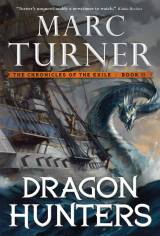 4.
4.  at Amazon.
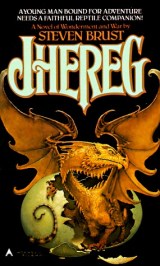 3.
3.  at Amazon.
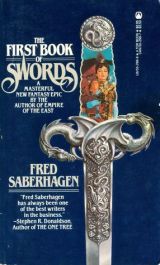 2.
2.  at Amazon.
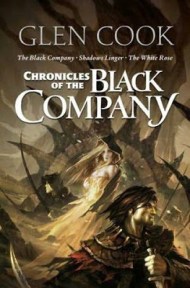 1.
1.  at Amazon.
 The Godless









 bookwraiths.com
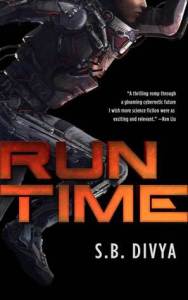
RUNTIME
Genre: Science Fiction
Series: Stand Alone Novella
Publisher: Tor (May 17, 2016)
Author Information: Twitter| Website
Length: 96 pages
My rating: 3 stars
The Minerva Sierra Challenge is a grueling day long race across the Sierra Nevada mountain range of the western United States. Participants internally augmented with enhancement chips and garbed in intricate exoskeletons; most of them corporately sponsored with support teams and the best tech money can buy. The winner assured of fame and fortune across the world. And into this renowned competition comes the most unlikely of contestants: Marmeg Guinto.
This bouncer from a poor family secretly enters the competition with money meant for tuition to nursing school and with tech pulled out of rich people’s garbage. Hell, even her implants are black market knockoffs, which she earned by her “illegal” cyber jobs. But even with all the odds stacked against her, Marmeg is driven to compete and win this competition by a lofty goal, a near divine purpose, a burning desire: to raise herself and her family out of poverty, to be able to attend college, to help her brother get his citizenship papers, and to finally be able to have the surgeries to become a gender neutral person.
As a social commentary goes, Runtime is an engaging, believable narrative of a possible future where technological advancement and continuing discrimination has shaped a society similar yet very different than our own. The Minerva Sierra Challenge a nice vehicle for S.B. Divya to entertain readers while the underlying morality issues are slowly revealed. Marmeg’s personal journey through this place grounding and livening up what would otherwise be a rather straightforward social justice tale.
Where this novella excels is in the writing style of S.B. Divya. The crisp, clear, and concise narrative effortless to read, quickly pulling you in and engaging you in Marmeg’s story without ever overloading your reading senses with too much information (i.e. no info dumps to be found here). Simple yet elegant, the author’s writing is extremely palatable and uniquely suited to the novella format.
Where Runtime struggled is in the story line itself. Even with its grueling and treacherous race scenes (where not only the terrain but other people are hazards), this is a work of social commentary, whose underlying messages about modern society’s ongoing struggles with technology, social stratification, gender identification, and bioengineering cannot be overlooked, because they are so tightly woven into every paragraph of our protagonist’s story that to extract them would cause the story itself to cease to be. And since modern “morality plays” are not particularly appealing to me, I found it difficult to enjoy Marmeg’s journey. Every second of my reading time spent comparing her society to our own rather than being held spellbound by this competition of enhanced humans traversing a mountain range in a day. Others might find the novella’s commentary on modern problems amazingly insightful or uniquely empowering however, so this particular criticism might merely be my personal preference in reading subjects.
Set in a dystopian society with a strong female lead who is dealing with many discriminatory, societal issues, Runtime is a quick, enjoyable read that will satisfy lovers of clever works of social commentary. While somewhat successful in mixing an exciting race narrative into the morality mix to keep things from becoming preachy, the novella will definitely be remembered more about its spotlight on our current societal issues and where the future might take us rather than the racing competition itself.
I received this novella from the publisher in exchange for a fair and honest review. I’d like to thank them for allowing me to receive this review copy and inform everyone that the review you have read is my opinion alone.
Purchase the book at Amazon.
Share this: