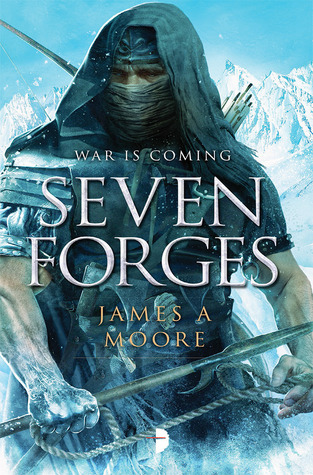
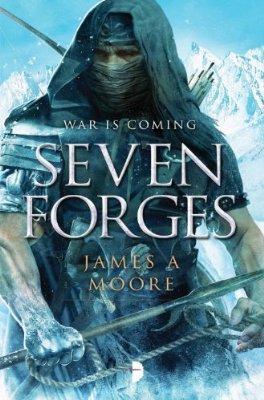
THE WOUNDED by JAMES A. MOORE (A SEVEN FORGES STORY)

SEVENFORGES

The Wounded by James A. Moore

Genre: Fantasy

Series: Seven Forges

Publisher: Self Published (November 4, 2013)

Author Information: Website | Twitter

Length: 13 pages

My Rating: 4 out of 5 stars.

The Wounded is a short story that follows Kallir Lundt: a minor character in Seven Forges who was mortally injured at the beginning of the book and never heard from again.

For those of you who have not read Seven Forges as of yet, the story told there focuses on Captain Merros Dulver, who is leading a small group of adventurers toward a range of unexplored mountains called the Seven Forges. The blasted lands that the group must transverse is a frozen wasteland, wind blasted, and devoid of life; facts that have made it an impenetrable barrier for anyone from the Empire of Fellein – which controls the majority of the known world – ever reaching these legendary peaks, let alone, exploring them. But, naturally, someone offered Merros a lot of money to come out of his well earned military retirement to do just that, so he and a handpicked group of people are freezing their butts off and wandering around in the wastes.

Soon, however, Captain Dulver realizes the Blasted Lands are not so uninhabited, as his band of adventurers is confronted by horrible beasts that come near to killing them and who horribly wound and disfigure one Kallir Lundt. Luckily, for Captain Dulver, an unknown race of people called the Sa’ba Taalor find them in the waste, lead them into their sheltered homeland in the Seven Forges and are seemingly happy to meet their unknown neighbors.

After becoming acquainted with one another, Captain Dulver’s band and a group of the Sa’ba Taalor leave the Seven Forges to travel back to the Fellein Empire. The plan to introduce these mysterious people to the rest of the world. Kallir is still drifting near unto death, however, and so he is left behind in the care of the Sa’ba Taalor, who claim that their gods can heal the mortally wounded man.

But what secrets are these unknown people hiding? Can they really heal Kallir from his mortal wounds? And even if they can, why are they doing so?

While this is a short story, it does a wonderful job of helping to answer those questions and reveal more about these interesting people called the Sa’ba Taalor and their mysterious homeland and culture. It also does an excellent job of introducing us to Kallir Lundt, who I believed was just another red shirt in a Star Trek episode, but who – after this tale and The Blasted Lands – seems to be a character who might play a bigger role in forthcoming books.

This one is recommended for fans of the series or those who have read Seven Forges. Other readers probably will not appreciate this unknown story of Kallir Lundt as much.

SEVEN FORGES SHORT STORIES
THE WOUNDED
SCARS

BE SURE TO CHECK OUT MY REVIEWS OF THIS SERIES
SEVEN FORGES (PART 1)
THE BLASTED LANDS (PART 2)

Purchase the novels at Amazon.

Posted in Fantasy, High, Short Stories, Sword and Sorcery | Tagged , , , , , , , | Leave a comment

FUN DAY MONDAY, OR THE BOOKS THAT WILL HELP ME SURVIVE THE WEEK AHEAD

Yeah, it is Monday again for me. Time to get back onto the old emplyment hamster wheel and run round and round. Maybe I’ll save the world this week, but I’d rather not have to today. The only thing that will help get me through the non-stop excitement of it all — besides my wonderful family, of course — are the books I will be reading this week. Hopefully, each of them will transport me to some awesome world where I can forget all about my grinding — though apprecaited –work week.

So without any further explanation, here are the books I will be reading this week.

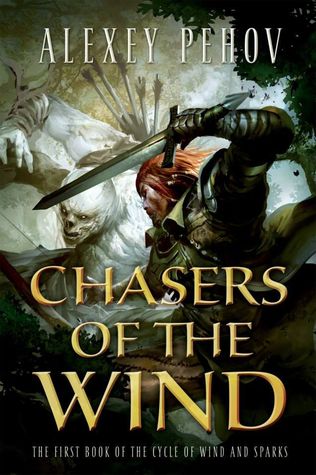
CHASERS OF THE WIND by ALEXEY PEHOV

CHASERSOFTHEWIND

Centuries after the disastrous War of the Necromancers, the Nabatorians, aligned with the evil necromancers of Sdis, mount an invasion of the Empire. Luk, a soldier, and Ga-Nor, a Northern barbarian, are thrown together as they attempt to escape the Nabatorian hordes and find their way back to their comrades.

Gray and Layan are a married couple, master thieves who are hiding out and trying to escape their former gang. They hope to evade the bounty hunters that hound them and retire to a faraway land in peace.

Tia is a powerful dark sorceress and one of The Damned—a group trying to take over the world and using the Nabatorian invasion as a diversion.

Unfortunately, for Gray and Layan, they unwittingly hold the key to a powerful magical weapon that could bring The Damned back to power.

Hounded by the killers on their trail and by the fearsome creatures sent by The Damned, Gray and Layan are aided by Luk and Ga-Nor—and Harold, the hero of The Chronicles of Siala. Realizing what’s at stake they decide that, against all odds, they must stop The Damned.

Chasers of the Wind is the first book in a new series from internationally bestselling author Alexey Pehov.

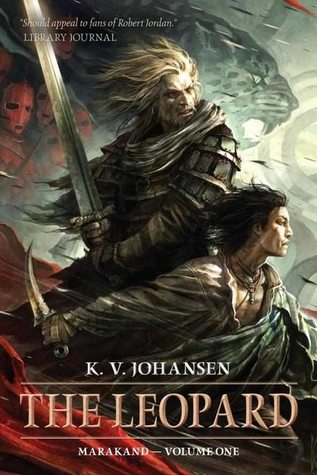
THE LEOPARD by K.V. JOHANSEN

THELEOPARD

Part one of a two-book epic fantasy, set in a world as richly drawn as J.R.R. Tolkien’s Middle Earth, but with Mideastern and Eastern flavors

In the days of the first kings in the North, there were seven devils…

Ahjvar, the assassin known as the Leopard, wants only to die, to end the curse that binds him to a life of horror. Although he has no reason to trust the goddess Catairanach or her messenger Deyandara, fugitive heir to a murdered tribal queen, desperation leads him to accept her bargain: if he kills the mad prophet known as the Voice of Marakand, Catairanach will free him of his curse. Accompanying him on his mission is the one person he has let close to him in a lifetime of death, a runaway slave named Ghu. Ahj knows Ghu is far from the half-wit others think him, but in Marakand, the great city where the caravan roads of east and west meet, both will need to face the deepest secrets of their souls, if either is to survive the undying enemies who hunt them and find a way through the darkness that damns the Leopard.

To Marakand, too, come a Northron wanderer and her demon verrbjarn lover, carrying the obsidian sword Lakkariss, a weapon forged by the Old Great Gods to bring their justice to the seven devils who escaped the cold hells so long before.

Well those are my picks for this week. Why not let me know what you will be reading.

Posted in Fantasy, Funday Monday | Tagged , , , , , , , | 7 Comments

SEVEN FORGES SHORT STORIES

The blog this week has spent a great deal of time focusing on the upcoming release of The Blasted Lands, the second book in the Seven Forges series, written by James A. Moore.

THEBLASTEDLANDS

While it is only a couple days (June 24, 2014) until The Blasted Lands will be released, I thought I’d share a few short stories that Mr. Moore has posted around the net to help Sa’ba Taalor fans get their fix. While anyone can enjoy these stories, I do believe they will mean much more to those of you who have read the first book in the series, Seven Forges, and already have some insight into these characters. Enjoy!

SEVEN FORGES SHORT STORIES
THE WOUNDED
SCARS

BE SURE TO CHECK OUT MY REVIEWS OF THIS SERIES
SEVEN FORGES (PART 1)
THE BLASTED LANDS (PART 2)

Purchase the novels at Amazon.

Posted in Fantasy, Short Stories | Tagged , , , , , , | 2 Comments

“Scars” A Seven Forges Short Story by James A. Moore

This short story was originally posted by Mr. Moore over at his blog. Since I could not seem to get a link to work, I have copied “Scars” directly to the site. You can read more from Mr. Moore over at his blog GENREFIELD or at his author site JAMES MOORE BOOKS. In any event I hope you enjoy the story!

sevenforges2

Wollis March slipped from his furs and breathed a deep and sincere sigh of relief. The feel of fresh, cool air across his upper body was a blessing and he thanked his gods for it.
They had been traveling in the Blasted Lands for longer than he cared to think about. Instead of focusing on the long days of freezing weather and endless windstorms, he concentrated on the rewards awaiting them. There would be gold aplenty to share between the explorers.

Before that, however, there was the matter of getting back to the capital and presenting the maps of the area that had been given to them and introducing the Sa’ba Taalor to their employer. He looked over his shoulder as the strangers coming with them followed his example and peeled off layers of furs, leather cloaks and in many cases armor. The great beasts they rode on—he could not decide what sort of monsters they might be, but they were decidedly large and they had claws and fangs—let out a few grunts of approval and shook their bodies, knocking dust and grit out of their fur.

Wollis dismounted from his horse and winced at the flare of pain in his thigh. The scars were deep and the muscles had never quite come back as strong as he’d have liked. Still he could walk and that was a blessing.

It was time to stop for the day. The sun was setting and the cliffs facing them were too steep to attempt in the darkness. There were paths, yes, but they were treacherous even in the light and the men he traveled with and their guests alike carried far too many supplies to make the trek easily. They had to find the Temmis Pass, and that way was nearly perfectly hidden by the surrounding terrain. He would be able to find it tomorrow, he suspected, but not in the night.

He ordered the men to prepare for the rest and began the same duties himself. Within the hour everyone was done with their appointed tasks and the Sa’ba Taalor had several fires working. The strangers believed in cooking and eating meals together and they had invited him to join them. Though he did not speak their language they had done an amazing job of learning the common tongue during the travels, aided their apparent leader, Drask Silver Hand. Drask had gone ahead now, moving toward Fellein’s Summer City, Tyrne. According to tradition it was called the “Summer City” because the Emperors liked to spend the summer there, but the current ruler had not left his palace there in over seven years. It was the new capitol as far as Wollis could tell.

Tusk walked his way with several other members of his people, three women and two additional men. He barely recognized the giant without his skull-like helmet in place, but the scars on his arms were as good as the armor for singling him out. Each and every member of the gray-skinned people wore a veil to hide everything below their eyes, a demand of their gods, apparently. For whatever reason the Daxar Taalor did not believe Wollis or the rest of his people worthy of seeing the faces of their followers. It was best not to question the will of the gods. That much Wollis knew from his own people. And while most of them wore veils without any real decoration there were fine rings of metal covering most of the surface of Tusk’s veil that gave out minuscule ringing notes with each stride the man took. The Sa’ba Taalor had removed the extra layers and now wore what seemed the common clothes of their people, at least while traveling, a few wore tunics but all wore vests over their chests and trousers that they stuffed into their boots. Male or female didn’t seem to matter. It was oddly refreshing after a few of the places he’d been in the past.

Less refreshing were the weapons each of them seemed incapable of walking around without. To the last they carried swords or axes within easy reach of their hands. On the slim chance that their larger blades might suddenly fly away, there were spare daggers and a few smaller swords strapped to thighs or tucked into the edges of their boots. Fifteen years in the military and he’d never seen any lot more determined to carry weapons in his life.

Tusk pointed to the largest of the fires. “Join us for food?”

“I would be honored.” He smiled at the man. It seemed the safest way not to die a quick and painful death. Merros Dulver, his leader—now also heading off in a different direction on a separate mission—spoke clearly with the group and wanted the relationship they’d started to remain friendly and cordial. Wollis wanted exactly the same thing. Ehnole and Stastha were among the people with him. He recognized both of them even past the veils all of their people wore. Traveling with the Sa’ba Taalor had taught him one thing he had never consciously understood before: the way a body moves is as distinct as the face it bears. Tusk walked with a certain strut that stated for one and all that he was confident. Ehnole swayed her hips in an unconsciously seductive way. Stastha the younger, harder girl, moved like a phantom, her feet never seeming to touch the ground solidly so that she appeared to glide just above the surface rather than touching heavily. Despite her soft tread she managed to move with a cockiness that he found appealing. After months away from home and his wife, he found almost all of the females appealing.

Removing their clothing had revealed one thing about the Sa’ba Taalor above and beyond everything else. They were scarred. To the last of them they sported the signs of previous fights and a hard, violent life.

The meal was the last of the fresh meat the Sa’ba Taalor had provided by killing Pra-Moresh only a few days earlier. Despite his worries from the first invitation to eat with the strangers, Ehnole had proven a very capable cook and the heavy aromas of the spices and herbs she used to season the pungent meat made his stomach rumble.

They sat in companionable silence and feasted on meat and a few odd vegetables brought with them from the valley of the Seven Forges. And when they were done Tusk brought out a pouch of wine that was deceptively potent and tart enough to make lips pucker and eyelids squint.

One of the men around the fire said something in their tongue and made Ehnole chuckle. Wollis was not foolish. He had every suspicion the comment made had been about him and he chose to ignore it.

Ehnole looked to him and spoke softly. “Bromt does not understand the lack of scars on your body.”

He looked at the man who’d spoken. His body was heavy with muscle and his skin was heavier with scars of every sort. There were what looked like tooth marks running along one shoulder. Wollis could actually see the individual shapes of the teeth that had cut through the man. He didn’t begin to want to guess what sort of beast had made those marks in the first place.

Wollis was exactly drunk enough to answer, even knowing that he should approach all conversations here with caution. “I have always found the best way to deal with an attack is to not be where the attacker expects me to be.”

Tusk and the rest laughed and Bromt joined in when the words were translated. Wollis smiled and laughed as well, relaxing a bit. When you got right down to it, there were enough of the Sa’ba Taalor around him that if he accidentally offended them he’d probably be dead before he could regret it, so best just to enjoy himself.

Tusk spoke next. “You walk with a very serious limp. How did that happen, Wollis March?”

“I caught a spear in my leg.” He thought back to the moment so long before. The man with the spear came off a horse and brought the spear down with plans to drive it through his skull. He almost made it. “I dodged the worst of the attack. Man was aiming for my head, you see, but he caught me in the leg and the tip went through my muscles and bone and pinned me to the ground.”

The strangers nodded their heads.

“I’d be dead if not for Merros Dulver. He stood over me and fought off the rest of the attackers until additional soldiers arrived.”

“Did you kill the man who did that to you?” Ehnole asked the question.

“No. I was really very busy screaming. It hurt a great deal, you know.”

They seemed disappointed. And Wollis frowned. “Have any of you been severely injured?” He asked the question already knowing that the answer was yes and that he was being foolish.

Just the same Ehnole answered, “Yes. All of us.” She opened her tunic and bared her midriff, showing the light gray of her flesh and the darker gray of several of her scars. One long scar in particular was impossible to miss. It wrapped itself around her waist twice and slithered like a serpent.

“What happened there?”

“I tried to capture my mount. They must be caught, you see. They are not tame. We must tame them.” She pointed to the great creature where it lay not far away, looking toward the fire without moving beyond an occasional sigh or a shuffling of the enormous body to find a more comfortable spot on the ground. “Toratta did not want to be tamed. He fought me very hard. I had wrapped the trapping leathers three times around my waist to let me hold on better.” Her eyes smiled. The rest of her face, as always, was hidden away. “Some would say I held on too well, but I won my mount that day.”

“Where do your mounts come from? Are they in the same valley as your people?” Toratta looked in his direction the great eyes of the thing like lanterns in the growing darkness.

For a moment no one answered, and finally Tusk nodded his head. “They are from the Taalor Valley. But they are not bred by us. They are gifts from the gods.”

Wollis nodded his head, suspecting that he was touching against a subject the Sa’ba Taalor preferred not to discuss. He felt no particular need to push the matter. Instead he pointed to the scar on Bromt’s shoulder and chest. “And Bromt? Is that his name? How did that happen?”

Ehnole translated the question. And then she translated the answer as well. While he spoke, Bromt ran his finger over each individual tooth mark that permanently marred his flesh.

“There are things in the Blasted Lands. We do not see them often and most who do see them do not live to speak of it. I met one of them. It killed my first mount and bit most of the way through my arm before I killed it.”

“How did you kill it?”

“Well, it bit my arm as you can see. But it also swallowed my arm.” He mimed a mouth opening around his arm and swallowing the whole of it. And as he did so, Wollis could see that the tooth scars ran around the back of his shoulder as well. It had literally taken his entire arm into its mouth. “When it did that, it also swallowed my blade. So I cut it open from the inside and watched it bleed out.”

Wollis shook his head in wonder. The idea was unsettling.

“You really only have the one scar?” Ehnole seemed endlessly puzzled by the notion.

“Well, no. I have more scars, but they aren’t really very significant. I mean, I managed to nick my chin a few times when I was shaving. I’ve a long scar on my finger from when I cut myself when I was sharpening a sword blade and drinking. I’ve certainly never managed anything quite as spectacular as Bromt’s scar or yours. I can see more scars on Tusk than I would have thought possible for any man to survive.” He shrugged. “I’m afraid in comparison I’m rather disappointing.”

Tusk leaned forward. “Not at all. You are merely different. You avoid being cut. I can respect that. The followers of Wrommish use a similar principle in combat.”

“Wrommish is one of your gods?”

Tusk nodded. “Wrommish advocates using the body as a weapon. So the idea of not being struck makes sense. The hands and arms and legs are used to defend against weapons in combat.”

“How does a thing like that even work?” He’d seen plenty of brawls in his life but never once seen one that ended well when the brawler came up against armed men.

Tusk moved his hand in a back and forth motion. “The ones who don’t learn Wrommish’s ways early on seldom manage to learn it well.”

“I imagine that could be a problem, yes.”

He pointed to the south where several of his people had gone with Merros Dulver a day or so earlier. “Jost is traveling with your Captain. She is a strong follower of Wrommish. I have seen her block many weapons with only her hands.” He thought for a moment. “Drask as well.”

“I should think he has an advantage there, what with one hand being metal.” The words fairly jumped past his lips before he could stop them and Wollis had to resist the urge to slap his own hands over his mouth as soon as he was done speaking.

Tusk studied him for several moments. All around him the Sa’ba Taalor were deadly silent.
And then Tusk slapped him on the shoulder with one large hand and roared laughter. The rest joined in and Wollis relaxed. When they had calmed down a bit Tusk looked at him and shook his head. “Of course Drask might well kill you for saying that to him. It would depend on his mood.”

“I didn’t mean to offend….”

Tusk shook his head. “I take no offense. But I am not the one who had his hand cut off.”

“How does his hand work?”

Ehnole answered that one, “He was gifted by Ydramil.”

“Another of your gods?”

Ehnole nodded. “The Daxar Taalor each favor one metal. Well, except for Durhallem. But each favors one. And if they choose to favor someone who has lost a limb, it will always be made of that metal. There is no mistaking which god has granted a favor of that sort.”

“What makes them decide? I mean, do all of your people get replacements if they are wounded?”

“Not at all,” Tusk answered. “The Daxar Taalor choose who they reward very carefully. There are…conditions that must be met. If Drask had not performed to the satisfaction of Ydramil, he would not have been granted a new hand.”

“How do the gods decide?”

Tusk shook his head and leaned in closer. “How do gods decide anything? How do your gods offer rewards?”

“To be honest I have never spoken with my gods and they have never spoken with me.” He shrugged as he answered. “You and your people seem to have a better relationship with your gods than I have ever had with mine.”

Tusk shook his head and though little of his face could be seen behind the veil, Wollis sensed the pity the man felt for him.

To escape that irritating gaze he asked, “How did Drask lose his hand?”

“It was cut off in a duel.” Tusk swung one hand through the air in a chopping motion. “Do you have duels?” he looked closely at Wollis.

“We have formal challenges. They’re put before the magistrate or, if you’re in the capital city they are handled before the representatives of the Emperor.”

“We are not so formal. The man who attacked Drask made his accusations and drew his axe. Then when Drask stood to defend himself, the man cut his hand off.”

“What did Drask do to offend him?”

“I do not know. But Drask killed the man a moment later. The fool was already celebrating his victory.” Tusk shook his head. “Drask drove a knife through the man’s neck and finished the fight properly.” The man turned and called to his people in their own unsettling language—whenever the Sa’ba Taalor talked there was an odd resonance to their words but when they spoke their native tongue it was worse—and Wollis looked at the gathered group as they considered his words and finally the other woman with the group spoke up. Had he learned her name? He couldn’t remember.

Tusk nodded at her words and spoke again, “I could not remember what Ydramil demands. Drask would have taken the body of his defeated enemy into the Heart of Ydramil and made the body an offering. When he was done he would have held his wounded hand to the fires of Ydramil’s heart and asked for a new hand. The god must have accepted his offering, or he would not be alive now to carry on.”

Wollis nodded and considered those words carefully. “The heart of Ydramil, that is in the heart of the mountain?”

“Of course.”

“How did he get there?”

“Likely he walked. If Ydramil was feeling unkind he would have been made to crawl through one of the tunnels that leads to the heart of the mountain.” He paused for a moment and then continued. “The Daxar Taalor do not make it easy to ask favors of them, so he very likely had to crawl and drag his offering along behind him.”

Wollis considered the maps he’d seen and the mountains of the valley. Ydramil was far to the west in the valley, if he remembered properly. The mountains were as different from each other as their names. They were part of the same mountain range but no two looked at all the same. He imagined the climb would have been over harsh, broken stone with little by way of plant life along the sides and slopes. Scaling any part of the thing would be a challenge. Carrying another man’s weight? While missing a hand and bleeding? He doubted it was possible but chose not to say anything of the sort.

“When we lose hands, it is forever.” Wollis shrugged. “When my leg was injured three was no way to replace it. Nothing as impressive as Drask’s silver hand, so it was learn to walk with my injuries or sit for the rest of my life.”

Tusk nodded at him. “I think you made the right choice.” He placed his hands at the small of his back and bent backward, sighing. “My spine no longer enjoys sitting on my mount.”

The silence between them grew longer and Wollis yawned. It had been a long day. “We should find the Temmis Pass easily enough tomorrow. With good weather another two weeks will have us at our destination.”

“Your horses are slow,” Tusk spoke without criticism, merely making an observation. “But I look forward to seeing your Fellein.”

“Have you ever been away from the Seven Forges and the Blasted Lands before?”

Tusk looked toward the north and west, where even at this great a distance the light from the mountain range could be seen as a faint glow.

“Only once. We rode to the north of the Taalor Valley.”

“What did you find there?” Wollis had never considered that there would be anything beyond the Seven Forges. Really, the mountains had always seemed like the end of the world.

“Another time, Wollis March. It’s late. We should rest while we can.”

The man swatted him amiably on the shoulder one last time and strutted back toward where his tent was set up.

There would be no more answers that night.

© James A. Moore and genrefield, 2014. Unauthorized use and/or duplication of this material without express and written permission from this blog’s author and/or owner is strictly prohibited. Excerpts and links may be used, provided that full and clear credit is given to James A. Moore and genrefield with appropriate and specific direction to the original content.

Posted in Fantasy, High, Short Stories, Sword and Sorcery | Tagged , , , , , , | 6 Comments

WORLD BUILDING: FELLEIN AND THE SEVEN FORGES BY JAMES A. MOORE

It’s a different sort of thing, building an entire world.

I mean, for me, as a horror writer, it was always a bit easier. Think of a situation and then either plop the characters into a real town or city or into a fictitious town or city in the real world. Sometimes a bit of both. In the Serenity Falls trilogy it was both. Most of the story took place in the imaginary town of Serenity Falls, but there were parts set in Manhattan and Chicago and a few other locations I’ve been to in my life.

See? Easy. You can wing that sort of thing and even cheat a little with a map if you feel the need. Making your own world is different. Even if I decide that I want to work in, say, early Medieval Europe as a foundation for the technology of the land, I have to work out additional aspects and a lot more of them than I originally considered.

In this world (or a close approximation where the author has added magic into the history) there are certain aspects that are still covered. People from England will have English names. There will be exceptions, of course, but mostly that’s a fair assessment. There might even be a few adjustments for time frame, but that can be sketchy. Everyone talks in thees and thous and the next thing you know, your readers are getting annoyed. I use that as an example because I actually ran across a fantasy book that did that once and it annoyed me exactly enough that I set the book down and never bothered again. That was long enough ago that I can’t even remember the book, but I can assure you I never bothered with that author again. I know that sounds harsh, and I certainly don’t like to hear it about my own writing (pretty much it happens to everyone sooner or later) but there it is. My money is precious to me and it was a lot more precious when I was in high school and scratched out enough money after school to keep me in comic books, books and the occasional movie.

Where were we? Oh, yeah, world building.

The thing is, you can get lost in that sort of detail. You can go crazy with names, especially if you’re doing historical twists on the real world. A thousand years ago the name Jesus Christ wasn’t pronounced the same way. I imagine most names weren’t. Go read some Shakespeare and see how much of that glorious prose is used in regular conversation and I think my point will be made. I think accessible characters and languages are important, because those are the exact things that used to tick me off as a reader. When an author gets so bogged down with details of name and culture and history that means nothing to the progression of the story that it snaps me out of my comfortable reading zone and makes me remember that I’m reading a book.

So that’s one of the serious issues I had when it came to building a new world.

Let me explain that a bit more if you will.
17671897
I decided to make up a brand new world. I didn’t want ancient England or Greece or the Ivory Coast before it was called by that name. I wanted a new place, with new landmasses, new oceans, the whole nine yards.

Do you know what the problem with that is? If your answer is “No,” you aren’t alone. Neither did I.
We’ve touched on names. Listen, as much as I hate odd sounding names and locations and exotic titles that can yank me out of my reading zone, I also have an issue with barbarians named Phil, and common names for every new and exotic location. It’s a pet peeve of mine. It was also a serious challenge for me. I wanted the best of both worlds and that meant I had to make it work as best I can.

So let’s look at names. There are names and then there are titles. And you know what else? There are nicknames. They are not always the same things.

As an example let’s look at Tusk. Tusk is one of the Sa’ba Taalor, the bad guys of the Seven Forges story, at least from one perspective, and he is initially introduced simply as Tusk. Later we learn that his name is actually Tuskandru. Later still we learn that his full name and title is Tuskandru, Chosen of the Forge of Durhallem and Obsidian King. His friends get to call him Tusk. That’s enough for him. Rest assured, not all of the kings in the Seven Forges are that casual. Another quick example and we’ll move on from this particular subject. One of the other Sa’ba Taalor, one of the females of the species, is introduced as Swech. The character who meets her and contemplates her moniker isn’t sure if that’s her name or if it’s a nickname because she has dark gray hair and her name also means “Soot Hair.” In reality her full names is Swech Tothis Durwrae. As they are a rather casual people, she has no titles.

That is a total of two people from one nationality out of the dozen or so that have been introduced into the series so far.

See what I mean? There’s a lot more detail involved in the creation of a world than I thought there was at the beginning of this series.

The good news for me? I like doing this sort of thing. It’s fascinating.

Names have meaning. I’ve met several people from several different areas of Africa who all had very different names that had one thing in common: They are named after the day of the week when they were born. Apparently that’s a fairly common practice in parts of Africa. Not so much here in the US, but that’s part of what makes names fascinating for me. In parts of Europe for the longest time your name reflected your chosen profession or where you were born, depending on circumstances. The variables are nearly endless.

So too, the history of the world. We are all the products of our history to one extent or another. One person is born into wealth and power and trained to deal with the world in a certain way. Another is born into poverty and has to approach the world in an entirely different manner. One is given every advantage and trained to handle adversities. The other’s entire life might be adversity.Does the Empire allow slavery? Does the Empire condone or condemn the use of magic (We’ll get back to that one in a minute.)? How many gods exist? For Seven Forges, that last one is a doozy. Think about history for a second. Our world history. The whim of Emperor Constantine changed the way a sizeable portion of the world looked at theology. How? Constantine decided that the only legal religion would condone a single god. Monotheism. Allegedly he did this on a whim, because he found it less confusing. Imagine if he’d decided the only acceptable deities were the ones worshiped in Rome or Greece at that time. By a simple twist of fate or destiny or what have you, we not have Christianity as a driving force in many parts of the world.
THEBLASTEDLANDS
History impacts every part of the world you build and whether or not you use that history it’s best to have a grasp of it.

Geography is fascinating stuff, too. There but for a mountain pass that was properly defended by a hundred soldiers, a dozen legions might well overtake an entire country. Because it is well guarded, the land beyond remains safe as long as no one can figure out how to scale through the rugged mountains.

The area where vast treasures lay hidden might never be found if there isn’t a river running through the area, because everyone who tries to get there dies of thirst and their horses die, too. Back to history for a moment: once upon a time maybe there WAS a river there, but the source dried up or was diverted and now that hidden treasure is under a desert.

It all interconnects. The faith of a people can shape their traditions. The names they choose might well be taken from the names of their gods, the names of the ancestors, the job they do, the day they were born, the moon sign they were born under, the whim of a shaman or queen. The choice to be a farming community or a gathering of raiders might be decided by the weather conditions in an area, or whether or not the land is too rough to allow proper cultivation of the soil. The war between the Ape People of Durgoh and the Cat Folk of Chinei might come down to something as trivial as a cat person marking the wrong sacred tree and offending the devout ape person that saw the blasphemous act. For that matter, the name Durgoh might be an insult in the language of the Chinei and miscommunication might be all that is responsible for the skinning of hundreds of ape folk who never meant harm.

Building a world is a blast. But you have to know what you’re getting yourself into, don’t you? Before I wrote Seven Forges I have never been obligated to keep a lexicon of names. That lexicon is now several pages long and includes fifteen gods, several different locations and countries, and no less than five different peoples who do not always play nicely with each other. There is a history between these peoples and not even I know all of that yet because I don’t have to know all of it yet. I get to make it up as I go along, but it has to make sense, it has to be organic. If it isn’t, you can bet it won’t work out properly for me as the writer or for any potential readers.
They used to have an old saying on maps about what lay beyond the known territories and what might be out there. As a sign of potential danger they’d put “Here there be Dragons.”

Here there be Dragons, indeed.

Which, of course, is another consideration when you’re building a fantasy world. What sort of monsters do you want to have wandering the lonely, deserted places where travelers sometimes get lost? What names go on the maps to warn of the unknown?

In a lot of ways Seven Forges and the world of Fellein are foreign territory for me, too, and I’m loving the chance to explore.

Thanks for having me as a guest at Bookwraiths.com

James A. Moore

ABOUT THE AUTHOR
jamesamoore
James A Moore is the author of over twenty novels, including the critically acclaimed Fireworks, Under The Overtree, Blood Red, Deeper, the Serenity Falls trilogy (featuring his recurring anti-hero, Jonathan Crowley) and his most recent novels Blind Shadows as well as Seven Forges and the forthcoming sequel The Blasted Lands.

He has twice been nominated for the Bram Stoker Award and spent three years as an officer in the Horror Writers Association, first as Secretary and later as Vice President.

The author cut his teeth in the industry writing for Marvel Comics and authoring over twenty role-playing supplements for White Wolf Games, including Berlin by Night, Land of 1,000,000 Dreams and The Get of Fenris tribe. He also penned the White Wolf novels Vampire: House of Secrets and Werewolf: Hellstorm.

Moore’s first short story collection, Slices, sold out before ever seeing print.

He currently lives in the suburbs of Atlanta, Georgia. Meet him on his blog.

BE SURE TO CHECK OUT MY REVIEWS OF THE SEVEN FORGES SERIES
SEVEN FORGES (PART 1)
THE BLASTED LANDS (PART 2)

Posted in Author Spotlights, Guest Post | Tagged , , , , | 13 Comments

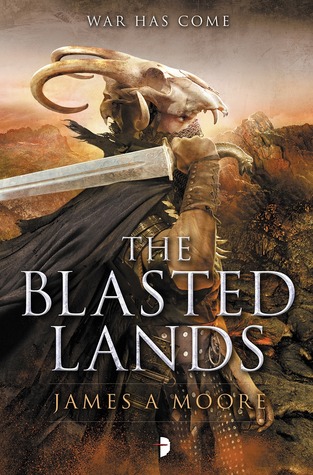
THE BLASTED LANDS by JAMES A. MOORE

theblastedlands

The Blasted Lands by James A. Moore

Genre: Fantasy

Series: Seven Forges #2

Publisher: Angry Robot (June 24, 2014)

Author Information: Website | Twitter

Length: 390 pages

My Rating: 4 out of 5 stars.

The Blasted Lands is that dreaded second book in a series. You know, the one that is suppose to build upon all the good things from the first installment while adding just enough new plots and lore to keep the story fresh but without actually revealing the ending that will come in a book or two. Honestly, writing a second installment in a fantasy series is a hard juggling act for any author, but in my opinion, Mr. Moore not only succeeds with The Blasted Lands but excels at it!

Naturally, the story picks up where Seven Forges ended. Pathra Krous, Emperor of the Fellein Empire is dead, killed by the Sa’ba Taalor, who emerged from the mysterious blasted lands in peace before viciously murdering their host. Now, the task falls to Drash Krohan, First Advisor to the Emperor and legendary sorcerer, to pick a capable ruler to replace Pathra. While this is always a trying task for the wizard, it is more imperative than ever, because the Sa’ba Taalor of the Seven Forges are coming!

Some few in Fellein try to deny the inevitability of the coming war. More than a few of the royal family wish to ignore it all together as they fight over the throne, but Drash Krohan will not tolerate any such foolishness, for he recognizes the truth. Perhaps the armies of Sa’ba Taalor will not be in Fellein in a week or a month, but without a doubt, soon the blasted lands will be crawling with them, as they come to destroy the Empire. And while General Merros Dulver seems to have the correct qualities to lead Fellein’s armies, Drash isn’t so sure that all the soldiers of the Empire will be enough to hold back the strange, grey skinned people of the Seven Forges. For, you see, the Sa’ba Taalor are a unique breed of humans, almost otherworldly in their greater strength, endurance, and reflexes and more gifted in killing than even the finest Fellein warriors. Reared in their isolated valleys, these people are an unknown quantity, devoted to their living gods and more than willing to destroy anyone or anything that stands in the way of their plans. And therein lies Drash Krohan’s most pressing task: discovering just who and what the Sa’ba Taalor really are and why they wish to destroy Fellein!

From this beginning, the story develops along multiple lines as Mr. Moore seamlessly shifts from Drash Krohan and General Dulver frantically trying to plan for the inevitable war to Andover Lashk, Fellein ambassador to the Seven Forges, living among the Sa’ba Taalor themselves. One chapter will follow Drash Krohan’s “Sisters” gathering information across the world while the next will focus on a secret expedition to the mysterious Mounds in the Blasted Lands. And inevitable, every few chapters, the mysterious Pilgrim will make an appearance, referring to the old gods awakening and his own shadowy mission; a mission that is somehow tied to the re-emergence of the Sa’ba Taalor into the world.
17671897
Without a doubt, in The Blasted Lands, Mr. Moore has woven an interesting story that not only side steps the second book letdown but is, in my opinion, even better than the first. Where Seven Forges teased a reader with the Sa’ba Taalor and their strange land, The Blasted Lands goes a long way toward fulfilling their promise, revealing much more about their culture and history as well as hinting at the origin of the waste lands themselves. And while the Sa’ba Taalor are still the stars of this show, Mr. Moore has also deftly turned the Fellein characters into more than cardboard scenery for his master race, as Drash Krohan, General Dulver and Andover Lashk shine in their own special ways. All in all, this novel was a great read, and this series is definitely one to watch for any true fantasy aficionado.

I received this book from Netgalley and Angry Robot in exchange for a fair and honest review. I’d like to thank both of them for allowing me to receive this review copy and inform everyone that the review you have read is my opinion alone.

Purchase this book over at Amazon.

BE SURE TO CHECK OUT MY REVIEWS OF THE SEVEN FORGES SERIES
SEVEN FORGES (PART 1)

Posted in Fantasy, High, Sword and Sorcery | Tagged , , , , , , , , | 15 Comments

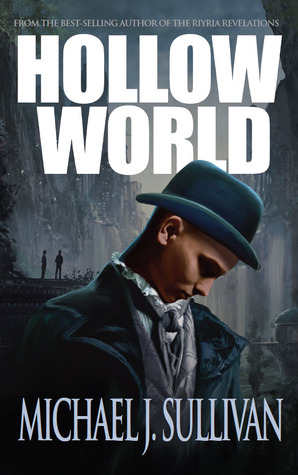
HOLLOW WORLD by MICHAEL J. SULLIVAN

hollowworld

Hollow World by Michael J. Sullivan

Genre: Science Fiction

Series: Standalone Novel

Publisher: Tachyon Publications (April 15, 2014)

Length: 371 pages

Author Information: Website | Twitter

My Rating: 2 out of 5 stars.

Hollow World was a novel that I was really excited about reading. I mean, one of my favorite fantasy authors, Michael J Sullivan, penned it, and it promised to be a science fiction novel in the mold of H.G. Wells classic The Time Machine, which is one of my childhood favorites. So, all the stars seemed to be lined up for me to thoroughly enjoy this one. Unfortunately, the novel and I quickly took a dislike to one another, and while I did finish it, I cannot say that I enjoyed the experience.

The plot of this novel centers on one Ellis Rogers: an ordinary guy who seems to have a good life. He is married, has a comfortable job, and even has a best friend named Warren, who has been along for life’s rocky road since high school. But though everything seems great with Ellis’ world from the outside, things are not so rosy within. First, he and his wife hardly have anything to do with one another anymore. (Years before, their only child committed suicide and that loss was so devastating that it has become a wedge holding them apart.) Second, Ellis has just discovered that he has a terminal illness and that he has only six months to live!

In a situation similar to Ellis, most people would be paralyzed with fear by this diagnosis and struggle with what to do with their short time remaining. Should they submit to grueling medical treatments that have little hope of saving their life? Maybe, head off to finally complete all those childhood adventure that are on their bucket list? Or perhaps, they would just patch things up with their loved ones? However, Ellis doesn’t go through all these myriad emotional choices, because as soon as he gets the diagnosis he knows exactly what he intends to do: fire up the time machine in his garage and head off into the future!

Sure, there are drawbacks to Ellis’ plan. I mean, he doesn’t know if the time machine will actually work, and even if it does work, it is a one way trip. Plus, he has no idea what he will find in the future. But even knowing all that, Ellis doesn’t see any reason not to give it a try. So without a word of goodbye to his wife, our middle aged adventurer heads off into the future to find a cure and begin his new life!

As he speeds off into the unknown, Ellis has his own perception of what the future will be like. Flying cars, robots, and all those other Jetson-esque things, most likely. But what he finds is something so different that it shocks his “modern” twenty-first century sensibilities.

Before our cure-seeking hero can get a grip on how different the world is, however, he finds himself stumbling into the middle of a murder. Something that is unheard of in this peaceful world. Quickly, he is drawn into the investigation, as he is the only person qualified for the job, since he is the only person alive who has ever experienced a murder – even if his experience was through murder mystery novels.

Once the investigation begins, it quickly leads to an unexpected place and an unexpected person, and Ellis is forced to make a choice about whether this human utopia should be saved or destroyed. A decision that requires him to make a judgment on whether the new, non-traditional Earth and its values are good or bad!

After reading that description, I am sure this novel sounds very interesting to many of you, and no doubt, a few of you might wonder how I could have given it only two stars. In response, I must admit that I wanted to love this book, and as I finished the first few chapters, I tried very hard to convince myself that this was going to be another of Mr. Sullivan’s enjoyable rides. However, the simple fact is that Hollow World was just not for me.

To expound why I did not love this novel, let me establish something up front: I really, really do not like stories that are political in nature or preachy about social issues. Whether that is a religious novel disguising itself as a fantasy tale or a social activist work that markets itself as an adventure story, I am just instantly turned off by morality plays. Sure, they were fine when I was a teenager, but now I really do not enjoy them. The simple fact of the matter is that I read for escapism reasons: I want to be transported away from the present world with all its modern sensibilities and endless debate regarding political and social issues and experience for a few hours something new and wondrous that causes the present to fade away. So obviously, my destination of choice is not going to be a future Earth where classic religious beliefs and modern sensibilities clash to see which is more palatable and correct.

In summation, Hollow World is Mr. Sullivan’s time machine social commentary. It extrapolates on what heaven is, what is god, how can mankind create utopia, and what forms do love come in. Whether that type of story will be to your liking is based upon your personal reading tastes and whether you enjoy modern, morality play. If, however, you are searching for a grand adventure tale or an escapist vehicle, this one is probably not for you.

I received this book from Netgalley and the publisher in exchange for a fair and honest review. I’d like to thank both of them for allowing me to receive this review copy and inform everyone that the review you have read is my opinion alone.

Purchase this book over at Amazon.

Posted in 2 Stars, Science Fiction, Soft, Time Travel | Tagged , , , , , , | 2 Comments

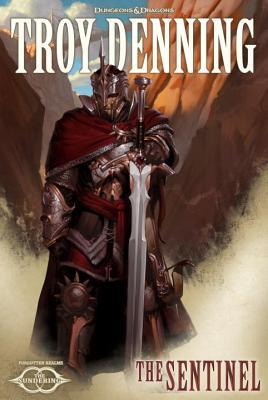
THE SENTINEL by TROY DENNING

thesentinel
My rating is 3 out of 5 stars.

The Sentinel is part five of The Sundering, which, of course, is a six part series following the separation of the worlds Abeir and Toril. While there are non-divine events transpiring around the world, most everything seems to be tied to the gods battling each other for worldwide supremacy. Thus, the Great Rain, falling earthmotes, magical fluctuations, and changes to the continents’ surfaces somehow point back to some god or goddess attempting to expand their power spheres. These divine beings do not dirty their hands doing all these things on the mortal sphere, however, but exert their will through certain mortals called “Chosen”, who in return for divine power allow their godly mentors to pull their strings. And in The Sentinel, Troy Denning presents the quest of four such “Chosen.”

The story erupts out of the gate, immediately thrusting a reader into the action, as watchman Kleef (sworn to Helm, god of duty) finds himself caught up in the evacuation of the Cormyr city of Marsember as the Shadovar (shadow-infused beings from Netheril) advance upon it. However, quickly, our brave watchmen finds himself defending two strangers from shadovar attack; these strangers being Joelle (Chosen of Sune, goddess of love) and Malik (Chosen of Cyric, god of strife and lies), who later are revealed to have stolen the Eye of Gruumsh (relic of the Orc god) and are on a quest from Sune to deliver this token to the underground temple of an Earth Primordial. (The convoluted theory being that by doing this they will foil yet another plot by Shar, goddess of night and oblivion, to take over the world of Toril.) Naturally, the orcs are also after Joelle and Malik, and before too long, Kleef is drawn into this quest as is a young noble woman of Marsember named Lady Arietta (a presumed Chosen of Siamorphe, goddess of nobility and rulership), who initially has personal reasons for wanting to help.

From this intriguing beginning, the story bogs down into a cookie cutter quest adventure that soon bores more than it inspires. Sure, there are fights galore here, but even those fixture of great Forgotten Realms tales seem somewhat bland and lifeless. The simple fact is the flaws in The Sentinel overshadowed its strengths, which is disappointing but nonetheless true. Let me explain.

This tale is driven by four main characters, who are immensely different from one another. This usually means lots of group friction and interesting interactions, which allows the author to delve into the character’s background, personal beliefs and outlook on life and gradually evolve the individuals through personal growth. Here, however, our four companions’ never progress past the point of mimicking their Chosen god or goddess’ personality. Kleef is the dutiful follower of a dead god, always doing the “honorable” thing; Arietta is the noblewoman mimicking the nobility of her patron goddess and never growing beyond being confused about her role in the world; Joelle constantly is using her goddess given powers to charm everyone into a ridiculous caricature of “love”; and Malik is a consummate liar and creator of discord, just like his patron god. Each of these four constantly make the same decisions throughout the story; decisions that quickly become repetitive and boring.

Even with the four heroes being somewhat uninspiring, the story might have been livened up by a good villain or two, but unfortunately, The Sentinel is devoid of those. There is no ominous Nazghul or even a fearsome group of insidious beings like the drow of R.A. Salvatore’s Companions novels. Instead, Mr. Denning has a few cookie cutter enemies, who don’t really bring fear or interest, for that matter.

Lastly, unlike other novels in this series, The Sentinel really suffered from not delving into the details of what the hell is actually happening in the Sundering. Sure, all the books in the series have used the event as a backdrop to the individual tales, but in the other novels, the Sundering was just a peripheral issue to the actual story. Here, the whole quest of Joelle, Malik, Kleef, and Arietta’s quest is to help their gods keep Shar from somehow taking over the world, but the how, why, and what might happen if they fail is so vaguely outlined that a reader wonders why they should even care at all whether the foursome succeeds or fails.

All in all, The Sentinel is a decent adventure novel that is mildly enjoyable. If you are a huge Forgotten Realms fan, it is definitely good enough to waste a few hours, enjoying the setting and atmosphere. If you are not a huge fan of the Forgotten Realms setting, however, then this one might be something that you would want to skip.

I received this book from Netgalley and the publisher in exchange for a fair and honest review. I’d like to thank both of them for allowing me to receive this review copy and inform everyone that the review you have read is my opinion alone.

Purchase this novel over at Amazon.

CHECK OUT MY REVIEWS OF THE SUNDERING SERIES
THE COMPANIONS (THE SUNDERING #1)
THE GODBORN (THE SUNDERING #2)
THE ADVERSARY (THE SUNDERING #3)
THE REAVER (THE SUNDERING #4)
THE HERALD (THE SUNDERING #6)

Posted in Fantasy, Forgotten Realms, High | Tagged , , , , , , | 5 Comments

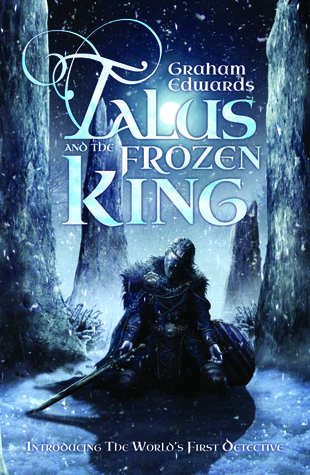
TALUS and the FROZEN KING by GRAHAM EDWARDS

talusandthefrozenking
My rating is 3 out of 5 stars.

Talus and the Frozen King is a good old-fashioned murder mystery set in the Neolithic Age. It is a short novel, written in a simple, straight forward style where every word counts for something, and if it reminds you of a traditional mystery in the vein of Sherlock Holmes, you are not alone, since that seems to be a consensus of most reviews. However, where that similarity might be a negative for some novels, Graham Edwards does a good job of using the historical setting to make this more than just another mystery novel.

The story itself takes place on the small island of Creyak, where King Hashath is found dead and frozen in the village commons on the very same morning that two wanders appear in town. Naturally, these two strangers are our protagonists throughout the book: Sherlock Holmes and Watson – holmes-and-watsonsorry, I mean, Talus the bard and Bran the fisherman. These two immediately are suspected in the bizarre fate of the island’s ruler, but Talus – ever quick-witted, silver-tongued, and gifted with an eye toward solving riddles – convinces the king’s eldest son and heir to allow him to undertake an investigation into the identity of the real murderer.

No mystery is ever simple, however, and neither is the king’s strange demise in this peaceful locale. Soon, Talus and Bran find themselves delving into the strange world of isolated Creyak and its island people. Old enemies of the king materialize. Family secrets rear their ugly heads into the light of day. And very quickly, all clues begin to point toward one of the king’s own sons being the killer. A situation that promises nothing but imminent danger and possible death for Talus and Bran!

All in all, Mr. Edwards delivered a very enjoyable murder mystery with Talus and the Frozen King. It is a fast paced, intense whodunit mystery that starts out slowly but gains steam as Talus and Bran grow closer to the big revelation of the true murderer of Creyak’s king. While it has little, if any, fantasy elements that I could personally see, it is still well worth a quick read by any book lover!

I received this book from Netgalley and the publisher in exchange for a fair and honest review. I’d like to thank both of them for allowing me to receive this review copy and inform everyone that the review you have read is my opinion alone.

Purchase this novel over at Amazon.

Posted in Fantasy, Low | Tagged , , | 4 Comments

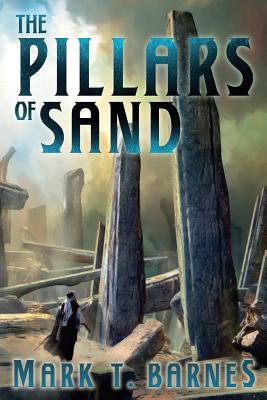
THE PILLARS OF SAND (PART 3 OF ECHOES OF EMPIRE) by MARK T. BARNES

THEPILLARSOFSAND
My rating is 4 out of 5 stars.

The Pillars of Sand is a fitting ending to the Echoes of Empire fantasy series. It is filled with intense action, revelations of ancient secrets, and the continued development of one of the most interesting and fully developed fantasy worlds on the shelves today. If you are a fantasy aficionado who adores world building, voluminous lore and ancient history, then you will be hooked on Echoes of Empire from the first chapter of book one, and very quickly, Mark T. Barnes will become one of your must read authors.

As for the story in Pillars, it continues to explore the political and social upheaval of the Shrīanese Federation, as Corajidin leads his land down a road to recover its ancient greatness at any price. Standing against him are his own daughter Mari, warrior-poet of renown, and Dragon-Eyed Indris. These two are now lovers but have been torn apart by circumstances and are forced to walk different roads – even though those roads are not theirs by choice and might not lead them back together. And as these three people’s story progress, the very future of Shrīan and the world itself begin to subtly take shape before a reader’s eyes.

The hero of this tale is, without a doubt, Indris. He is the mysterious sorcerer, whose power is only rivaled by his absolute dedication to not acquiring too much of it. For Indris has learned wisdom during his troubled life, and that wisdom teaches him too much power leads one to become addicted to it, wanting more and more until eventually you are the tyrant that you once abhorred. A fate that Indris realizes he is not immune from. So while he is forced by circumstances to travel down paths to acquire power, Indris fears to embrace it, ever struggling to find the correct balance between what he must have to save his nation and what other people are trying to force him to take in order to fulfill their own selfish and mysterious designs.

Standing directly opposite the decency of Indris Dragon-Eyed is the vile evilness as represented by Corajidin. Throughout the series, Mr. Barnes has showed this powerful ruler slipping into insanity, forging pacts with evil beyond his conception, and doing horrid deeds to fulfill his destiny and bring greatness to his people. However, Corajidin has also become a three dimensional character, waxing sentimental about his love for family one minute before committing his next horrendous act the next. Few villains in fantasy have as many well intentioned reasons for their actions as Corajidin, and fewer still have as well developed humanity as he does. And Mr. Barnes does an excellent job of not just telling his readers this but showing them, as Corajidin casts aside his own honor to save his son, is willing to pay any price to aid his wife, and then looks the other way to help aid his beloved daughter Mari. When coupled with the revelation that Corajidin’s descent into insanity was not an accident, I found myself almost feeling sorry for this villain, wishing that fate had allowed Corajidin to be the decent person that he could have been in a different life.

As for Corajidin’s beloved daughter, Mari, she starts out this book by reaching her full potential as a kick-ass character. Throughout the series, Mari has fallen in love with Indris, tried to juggle both her personal convictions and her devotion to her family, and attempted to find a way to save her father and brother from their ambitions and sever their pacts with evil beings, but in this book, her circumstances have finally forced her to accept the fact that she is a woman on her own. Her family has abandoned her. Indris has been taken from her. She is a woman confined to the camp of her enemies, and only she can save herself. So Mari must forge her own destiny; a destiny which she has determined is to stop her family and its shadowy allies from destroying Shrīan, no matter the cost! So while her love for Indris remains and her desire to find him again is still paramount, it is past time that she assumed the mantle of true warrior-poet!

Before I read The Pillars of Sand, I was desperate to discover what happened next in Mr. Barnes intriguing trilogy, and this story did not let me down. It roared out the gate at full speed, delivering twists and turns that I had not expected. At the halfway point, I could hardly put my e-reader down for fear of missing something. Unfortunately, around the halfway point, the story slowed down considerably. The plot continued to progress, but the pace began to crawl somewhat. Thankfully, the mid-book swoon did not continue for long, for soon Indris, Mari, and Corajidin’s stories converged and merged into a satisfactory ending that tied up many of the loose ends in this trilogy and surprised me in many ways. (Okay, some of it was surprising and some of it wasn’t.) However, what this ending did a spectacular job of doing was setting up the next series of books about Indris and Mari. I mean, Mr. Barnes is already working on the sequel, right?

So if you love epic fantasy and have not tried out this series, you need to pick up The Garden of Stones and give Echoes of Empire a try, because this is a series that is only going to get better and better as Mr. Barnes expands upon it.

I received this book from Netgalley and the publisher in exchange for a fair and honest review. I’d like to thank both of them for allowing me to receive this review copy and inform everyone that the review you have read is my opinion alone.

Purchase this novel at Amazon.

BE SURE TO CHECK OUT MY OTHER REVIEWS OF THIS SERIES
THE GARDEN OF STONES
THE OBSIDIAN HEART

MARK T BARNES INTERVIEWS AND GUEST POSTS
ANNE CHARNOCK
SUZANNE CHURCH
THE SCIFI SHOW

UPCOMING4

Posted in Epic, Fantasy, High, Sword and Sorcery | Tagged , , , , , , , | 10 Comments