FAITH AND MOONLIGHT PART II

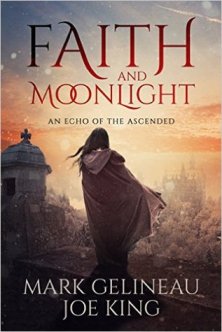
faith and moonlightFaith and Moonlight Part II by                                             Mark Gelineau Joe King

Genre: Fantasy

Series: Faith and Moonlight #2

Publisher: Self Published (May 15, 2016)

Author Information: Website | Twitter

Length: 58 pages

My Rating: 4 stars

Choices!  Life is a continual string of them.  Each one changing or reaffirming our course through the years.  And many times, the ultimate consequences of a single choice is not immediate apparent.  Good or bad spiraling out unseen from a decision until our whole life is affected by it, people around us are affected, and, perhaps, even the larger world.  And that dynamic is what drives this second installment of Faith and Moonlight.

For those who have not yet read Part I, Kay and Roan’s tale began with them setting off from their orphanage to find a new home in the wide world.  Their youthful dream of becoming Razors (the magical warriors of their world) leading them to the School for Razors in the capital city, where they are granted entry on a temporary basis.  Thirty days all they have to prove their worth to remain.  Roan pledging to Kay (and himself) that he will aid her in finding her innate talent or they will leave the Schools together.  The inevitable struggles they encounter leading to an ultimate choice by Kay, one which will change everything.

Now, time has passed.  Roan and Kay are established members of the Razor Schools.  Roan has advanced quickly, gaining entry into the elite “Royals” who dominate the upper echelon of the student ranking ladders.  Kay has also steadily improved (though not at her friends pace), making new friends of her own, and feeling abandoned by Roan, as his well-intentioned plan to use the brash, bullying Royals to propel him to a higher position steadily drives a wedge between them.  (In Roan’s defense, he tells himself he is doing all this so he can take care of himself and Kay.)  And as the close friends drift further and further apart, the ominous consequences of Kay’s choice grows worse, foreshadowing misery and shame to come.

Wow!  That was my feeling as I finished this wildly entertaining installment in Gelineau and King’s Echoes of the Ascended series.  Faith and Moonlight a Harry Potter-esque story of a school for magical warriors which quickly morphed  from a straight ahead fantasy into a suspenseful tale filled with loads of memorable characters.  The authors slowly but surely sculpting each and every person into living, breathing individuals with strengths and weaknesses, hopes and dreams, flaws and blessings.  Certainly, there is a strong young adult leaning to their behavior, but it perfectly fits the age of these characters, their personal situations, and the competitive atmosphere surrounding them.  The rapid changes in friendships and adversaries as well as goals perfectly capturing this time of their lives, where they are not only transitioning into adulthood but also attempting to rise above their peers.

But should you invest your previous reading time in this series?

Absolutely!  I give this and the other Echoes of the Ascended series (A Reaper of StoneRend the DarkBest Left in the Shadows) my highest recommendations.  Gelineau and King’s stories exhibiting the essential essence of classic fantasy: optimism and realism, laughter and tears, adventure and contemplation, mysteries and revelations.  Faith and Moonlight itself an amazingly addictive read, one which keeps getting better and better with each installment.  And I would encourage all lovers of entertaining fantasy to jump on this bandwagon, because it is going to be a fun ride to the finish.

I received this book from the authors in exchange for a fair and honest review. I’d like to thank them for allowing me to receive this review copy and inform everyone that the review you have read is my opinion alone.

Purchase the book at Amazon.

Posted in 4 Stars, Fantasy, Short Stories | Tagged , , , , , , , , | Leave a comment

FUN DAY MONDAY, OR THE BOOKS THAT WILL HELP ME SURVIVE THE WEEK AHEAD (MAY 16, 2016)

funday-monday

The work week begins. I quickly slip into my business suit and head back into the office to save a few innocent people. But while I try to fool myself into being excited about the grind, deep down, I’m not, so I’m going to escape dreary reality by reading some great books.

Yeah, I’m still working on some other books, but this week I’m going to sit down and get some serious reading done . . . I hope.  🙂

border

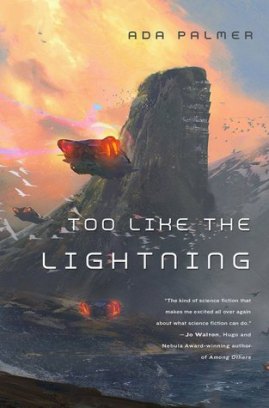
too like the lightningToo Like the Lightning by Ada Palmer

Genre: Science Fiction

Series: Terra Ignota #1 

Publisher: Tor Books (May 10, 2016)

Author Information: Website | Twitter

Length: 432 pages

Mycroft Canner is a convict. For his crimes he is required, as is the custom of the 25th century, to wander the world being as useful as he can to all he meets. Carlyle Foster is a sensayer–a spiritual counselor in a world that has outlawed the public practice of religion, but which also knows that the inner lives of humans cannot be wished away.

The world into which Mycroft and Carlyle have been born is as strange to our 21st-century eyes as ours would be to a native of the 1500s. It is a hard-won utopia built on technologically-generated abundance, and also on complex and mandatory systems of labeling all public writing and speech. What seem to us normal gender distinctions are now distinctly taboo in most social situations. And most of the world’s population is affiliated with globe-girdling clans of the like-minded, whose endless economic and cultural competition is carefully managed by central planners of inestimable subtlety. To us it seems like a mad combination of heaven and hell. To them, it seems like normal life.

And in this world, Mycroft and Carlyle have stumbled on the wild card that may destabilize the system: the boy Bridger, who can effortlessly make his wishes come true. Who can, it would seem, bring inanimate objects to life…

Perfect for fans of Jo Walton, Robert Charles Wilson and Kim Stanley Robinson, Too Like The Lightning is a refreshing change of pace from the current trend of gritty, dystopian novels. Much like Homer telling of heroic deeds and wine dark seas, Mycroft Canner’s narration will draw you into the world of Terra Ignota—a world simmering with gender politics and religious fervor just beneath the surface, on the brink of revolutionary change.

Purchase the book at Amazon.

Posted in Funday Monday | Tagged , , , , , , , | 2 Comments

CAMBER OF CULDI

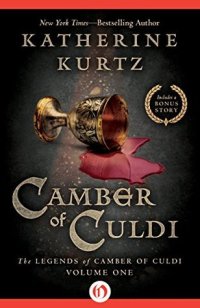
camber of culdi open roadCamber of Culdi by Katherine Kurtz

Genre: Fantasy

Series: The Legends of Camber of Culdi #1  

Publisher: Open Road Media  (March 8, 2016)

Author Information: Website  

Length:  314 pages

My Rating: 3 stars

Camber of Culdi was originally published in 1976, following on the heels of the thrilling exploits of the young King Kelson Haldane in The Chronicles of the Deryni trilogy. In Deryni chronologically terms, however, this novel is the oldest, going back in time to shed light on the mysterious Saint Camber, who is reviled and revered in equal measure by the populous of the Kingdom of Gwynedd in Kelson’s time.  And here readers come face-to-face with this Deryni legend.

The ruler of Gweynedd at this time in Camber’s life is the young Imre; his ancestor Festil I, the Conqueror, having brutally overthrown the human kings centuries before, seizing power for the Deryni race.  These very human-like people living along side the population, normal in every way except in their extraordinary mental powers which are rumored to be magic.  And while the Deryni overlordship of the land has not been all bad, it has taken a decidedly downward turn upon the ascension of Imre, who is a horrible racist (He views humans as nothing more than livestock to be worked, taxed, and killed as needed.) and more than a little insane.  These qualities having caused Camber MacRorie, Earl of Culdi, to retire from court; his duties to the crown passed to his eldest son, Cathan, who has been fast friends with Imre since childhood.

This self-imposed retirement of the Earl seems to be for the best.  The quiet life suiting him, allowing Camber to spend his days on ecclesiastical and historical study as well as family time: his daughter Evaine mainly, though he is close with his sons Cathan and Joram too.  The greater goings-on of the kingdom still of interest to him, but his belief that younger men should guide the king into more prudent rulership.  But then two events occur simultaneously: Imre decreeing that innocent humans must die in punishment for the murder of a Deryni, and an elderly human on his deathbed passing along a deadly secret to Camber’s son-in-law Rhys Thuryn.  These unrelated events setting off a chain reaction which forces Camber of Culdi to contemplate betraying his ruling monarch and, perhaps, the Deryni race itself!

Having read this (and the other Deryni novels) as a teenager growing up in the 1980s, picking up Camber of Culdi again after all these years was both a welcome return to a childhood haunt and a trepidatious homecoming  for an older, more cynical me.  And, after finishing my re-read, I have to admit being both pleased and disappointed with the novel, though I definitely feel more of the former rather than the latter.

On the pleased side, I have to point to the wonderful world of the Deryni, which I still found as engrossing and as entertaining as it was decades ago.  This fantasy version of medieval Europe filled with royal houses, political machinations, and the unique Deryni.  What set it apart from other series is Katherine Kurtz’s wholesale inclusion of the Catholic Church in her story; medieval Christianity fully in place with Jesus Christ having died on the cross, his followers having spread across the world, monasteries and militant orders dotting the landscape, and the learned quoting Latin Psalms.  This inclusion of religion allowing the author to capture the true nature of this historical setting, to show the clash of secular and religious powers, and to juxtapose the dual nature of devotedly religious people committing horrible deeds in the name of secular power.

On the disappointed side, I have to acknowledge this group of characters were a bit of a letdown for me (though, to be completely honest, I never loved them as much as I did Kelson, Morgan, and company).  Camber always seemed more a saint than a real person.  His children Cathan, Joram, and Evaine (as well as other confidantes like Rhys) had brief flashes of personality, but never received a real opportunity to grow into anyone truly special.  King Imre and other “bad guys” were penned as fairly one dimensional creatures, easily labeled as the “insane tyrant”, “the “evil temptress”, or the “scheming liar.”  And there was a complete absence of female main characters, though that might be a result of the time period when the book was first published more than anything else.

Overall, Camber of Culdi is a fine fantasy read filled with political scheming, dynastic intrigue, and a touch of magic, set in a wonderfully developed faux-medieval Europe with a fully realized Catholic Church.  For longtime lovers of the Deryni novels, it will be a joyful return to a familiar home, replete with iconic characters and an easily followed tale told in Katherine Kurtz memorable style.  To those new to the series, I would encourage them to read the first trilogy, The Chronicles of the Deryni, before delving in here, because the revelations in this book could ruin very important plot elements there.

I received this book from the publisher in exchange for a fair and honest review. I’d like to thank them for allowing me to receive this review copy and inform everyone that the review you have read is my opinion alone.

Purchase the book at Amazon.

Posted in 3 Stars, Epic, Fantasy, Low | Tagged , , , , , , | 3 Comments

TOP 5 WEDNESDAY: Characters You Are Most Like

top5

Today, the guys in the Goodreads Top 5 Wednesday group had a great topic: Characters You Are Most Like.  The only catch that you have to be honest and choose characters you are like, not characters you WANT to be like. You can also choose one character trait you share with a particular character.

border

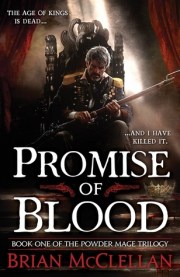
promise of blood5. TANIEL TWO-SHOT

Taniel is a Captain in the Adran Army and an accomplished Powder Mage. He is also the son of Field Marshal Tamas, and he clearly exhibits my “daddy issues.”  The very ingrained belief that my father does not respect me or value me as much as I deserve.  While this isn’t quite as big a deal as it was when I was growing up, I still find myself struggling from time to time living up to the formidable shadow which my father still casts.  Not saying my dad is a Field Marshall who has overthrown the ruling king or anything, but in his way, he set a high standard. Thankfully, though, I’ve dealt with mine better than this guy does.


saint's blood4. FALCIO

This swashbuckling hero of the Greatcoats series is the idealistic sort who has spent his life wanting to stick it to the corrupt “man” and bring justice to the little people whom he represents.  Character traits which I have always had, so much so it led me to become a criminal defense lawyer to protect the “little guys” from the terrible persecution of the legal system.  Even after all these years and the cynicism it breeds, I still think I have the idealistic nature of Falcio in me somewhere.


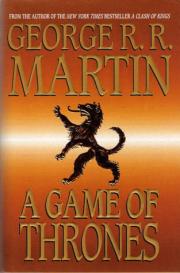
A GAME OF THRONES3. EDDARD STARK

Honorable.  Isn’t that the term which perfectly describes old Ned.  To me, it probably is right up there with family man and a few other things.  And I’ve always been told I’m honorable to a fault — even when it winds up biting me in the ass.  You know, I’m the one who doesn’t want to cheat at the game because it just isn’t fair to do so.  The guy who tries terribly hard to do all the right things because I want my family to have a better life than me.  All that kind of honorable stuff.  Yeah, it works for me about as well as it worked for Eddard.


lord of the rings2. ARAGORN

No, I’m not saying Aragorn and I share the trait of great bravery or whatever.  Nope, I’m referring to this guy’s movie persona where he makes it very clear he doesn’t desire to be king and carry all that responsibility and expectations on his shoulders.  Personally, I’ve always been the same way.  When I was younger I ran from all responsibilities.  Anything which was going to require me to “grow-up” was steadfastly avoided.  That is until I held my oldest child for the first time, at which point it came crashing down on me that now I had to carry that responsibility because he deserved only my very best.


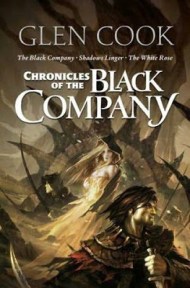
Chronicles of the Black Company1.  CROAKER 

Middle-aged.  Grumpy.  Lover of history.  Former romantic who is now a cynic.  Smart ass.  Sees the world for what it is.  Damn, this guys sounds exactly like me.  We have so many traits in common that I can’t really list them all.  And, yeah, I also married a brunettes in leather with bad attitudes.


Posted in Top Five Wednesday | Tagged , , , , , , , , , , , , | 5 Comments

TEASER TUESDAY

teasertuesday1

Teaser Tuesday is a meme held over at Books and a Beat.

To participate, all you have to do is:

• Grab your current read

• Open to a random page

• Share two (2) “teaser” sentences from somewhere on that page

• BE CAREFUL NOT TO INCLUDE SPOILERS! (make sure that what you share doesn’t give too much away! You don’t want to ruin the book for others!)

• Share the title & author, too, so that other Teaser Tuesday participants can add the book to their TBR Lists if they like your teasers!

bordersaint's blood

Saint’s Blood by Sebastien de Castell

Genre: Fantasy

Series: Greatcoats #3

Publisher: Jo Fletcher Books (April 7, 2016)

Author Information: Website | Twitter

Length: 576 pages

On the morning of your first duel, an unusually attractive herald will arrive at your door bearing a sealed note and an encouraging smile.  You should trust neither the note nor the smile.  Duelling courts long ago figured out that first-time defendants are less prone to running away if it means embarrassing themselves in front of beautiful strangers.  The practice might seem deceptive, even insulting, but just remember that you are the idiot who agreed to fight a duel.

Purchase the book at Amazon.

Posted in Teaser Tuesday | Tagged , , , , , , | 2 Comments

FUN DAY MONDAY, OR THE BOOKS THAT WILL HELP ME SURVIVE THE WEEK AHEAD (MAY 9, 2016)

funday-monday

The work week begins. I quickly slip into my business suit and head back into the office to save a few innocent people. But while I try to fool myself into being excited about the grind, deep down, I’m not, so I’m going to escape dreary reality by reading some great books.

As always, I am behind on my reading from last week, but I fully intend to remedy that and get back on track with a new book I’ve been wanting to read for a while now.

border

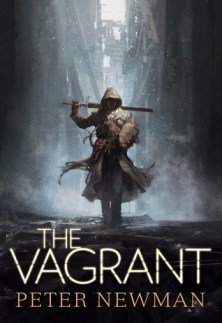
the vagrantThe Vagrant by Peter Newman

Genre: Post-Apocalyptic / Fantasy

Series: The Vagrant #1  

Publisher:  Harper Voyager (May 1, 2015)

Author Information: Website | Twitter

Length:  400 pages

The Vagrant is his name. He has no other. Friendless and alone he walks across a desolate, war-torn landscape, carrying nothing but a kit-bag, a legendary sword and a baby. His purpose is to reach the Shining City, last bastion of the human race, and deliver the sword, the only weapon that may make a difference in the ongoing war. But the Shining City is far away and the world is a very dangerous place.

Purchase the book at Amazon.

Posted in Funday Monday | Tagged , , | 5 Comments

GUEST POST & GIVEAWAY: LUKE TAYLOR

authorspotlight


Last week, I was honored to interview Luke Taylor and review his new fantasy novel, The Muiread, and today, he has been nice enough to return with a guest post as well as a giveaway.  So without further talking by me, let’s get to the post.

border

ON FILMING THE MUIREAD:

DEREK CIANFRANCE AND WRITING FROM VISUAL PERSPECTIVE AND DISTANCE

The very first scene for The Muiread came to me in a dream. It was only a flash, but it was enough to get me on the right path. I was on a horse, following a woman with fiery red hair, also riding on a horse just in front of me, and we were surrounded by these massive sloping walls of emerald green. The horse had this easy, ambling pace, as if it hadn’t a care in the world. And the woman’s face, well, I couldn’t quite see it, but I knew she was a fair Highland beauty if there ever was one.

That was it.

But in that, I caught the truest essence of what The Muiread was to be to me, and hopefully to the readers, and that was, a physically immersive experience, both through lyrical and poetic prose and visceral nose to nose visuals.

You see, I was in this other world that felt so real, but it was only enough of it to whet my appetite. There was nothing whimsical, imaginitive, fantastical, or magical about it. It was real. I was in it.

Let me preface this piece by saying that I write visually, first and foremost. My imagination is a movie screen and I’m only describing the movie I’ve seen and am always trying to put it into words. I cast these “movies” with the appropriate actors (I can always get who I want!) and I pick the appropriate directoral style and location for the “film”.

the muiread 2.0For The Muiread, the only one that I’d seen capture such a visceral, tangible cinematic experience was Derek Cianfrance (Blue Valentine, The Place Beyond The Pines) and if you watch the very first sequence of The Place Beyond The Pines, and watch the camera voyeuristically following Ryan Gosling’s stunt biker (strangely enough, named Luke) through a night carnival, you’ll understand what I mean. Your world-building is done in a minute flat and it’s so incredibly dense and fascinating and interesting and dangerous and mundane and colorful and confusing as our own world, because it is. There’s almost too much to take in so you just accept it all. Electric blue cotton candy and metal band t-shirts, trinket kiosks and parents frustrated to wait in line with their children. It’s all a blur, because of Cianfrance’ magnetic focus upon Gosling, but it’s there, too deep and perfect to comprehend the intricacies of so we just accept it in our senses like a taste or a texture. And each and every detail carries its own story, but we have to focus on the one that we’re moving with, back to front, shoulder to shoulder, the one we’re following around like a stalker.

Cianfrance’ filming style is to artistically put the audience in the same room as couples arguing, letting them smell the cigarette smoke as it drifts toward the unblinking eyes of the lens. They curse, they spit, they say what’s in their heart, and you can’t help but listen. A character wears the same jacket because it’s the only one he has. Every scene carries the uncomfortable freshness of happening right before your eyes, in the moment. No pause button, no retakes. The camera walks in step with the characters and the world around them is as un-Hollywood as the one in which we live ourselves.

I hope you can understand why I wanted this style and viewpoint for mythic/archaic epic fantasy.

And capturing this raw and grainy verve is all a matter of distance.

Most epic fantasy has a very broad and polished feel to it, soaring with great big budgets and loads of faces you can’t remember and names you can barely pronounce. If you watch Peter Jackson’s The Lord of The Rings (you probably shouldn’t be reading this if you haven’t) then you’ll remember a great many gratuitous helicopter shots of the stunning mountain ranges of New Zealand and the CGI-laden roller coaster ride in The Two Towers highlighting the building of the army that would later march against Helms Deep by sweeping down from the ripping up of the trees past all these pulleys and weights down to where the forges were blazing as weapons were being made, orcs and other creatures dotting this layered terrine of destruction like scampering ants. Dizzy and overwhelming, it was brilliant. And the movies just kept getting bigger. This was all necessary to establish how grand an investment Middle Earth is, but that meant constantly adjusting the perspective from a soaring eagle’s eye to plodding Hobbit-height as we go from a battle of thousands to a battle of inner struggles, a battle of thoughts and lies, back up to a parapet wall for a hail of arrows and then down again in the mud with Sam and Gollum arguing about Mr. Frodo. Subliminally, books do this far too much without realizing it, stealing grandeur from something that needs to be huge or removing claustrophobia from something that should make the back of your neck itch just to read it by putting the reader at the wrong distance or perspective. What I wanted was a fixed directoral style that put you shoulder to shoulder with the characters, no way to leave, so you got mud in your face when they did, and you felt overwhelmed when the earth shook and mythic beasts that’d been chained up in the depths of the earth for Ages tore from a chasm in the ground to take to the sky.

I’d like to share a few portions of early reviews of The Muiread, collected from Goodreads.

It’s a book that doesn’t follow the typical style of more modern fantasy novels, instead it focuses on giving the readers a story they’ll never forget. If you’re looking for something you can read by the fireplace this winter, that’ll let you escape reality briefly to Dunheath’s dusty scenery and to the smell of beeswax candles and baked bread, to visions of magnificent stallions and characters so real that you’ll feel like you’re reuniting with old friends, then pick up a copy of The Muiread.

Author Luke Taylor is a vivid writer and his scenery is crisp, raw and makes the reader feel as if they are riding along through ravaged lands or dark woods at full speed on a stallion alongside the characters. Taylor constructs kingdoms, dialects and unforgettable characters that become real people, heroes and villains alike, instead of just flashy, surface specters with no substance or backstory as in many fantasy novels. With Taylor’s creativity, everything from the dirt to the sky is full of life as The Muiread builds. As the book continues on, the intimacy and intensity grows and Luke Taylor takes careful steps with each sub story and character to keep the momentum flowing.

The descriptions of the world and the characters in it were absolutely magnificent. I had some very vivid images in my mind as I was reading because it was just described so well!

I am very thankful these readers felt what I wanted to give them, that feeling of being there. Thankfully, they let me do that to them, and I’m glad they got what I was trying to do.

And this was all achieved by distance and perspective, established not only by what is described in setting, location, or action, but also in the proximity or distance of smell, and sound.

So, the first scene consists of one character watching another, written in first person. All of The Muiread is written in a poetic manner (which we’ll discuss later) but to get such a clear view into the narrator’s thoughts as he watches this beautiful woman walk around this less than noteworthy village set behind great big shoulders of emerald gives you that the muireaddistance immediately. It’s very personal. No talk of history, just one person looking at another. Take a look at a photograph of nature. Is it taken from a helicopter? Or is it taken by a person standing on the ground? The more photos you look at, the more you’ll notice the difference. It would be elementary to say that your perspective changes the way you see something, and I wanted to make sure never to leave that feet-on-the-ground perspective. Moving on through the story, the slowness and stillness of the pace helps to establish the dominant and uncaringbigness of the setting spreading around the narrator, which I modeled after the Scottish highlands. Nature thrums with a sort of independent carelessness, not giving a damn about anything, just doing whatever it does, and I wanted to just let it be what it is, unflinchingly massive, almost scary it was so big, instead of trying so hard to describe something it wasn’t. I wanted to play on a reader’s natural perception of nature. By writing in first person with the narrator always interacting with characters in close proximity to establish this intimate distance of establishing us (the narrator and whomever he’s with) and them (the giant breadth of the land and all the mystery it holds behind a veil of fog) I was able to populate this cinematic experience at eye level.

As the story goes on, there are some gutsy moments, and I wrote it so the reader almost felt like another member of the party nobody noticed. Just a voyeur, your fate linked to theirs. Some bad stuff happens and it’s up to you to duck and cover or you’re going to die.

Parts 2 and 4 are written in third person, but again, focuses on two women using this elbow to elbow proximity, following them behind the back when they’re not looking, or staring at them in the eye as they stare back. You watch them think. You hear the silence. Smells, sound effects, breath puffing in the air, all these things drag you closer to their bodies, like a magnet. These two women also have a lot of interior locations, so the settings seem to shrink or expand and blur in focus around them, and every eye in the room sticks on them like glue. Also, this is a good a time as any to talk a bit about the accents. I was very careful to listen to the actresses I’d cast, and instead of using accents and dialects to “add” to the flavor, it seemed to me a case of honesty and immersion. In this land, this is how they talk. This is how he or she talks. If you can’t listen, you can’t hear what they have to say. I’ve had tons of compliments on the accents, though, and I feel it’s a case of all these things working together, even though it’s nothing I could or would want to change.

Finally, Derek Cianfrance has a wonderfully artistic nature, crafting a senstive but also psychologically deep narrative, coming from the world of documentary filmmaking. These things blend together in The Muiread with that visceral sense of distance and physics, with all of the onomatopoeias and the rhythmic and grotesquely musical nature of battle and the fact that nothing special was going on in this fantasy world save that everything in it was inherintly real or realistic. So the artistry, melancholy and/or psychological, came from the actual poetic voice of the prose, which just about every review has praised. To me, this was like film score music, but like a window into the arcane oral tradition of ancient storytellers, who were the rockstars of their day. I wanted to write a book that could be read aloud, but writing so much of the prose with subtle verse was simply another layer of artwork to tint this already expressive adventure. And for adventure, I never wanted the reader to feel stimulated with false drama. Life is dramatic, but sometimes that gut-wrenching sort of drama that just hangs over us like a cloud, making us feel uneasy. The uh-oh of something being unfixably wrong and staring us in the face, holding a sword low in-hand, ready for a duel. The knowledge that you can’t run away from it. Pacing works with all of this to mitigate the established distance as well. Some writers, like action flick directors, like to use fancy cuts and chop up the pace and make fights easier to choreograph. Sometimes it seems like teleporting. There are very few, if any, camera cuts in a Bruce Lee fight. But Bourne? Bond? Taken? You see what I mean. I tried to slow the world down to a walking/running pace to get you to feel your own heartbeat, and when that heartbeat increased, it wasn’t by anything flashy or fancy. Just the tension of being alone in the Hexenwaste and walking straight into the monolithic Temple of the Immortal for answers buried deep in lore, or seeing strange and mythical carvings and knowing we live in a world older than we can even begin to comprehend, a world so old and mysterious it scares the crap out of you to reach out and touch that which has been left secret for a reason, a mere canvas painted by a million distant stars in the tapestries of Eternity.

All of this (and so much more) worked together in my mind to craft The Muiread to be if not an unforgettable experience, at least a different one, as realistic as it was artistic, and as deep with drama and mystery and personality and heart as the intricately woven lives of those who were so kind to take the time to read it.

Thank you very much for reading this, and my sincere thanks to Wendell for taking the time to read The Muiread and offer me this guest post on his excellent blog, Bookwraiths.

Never stop reading!

Until next time,

Luke Taylor

dotted line

                                                         GIVEAWAY DETAILS

dotted line

Luke Taylor was nice enough to provide a copy of this novel for the winner of this giveaway.  North American residents only.

And the winner is Elizabeth Hutson!  Congratulations, Elizabeth.  Your book is on its way.

Posted in Author Spotlights, Guest Post | Tagged , , , , | 1 Comment

HALF A WAR

HALF A WARHalf a War by Joe Abercrombie

Genre: Young Adult Grimdark

Series: Shattered Sea #3

Publisher: Harper Voyager (July 16, 2015)

Author Information: Website | Twitter 

Length: 352 pages

My Rating: 2 stars

I’m a completionist at heart, especially when it comes to reading. When I’ve experienced most of a story, a part of me demands to know how it all ends – even if I have not “loved” the overall series. And this character trait explains why Half a War ended up on my reading list after Half a King and Half the World underwhelmed me.

As this tale begins, three years or so have passed since the events in book two. The Shattered Sea is now ripped apart by war. Gettland and Vansterland staring down the High King. So far though, the alliance between King Uthil and Grom-gil-Gorm has accomplished little, as their ally Throvenland’s fall clearly illustrates. But the deeply cunning (and clearly ruthless) Father Yarvi has schemes within schemes, plots within plots that he has been slowly brewing, waiting patiently to gain his vengeance against Grandmother Wexen, and now the time for true war has come!

This titanic clash between Father Yarvi’s rebellion and Grandmother Wexen’s loyalist is seen through the eyes of three, new point of view characters: Princess Skara of Throvenland, Koll from Half the World, and Raith, sword bearer and cupbearer for Gorm. Very different people who begin this journey with their own unique circumstances, yet quickly find themselves drawn into the swirling vortex surrounding Yarvi. Events playing out around them which they have little to no control over. The hellish toils of war escalating, turning deadly and personal until it builds to a classic Abercrombie ending, where everything and everyone is painted in absolute grey, not a single hero in sight.

Wow, that sounds rather exhilarating, doesn’t it? A rousing and bloody conclusion to this grimwhine series, and there are many things to like here.

Action and bloody combat heads my list. All of the warfare realistically portrayed. Abercrombie fully capturing the brutality of regicide and warfare in this post-apocalyptic world. Death, mayhem, and deceit reign supreme. Sacrifices are made. Lies are told. Innocents die needlessly. Betrayals occur. Alliances are forged then broken. Revenge is served: both the hot and cold varieties. All of it drenched in the author’s cynical view of people; the philosophy that one person’s hero is another person’s villain clearly portrayed.

The true origins of the Shattered Sea is also revealed here. Not fully perhaps, but enough that the mysterious “elves” of the ancient past do come more into focus. This advanced civilization’s fall is hinted at; their poisonous and creepy ruins examined up close; and their lost technology plays a vital role in the conclusion. Abercrombie finally delivering on the promise of this ancient place.

Even acknowledging these strengths, I rated this book as a two star novel, which means it was merely “okay” in my eyes. Let me explain why.

For the third time in three books, Mr. Abercrombie chose to tell his story with all new point of view characters. That means this is the third time I’ve been introduced to new people, had to learn to either empathize or hate them, and seen the same overarching plots retold through the eyes of new characters. At the same time as this is taking place, the trilogy has to wrap up: the stories of Yarvi, Wexen, Uthil, Grom, Thorn, and Brand ending as well as the epic, world changing war concluding. And for all Mr. Abercrombie’s writing skills, he was not able to do all this and still make me feel the same depth of emotional attachment for Skara, Koll, and Raith as I did the stars of Half a King or even Half the World. Rather, our fresh faced trio turned into the latest faces in the Shattered Sea revolving door.

This lack of fully realized characters did not cause my next complaint, but it certainly did not alleviate it. What I’m referring to is the main protagonists in Half a War not being in control or even fully knowledgeable about what is actually going on. Instead of being in the thick of the decision making and plots in this titanic conflict, our trio are always on the outside peaking in like a bunch of kids eavesdropping on the grownups party. Sure, every once in a while the “adults” like Yarvi, Grom, or Thorn will talk to them, pat them on the head, or pass along a tidbit of what is going on inside, but the bulk of the time, Skara, Knoll, and Raith are out of the loop, not in the inner circle, bumbling around in the dark. Their actions having little to do with the outcomes in the story, or if they do, they are merely a puppet whose strings are being pulled by Yarvi or someone else. All of it rending our new characters little more than distractions from the real story playing out behind the scenes, which left me annoyed and longing for a chapter where the old characters (Yarvi, Uthil, et cetera) would be my point of view yet again.

My third complaint is the “romantic” story element here. I have to admit not being a huge fan of Yarvi’s love story in Half a King, but I could swallow it. When Thorn and Brand got together in book two, I rolled my eyes more than a bit, but I’m not a young adult anymore so I just threw it up to my romantic side being a bit cynical after a lifetime of real life. But in this story, Skara and her significant other never, never felt the least bit moving or even plausible. It felt forced and contrived; all of it a set up so the author could paint yet another character in absolute shades of grey.

But the most disappointing aspect of this novel to me, the most annoying element was the absolute lack of suspense. I’m merely speaking for myself, but the ending, the revelation of people’s true actions, and the transformation of characters into traditional grimdark snakes was guessed well in advance and did not deviate from their estimated course. The lack of “Wow!” reveals causing me to skim pages continually.

Now, I know that sounds like I did not enjoy Half a War at all, but the fact is it was an okay book, well worth reading to see how Yarvi and the Shattered Sea story ended. What it has cemented in my mind, however, is that – try as I might – I do not enjoy the kind of grimdark Mr. Abercrombie pens. Not sure exactly what it is, but I find his style, his constant philosophical commentary (I grew tired of “Only half a war is fought with swords” appearing so frequently in the narrative.), and his grey characters lacking in some essential quality, making me dread picking up his books rather than anxious to do so. I completely understand why many of you love his works (I can see his stellar writing ability clearly on the pages in front of me.), but I have merely accepted that I’m not going to be on the bandwagon no matter how many of his books I read. Don’t be sad for me though, because there are more than enough books out there for everyone to love.

Purchase the book at Amazon.

Posted in 2 Stars, Fantasy, Grimdark, Young Adult | Tagged , , , , , , , , , , | 5 Comments

THE MUIREAD

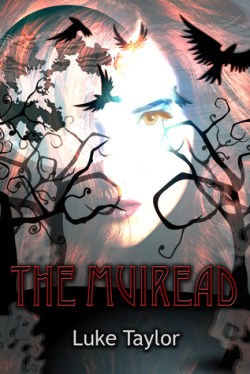
the muiread 2.0The Muiread by Luke Taylor

Genre: Fantasy

Series: The Ageless Duel #1

Publisher: Self Published (September 9, 2015)

Length: 332 pages

My Rating: 3 stars


I’m one of those readers who loves being wept away in a story from the opening page. Overwhelm me with names and places, immerse me with mysterious people, challenge me to decipher it all while on the run, because that is what makes a story interesting to me. And in the opening salvo of Luke Taylor’s The Ageless Duel series, I got all that and more.

Evi

In the Scottish/Gaelic inspired The Muiread, a reader is transported to magical lands torn apart by war. The narrative flowing around the mission of a mysterious warrior and his beautiful companion. Their journey taking place across a captivating panorama of beautifully described lands. Danger surrounding our heroes on all sides. Unknowns lurk everywhere. Questions demand answering. And all the while the world itself is ripping apart under the seemingly undeniable tide of darkness unleashed by The Ageless Evil!

Even with such an epic fantasy storyline, what is on center stage in this book is the vivid, poetic writing style of Mr. Taylor. His lyrical prose painting a multi-layered world, filled with crisp and detailed persons, places, and even dialects. Definitely, you can tell it is inspired by Scottish/Gaelic folklore, but the author weaves in enough unique, magical elements to make it his own creation. Each character real as only people can be, living through the growing horrors of the world in their own individual way. Every desert and forest, city and countryside filled with realistic life. The complexity of this place growing and intensifying with each scene, each chapter, until it is a fully realized world.

Such a writing style does come with a trade-off however. The intricate, picturesque descriptions slowing the pace of the story down considerably in sections. Epic events still transpire; brutal conflicts still take place; but they are slow moving affairs, where the details do get in the way somewhat. Which isn’t necessarily a negative here. Especially since I felt Mr. Taylor intended to write a classically styled novel, one which challenged reader’s attention spans, encouraged them to patiently absorb the ambience, to come to live in this place, not merely pop in for a few hours of entertainment.

The only real criticism I personally have with the narrative is the tendency to “tell” rather than “show” a bit too often. Obviously, many of the details of world history and the characters’s pasts have to be fleshed out somehow, and this does explain many of the sections where info dumps did occur, but it doesn’t excuse them all. And if those sections were tightened up, stripped down, and reworked somehow, I believe this novel would be an even more lyrical read.

Rich with intriguing history, vivid characters, and written in a hauntingly, poetic style, The Muiread is a promising beginning to The Ageless Duel series. With both romantic and tragic themes, this novel has an air of poignancy, which the elaborate, lyrical writing only heightens.  Readers willing to invest the time in learning about and coming to understand these characters and their world will soon find themselves eager to re-immerse themselves in this magical epic.

I received this book for free from the author in exchange for a fair and honest review. I’d like to inform everyone that the review you have read is my opinion alone.

Purchase the book at Amazon.

Posted in 3 Stars, Epic, Fantasy | Tagged , , , , , | 3 Comments

AUTHOR INTERVIEW: LUKE TAYLOR

authorspotlight


Today, on what is traditionally Indie Wednesday around here, I have the great pleasure to welcome Luke Taylor, author of The Muiread, to Bookwraiths, as he has bravely volunteered to answer a few questions about life, writing, and his new series The Ageless Duel.

Hello, Luke. Welcome to Bookwraiths. Thanks so much for sparing some time to answer a few questions.

Thank you for reading The Muiread and I look forward to your review, and thank you for your desire to read it!

Who is your favorite fantasy author? How have they influenced your writing style?

That’s a question with two answers…when I was a child, my mother would read Stephen R. Lawhead to me before I went to sleep. I would visualize the stories, and most of them were Celtic, and that has always been a part of my soul. From the classicist medieval fantasy textures to the lyricism of epic songs or prophecies. But my favorite fantasy author is Brandon Sanderson. He’s the Tolkien of his generation. His stories are such a rich investment. I’ve learned a lot listening to his lectures, but my writing style is more influenced by non-fantasy writers and it changes for every book. For The Muiread, it was really what felt natural to me, and I was unconscious of other styles, because I felt what I was doing so strongly.

What was the inspiration behind The Muiread? How long did it take you to develop the idea and put it down onto paper?
the muireadThe inspiration was, in essence, built upon years of loving Star Wars and thinking about writing a story about Mandalore The Immortal and playing games like Medieval II: Total War and loving the whole Teutonic aesthetic, but also, having strong Scottish heritage and loving Scotland, wanting something that was ultimately blending several things that were personal to me, such as a love of Akira Kurosawa films and many characters Toshiro Mifune played, as well as films like Gladiator and Braveheart, and then, so many spiritual things and thoughts of Creation and immortal creatures, of the eras of stone carvings and mythical creatures and on and on, all shown as if Derek Cianfrance filmed it. So, I’m sure you can read the book and pick out specific pieces of inspiration, but, as a pastiche of so many things combined to be something whole and complete with such a strong narrative voice and identity to me, it was incredibly simple once the ball got rolling, which happened when I was in the store, and I had been struggling to actually start the book, though I felt it brewing, and I saw the advertisement for Outlander, and it was the way the photograph suggested leaving where you are and going on a journey, and later that night, I had a dream where I was riding on a horse, that slow clip clop pace, in the Scottish Highlands. Ultimately, because I couldn’t go in real life, I wanted to go via the book, and I closed my eyes and The Muiread, in all of its depth, became something very real to me. It took four years to put pen to paper, but many of the things I drew upon stretch back to when I was a child.

The best book you have ever read is ______? Why did you love it?

That’s the Bible! Believe what is says or not, it has no equal! There’s so many different ways you can read it and always get something out of it or see something in it that’s beyond your comprehension. It has every different kind of story/narrative you could imagine and it never gets old. It’s amazing too, because your experience changes as you get older. The book doesn’t change, but you change. It remains the same as it was before you were born. That’s something beyond profound.

Why all the different dialects in The Muiread?

I wanted the story to have a sense of the arcane, as if it’s very old, and, truly, I wasn’t going to stifle any of my loquaciousness or cut back any of my love of poetry or ye old thou’s Shakespearean stuff, because, I knew that that was the story, and I was just being honest to myself and the story. And so, with the different actresses and actors I “cast” for the roles, I wanted to honor their unique vocal qualities and accents. Everyone has enjoyed the dialects so far once they get into it. Also, I know that if you choose to do anything, you have to go all the way, and it was just very natural for the story and the setting and the characterization.

The novel is broken up into different parts with different narrators; what were you hoping to achieve by this writing style?
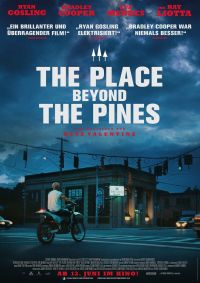
PlaceBeyondPines_teaser_A4.inddIt was important as far as distance and perspective to be shoulder height, eye to eye, immersed in the world, like the opening sequence of Derek Cianfrance film The Place Beyond The Pines. First person was essential for that, and then, to gain more perspective and build the depth, third person in Part Two, but the distance is still very tight. But because it’s third there’s more grandeur and it makes the story bigger. Part three is back to the same narrator as part one, part four is third person again, just like part two, and part five is first person, but from a different perspective that parts one or three, and really, when you’re sunk into the visual, it’s very simple. But it wasn’t going to be told any other way, since it’s not inherently traditional, but it’s still very simple and linear and doesn’t require a glossary or a dictionary to consult the world building or the lore. It makes perfect sense when you read it.

Any real world inspirations for this fantasy world?

Scotland!! And then the actors and actresses, of course. I made them all as real as I could and followed the parameters they gave me. There’s also a very Colorado-like setting in the end, but, I wanted the world to be easy to understand because it’s so much like our own. I guess I wanted to say, it is our own. This is a story of something that really happened long ago in the long lost mists of time, in steel and stone and all that jazz. It’s very accessible to visualize and to listen to, to imagine yourself in there with the characters, next to them. So, Scotland, my dream, real actors and actresses. And then there’s the creatures.

Favorite fantasy movie ever? Why?

I have to say either Braveheart or Gladiator, and I know they’re both “historical” but there isn’t much historical truth in either one of them, and they’re very much the dreams of wonderful filmmakers. So, either one of those for sure! But again, I like a very realistic sort of fantasy. I am quite the fan of Frozen for a great many reasons, and that’s obviously a different flavor of fantasy. But one of my best friends asked me if I wrote the story before watching Frozen, which I did, but strangely, there are a few parallels there. But that’s how things have always happened to me. I feel them long before I see them confirmed in other things that register with me. And that’s really cool!

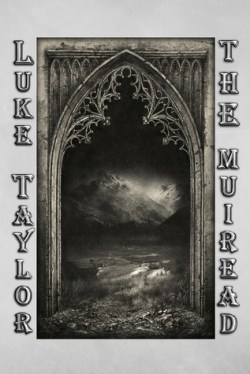
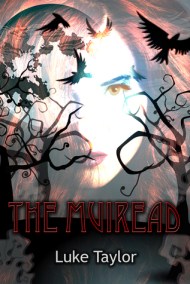
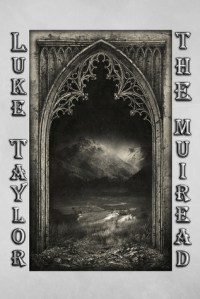
The cover art for the book is very unique. Was it difficult to find the right cover to capture the essence of this story?the muiread 2.0
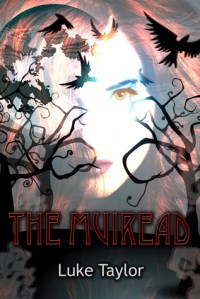
I’ve had mixed feedback on the cover, either love or hate, but it really does communicate the essence of the story with that gothic archway being a gateway into this arcane story, with the mist, steel, stone, and that grayness that covers a few of the characters. It also feels a bit lonely, I think, and the new cover includes many of the elements from the story and has a much different feeling but still communicates the essence of the story because, really, I think a good story can have tons of different artistic interpretations. I think it should, absolutely. Originally, because I’m such a fan of Michael Whelan, I wanted to have a classic oil painting cover, but then, I realized this wasn’t that type of story, and it needed more realism and grit, not so much flourish and color.

Have you felt any pressure to be more active on social media to promote your book? And if so, how do you feel about adding that to your other tasks as an author?

Well, I’m on Goodreads, I love it, and I treat it like a website. It can be terrible to think you have to be on Twitter, Facebook, Instagram, YouTube and on and on because those things take up so much time. Goodreads is wonderful because it’s worldwide and it’s all about books. It’s a community. Anyone can friend me or send me a message or use the provided link to buy my books on Amazon. It doesn’t get better than that! There was no pressure to go on Goodreads and connect with fellow authors and readers, but some people have asked me, do you have a website? And I keep thinking, there’s no point when there’s Goodreads! It’s so much better!

Best advice you received when beginning your writing career?

My father told me to be true to the story in my heart and to write it regardless of what anybody thinks, says, or does. There’s a quote by John F. Kennedy that says virtually the same thing, and that’s always in me.

I’ve read you are a musician. Tell us a bit about that, and does it help you at all with your writing?

Yes! I have been writing songs for years and songs are really just poems, so, I am always lyrically-minded and with The Muiread I didn’t hold back. Eternity speaks only in rhyme and whenever a character speaks in rhyme or iambic pentameter you can know that Eternity is speaking through them. It’s not hard, it’s not anything I stressed over. It’s like breathing to me. Also the character of Caoimhe is very much based off of a true friend of mine who plays the tinwhistle, and she wrote the song Caoimhe plays to Miora. It’s called Rabhadh, which means “A Warning.” So, that’s a real song. Also, I was listening to Trivium’s album “Shogun” practically the whole time I was writing, and, if you listen to the album and read part five, you’ll get the inspiration, how the two can fuse together and create something.

Favorite musical group or artist? Why?tumblr_mp1hvz2RmA1s94iluo1_500
That’s hard! I have to say Muse is number one, but I’m also a fan of older U2, of Queen, Tom Petty and The Heartbreakers, Bruce Springsteen, Pink Floyd, Supertramp, older Coldplay, The Killers, Keane, Norah Jones, Evanescence, and far too many bands and artists to list. My favorite metal band is Trivium, they just really speak my language musically and I find them very inspirational for battle scenes, but whatever I listen to I listen to the album all the way through. So, for The Muiread, it was “Shogun” on a loop.

How do you define success as a writer? Sales? Adoration? Creative satisfaction?

Two parts, firstly, being true to the story in your heart, and then, that story actually speaking to someone else, blessing them, entertaining them, or giving them something to think about. But really, if I write the story I know is in me and stay true and not let anything get in the way, that’s a job well done. When people give it high ratings and say why, or come up and tell me how awesome this was or that was, that’s really cool and I’m thankful I could give that to them. But none of that happens without being true to my heart. I’m not writing about vampire doctors in space just because I think it’ll make money. I’m not that kind of writer.

What projects can your fans look forward to in the near future?

There are some hardcore fans of Evening Wolves that will see me hopefully get back to working on Shatterpoint Bravo and Leopards, which would be the 3rd and 4th books of that series, and the end of that series. Also, fans of my YA fantasy Vault of Dreams have been ecstatic about Vault of Dreams and then the announcement of my next YA fantasy, Charis and The Book of Storms, which is a pirate book set in 1903, best described as The Book Thief meets Pirates of the Caribbean, but for some reason I keep thinking of it like Mad Max: Fury Road on the water. Whatever it is or isn’t, I’ve already started writing and researching and I must say I love it and will have tons of fun with it, but it’s really written for those who want it and need it, and I’m thankful to be in a place where I can write what’s in my heart and there’s a bunch of people out there who receive it like a room full of hungry diners.

borderthe muiread 2.0

ABOUT THE BOOK:

In the end of the Age, a champion has arisen. Blood has been spilt and nations torn asunder at the hands of The Warrior Who Knows No Defeat. So too, in the end of the Age, a venemous contender ascends; a foe of death and darkness, of hatred and hunger. Of Ageless Evil. For the end of the Age reveals secrets and forges destinies; interlocking hearts and minds, spinning Eternal tapestries in the stars. The end marks the path of conflict in steel and stone. The Duel begins.
border

LUKE TAYLORABOUT THE AUTHOR:

Luke has been writing since the age of seven and knew that, no matter what, he would be writing forever. His first “books”, were stapled together, carefully illustrated, and contained some sort of linear plot line and realistic character development, so much so that his parents knew there was more to his latest “creation” than met the eye.

Currently, he is taking a break from writing and binge reading all the great books he has on his tbr pile, so if you see him on a park bench in the greater Seattle, Washington area drinking a 20 oz. cup of dark roast and reading feel free to wave.

Currently, his published works include the Wolves and Leopard series and The Muiread.

Purchase his latest book at Amazon.

Posted in Author Spotlights, Interview | Tagged , , , , , , , , , , , | 2 Comments