FUN DAY MONDAY, OR THE BOOKS THAT WILL HELP ME SURVIVE THE WEEK AHEAD (MARCH 22, 2015)

funday-Monday

The work week begins. I quickly slip into my business suit and head back into the office to save a few innocent people from wrongful incarceration. But while I try to fool myself into being excited about the grind, deep down I’m not, so I’m going to escape dreary reality by reading some great books. Without any further ado, here are the novels I will be giving a try this week.

LEVIATHAN WAKES (EXPANSE #1) by JAMES S.A. COREY

LEVIATHAN WAKESHumanity has colonized the solar system – Mars, the Moon, the Asteroid Belt and beyond – but the stars are still out of our reach.

Jim Holden is XO of an ice miner making runs from the rings of Saturn to the mining stations of the Belt. When he and his crew stumble upon a derelict ship, “The Scopuli,” they find themselves in possession of a secret they never wanted. A secret that someone is willing to kill for – and kill on a scale unfathomable to Jim and his crew. War is brewing in the system unless he can find out who left the ship and why.

Detective Miller is looking for a girl. One girl in a system of billions, but her parents have money and money talks. When the trail leads him to “The Scopuli” and rebel sympathizer Holden, he realizes that this girl may be the key to everything.

Holden and Miller must thread the needle between the Earth government, the Outer Planet revolutionaries, and secretive corporations – and the odds are against them. But out in the Belt, the rules are different, and one small ship can change the fate of the universe.” Goodreads Description.

I’ve read about 225 pages of this one so far. It is an entertaining mystery set in space, but I’ve yet to understand why so many people say this is “THE” space opera to read. Not giving up, but something stupendous needs to happen quickly to keep me interested.

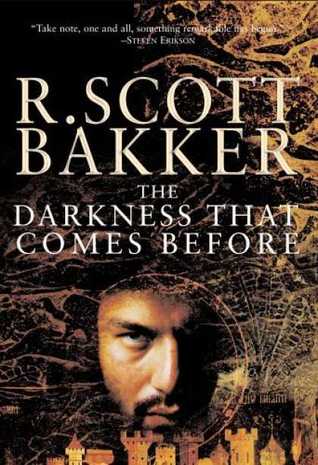
THE DARKNESS THAT COMES BEFORE (THE PRINCE OF NOTHING #1) by R. SCOTT BAKKER

the darkness that comes beforeStrikingly original in its conception, ambitious in scope, with characters engrossingly and vividly drawn, the first book in R. Scott Bakker’s Prince of Nothing series creates a remarkable world from whole cloth-its language and classes of people, its cities, religions, mysteries, taboos, and rituals-the kind of all-embracing universe Tolkien and Herbert created unforgettably in the epic fantasies The Lord of the Rings and Dune. It’s a world scarred by an apocalyptic past, evoking a time both two thousand years past and two thousand years into the future, as untold thousands gather for a crusade. Among them, two men and two women are ensnared by a mysterious traveler, Anasûrimbor Kellhus-part warrior, part philosopher, part sorcerous, charismatic presence-from lands long thought dead. The Darkness That Comes Before is a history of this great holy war, and like all histories, the survivors write its conclusion.” Goodreads Description.

I’ve had this one sitting around for a while, and since my ARCs are caught up, it seemed the perfect time to give it a go. I’m a bit apprehensive though, because I’ve read so many less-than-stellar review. Guess I’ll see for myself.

Happy reading this week!

Posted in Fantasy, Funday Monday | Tagged , , , , , | 4 Comments

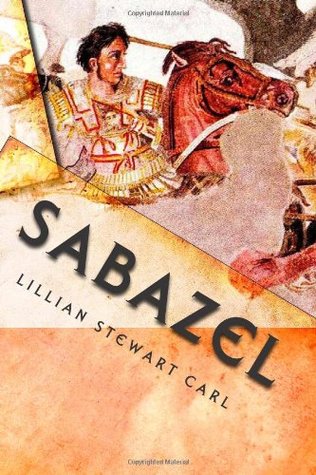
SABAZEL (SABAZEL #1) by LILLIAN STEWART CARL

SABAZEL My rating is 2 out of 5 stars.

Sabazel is a thinly disguised fantasy take on Alexander the Great: The Macedonian who led the Greek world in their crusade against the Persian Empire and won himself a world spanning empire as well as eternal glory. The only difference between that historical figure and the protagonist in this fantasy novel is that they have different names; here, Alexander is called Marcos Bellasteros.

The story begins with our mighty conqueror leading his armies in their crusade. Before the final battle for control of the empire, however, fate leads Marcos to Sabazel. This small nation-state is a land of warrior-women (Amazons) who worship their goddess and only consort with men at certain religious holidays throughout the year. The leader of Sabazel is named Danica.

Naturally, Alexander . . . err, I mean, Marcos and Danica initially hate one another but eventually fall in love; they then discover that their respective gods wish them to join forces to overthrow the Persian Empire . . . err, I mean the fantasy empire that just kinda, sorta resembles the Persian Empire. Together, they then set out on a quest to recover a magical sword, navigate through inevitable political intrigue, fight the final battle of the war and attempt to remain faithful to the love they share – even though they both realizes they can never truly be together.

If all that sounds like a rather straightforward 1980s fantasy, well, it is. But, all in all, Sabazel is still a decent read. Lillian Stewart Carl does a fine job portraying the Macedonian and Greek culture (albeit in a fantasy context), and the story she crafts has plenty of godly magic, political machinations, racial tensions, and even a bit of warfare – though not as much attention was paid to that as the romantic plot – to keep a reader entertained. But, unfortunately, the novel suffers from the same flaw as many fantasy works from this period: A bit of magic, some weird names, and a few fantasy tropes does not automatically make an epic fantasy.

So if you find this one on a used bookshelf somewhere, ask yourself a few questions before you pick it up. One, do you like Alexander the Great, Greek myths, and Amazons? Two, do you prefer your fantasy more romantic than violent? And three, does knowing what is ultimately going to happen detract from your enjoyment of the story?

If you answered “Yes” to the first two questions and “No” to the last one, then you should pick this one up. If not, you better just stay away. 80s fantasy isn’t for everyone after all.

You can buy Sabazel: The Sabazel series, Book One at Amazon.

Posted in 2 Stars, Fantasy, High | Tagged , , , , , | 1 Comment

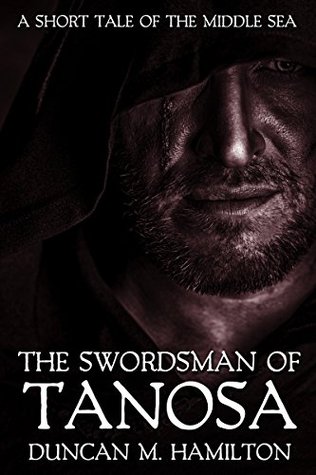
THE SWORDSMAN OF TANOSA (TALE OF THE MIDDLE SEAS) by DUNCAN M. HAMILTON

SWORDSMAN OF TANOSA My rating is 4 out of 5 stars.

“The Swordsman of Tanosa” is a short story set in the Middle Sea world of Duncan M. Hamilton, which has also been the setting for his Society of the Sword Trilogy and the standalone novel The First Blade of Ostia. And while I was totally unfamiliar with the author or his world before this story, I fully intend to pick up one of the Middle Sea novels in the near future.

The story itself centers on one Bafion: a swordsman who has seen his better days. The way he carries himself, his tattered clothes, his skill with a blade, and his courtly manners all suggest to his underworld employers that he once was much more than a sword-for-hire. But no one can say for sure, because Bafion will not speak of his past. It is a subject strictly off-limits. Any attempt to pry into it sure to result in blood being drawn.

But now Bafion is going to be called upon to face that mysterious past. For you see, a boss of the underworld has a job. A rather lucrative opportunity that he has offered to the swordsman. If Bafion fulfills said contract, he will finally have enough money to start a new life for himself. But in order to do so, he will have to go back to the place and the people he once left behind.

Call me a sucker for Three Musketeer-like swashbuckling but I really, really liked this story. It had a mystery, a down-on-his-luck and past-his-prime main character, and people dueling with rapiers. How can anyone not adore that type of fantasy? My only complaint was it was too short.

So if you – like me – really dig dueling rapiers, buy The Swordsman of Tanosa: A Short Tale of the Middle Sea at Amazon.

Posted in 4 Stars, Fantasy, Low, Short Stories, Swashbuckling | Tagged , , , , , , | 4 Comments

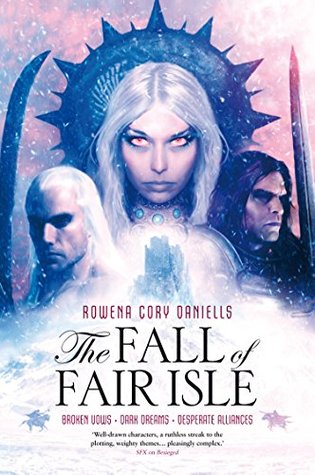
THE FALL OF FAIR ISLE by ROWENA CORY DANIELLS

THE FALL OF FAIR ISLE My rating is 3 out of 5 stars.

Upon Fair Isle, the garnet-eyed, silver-haired, pale-skinned, twelve-fingered T’En have nearly become a thing of legend, as years of intermarriage have made the race of conquerors nearly identical to their human subjects. But even so, T’En blooded nobles still rule the land, and, occasionally, that blood will show, resulting in a pure blooded “throwback”, causing a disruption of the tranquility as the specter of the violent past rears its ugly head. Imoshen is one of these blessed (and cursed) individuals.

For most of her life, Imoshen’s family has sheltered her from the revulsion and novelty that her condition causes among the nobility, but as dutiful adherents of the laws, they have taught her that as a “throwback” she must devote her life to one of service, abandoning any selfish desires for a family of her own. (Throwbacks are forbidden to marry or sire offspring.) And until recently, Imoshen accepted her fate in silence, but then her path crossed the only male throwback upon Fair Isle.

To say Imoshen and Roethe have sexual chemistry when they meet would be too mild a term for it. For once they are together the magic inherit within them ignites, drawing one to the other. Each touch of the other’s hand is lightning; each kiss is ecstasy; and each caress is pure nerve-tingling erotica. Quickly, Imoshen and Roethe cast societal conventions aside, announcing their intentions to wed. A decision that the nobility find frightening and somewhat abhorrent. But before the two can begin their life together, the wrath of the gods falls upon Fair Isle.

To the north, across the narrow seas, the Ghebite Empire has been spreading across the continent like a plague, engulfing each kingdom it touched. The barbaric horsemen too mighty for even coalitions of nations to hold back. And now – unlooked for – these conquerors have landed upon Fair Isle, intent on destroying the soulless “dhamfeer” as their religion labels the magical T’En.

Armies are raised. Battles are fought. And Fair Isle begins to lose.

All too soon, Imoshen finds herself the last of her family, Roethe’s fate unknown, beset with the legions of the famous General Tulkhan, the son of the Ghebite King and a mighty conqueror. And while every instinct within the young T’En screams for her to bar the gates to her small city, rally the remaining people and fight, the ancient T’En known as the “Aayel” – and Imoshen’s mentor – counsels something different: surrender! Not only of the city itself but of Imoshen to Tulkhan’s carnal desires to bed a pure blooded T’En. The Aayel warns that only by such a sacrifice can Imoshen save herself and all of Fair Isle!

Pretty interesting story. At least, I thought it would be as I began, and overall, it delivered on that promise – with a few exceptions that is. But let’s start with the positives about The Fall of Fair Isle.

As followers of Rowena Cory Daniells’ T’En novels already know, there is a lot of history and legend in the series. Not the general retreaded Tolkien fantasy or even the older Arthurian type that many fantasy aficionados are accustom to but something fresh yet still familiar. And in Fall, Daniells doesn’t make the mistake of unveiling her world in huge info dumps but deftly allows it to be revealed slowly and consistently as the story progresses, so that by the end many of a reader’s questions about Fair Isle and its T’En inhabitants have been answered without them even realizing it.

But the strength of this novel is definitely the romantic love triangle. From the first chapter, the attraction, distrust, and political machinations between Imoshen and General Tulkhan are front and center. The constant shifting of the viewpoint from one to the other allowing a reader to experience each person’s feeling as their first violent meeting leads to an even more complex relationship later on. And while Roethe enters and exits the narrative quite frequently, his presence and pull on Imoshen’s emotions and decisions never totally ceases. So if romantic love triangles and all their wicked twists and turns is something that you adore, The Fall of Fair Isle will not disappoint.

For all its interesting and compelling qualities, Fall did not entertain me as much as I would have liked, however. Mainly, this was due to my preconceptions of the novel. Perhaps I’ve read too many traditional grimdark fantasy series, but whatever the reason, I went into this novel expecting a great deal of combat, warfare, and intense political upheaval in the vein of Martin’s Song of Ice and Fire and instead found myself presented with a novel very light on the violence and warfare and heavy on the romance and emotional turmoil of the characters. A turn of events that was not necessarily bad but which did not meet my needs of the moment.

So should you give this novel a try?

It really depends upon your favorite type of fantasy faire. If that is grimdark or the violent variety of fantasy on the shelves, then The Fall of Fair Isle might not have what you are looking for. But if romantic fantasy is something you enjoy, then I’d recommend you pick this novel up.

Rebellion Publishing and Netgalley provided this book to me for free in return for an honest review. The review above was not paid for or influenced in any way by any person, entity or organization, but is my own personal opinions.

Buy The Fall of Fair Isle from Amazon.

Posted in 3 Stars, Fantasy, Romantic | Tagged , , , , , , | 2 Comments

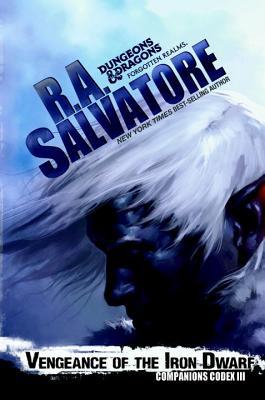
VENGEANCE OF THE IRON DWARF by R.A. SALVATORE

VENGEANCE OF THE DWARF
Vengeance of the Iron Dwarf by R.A. Salvatore

Genre: Fantasy

Series: Companions Codex #3 | Legend of Drizzt #27

Publisher: Wizards of the Coast (March 3, 2015)

Author Information: Website | Twitter

Length: 352 pages

My Rating: 3 out of 5 stars.

War! The Silver Marches have been consumed by it.

Across the land, the years of peace and plenty are a thing of the past. The drow cast Darkening obscures the very sun. Nesme is a burned out shell. Sundabar exists as a conquered city, filled with enemies. Elven Silvermoony lies besieged. The dwarven citadels of Mithral Hall, Felbarr, and Adbar are ringed about – above and below ground – with enemies too numerous to count. And the Companions of the Hall have been unable to stem the tide, finding themselves separated and fearful of their comrades survival!

Definitely, the fate of the Silver Marches appears bleak. The evil alliance of frost giants, white dragons, Many Arrows’ orcs, and the drow seemingly invincible. Yet even in apparent victory, the true designs of Matron Mother Quenthel Baenre has yet to be revealed – even to her friends and allies.

From this powder keg of fantasy warfare, Mr. Salvatore crafts another fine addition to the Legend of Drizzt. It has all the elements of an entertaining, fantasy romp that fans have come to expect from their favorite drow: a huge war raging, individuals acts of bravery, diabolical schemes, mysteries revealed, and more than a few moments of laughter. And here the author has even saw fit to add several moments of sobriety into the fantasy stupor that are both thought-provoking and emotionally jarring.

The best example of the latter is Bruenor’s reunion with his “mother”; a woman who reared him believing that he was not a long-dead king reborn but rather the infant child of her loving marriage. When the two face one another again with the truth of Bruenor’s resurrection between them, Mr. Salvatore does an excellent job of showing a realistic portrayal of a mother’s questions and despair at the fate of her own child – including the possibility that she might truly reject the son who was never really her son.

Even with all its positives, I have to admit that Vengeance of the Iron Dwarf did not entertain me as much as the last volume in the series, Rise of the King. The reason is simply that there was too much going on with too many characters, and Mr. Salvatore tried to wrap it all up too quickly. The frantic conclusion to this narrative so rushed that it was almost impossible for me to savor the grandness of the whole spectacle of diverse characters, races, and nations fighting a war to the finish. Something that marred an otherwise great Drizzt story.

At this point in my review of a Legend of Drizzt book I always seem to find myself saying the same thing: “If you are already a fan of the drow and his friends, then you will undoubtably enjoy this novel.” (Duh, right? I mean, it is a fantasy swashbuckling series whose longevity surely speaks to all those who love it.)

This first statement is unerringly followed by the “But, if you don’t like Drizzt or these types of classic fantasy fare (perhaps preferring more modern takes on the genre or narratives that diverge away from traditional elements) then there is nothing in this novel that is going to win you over.”

And I suppose I could say all that again, but I’ve decided not to. Rather, I’ve chosen to end this review by encouraging those who haven’t picked up a Drizzt book to go find one and give it a try. While Mr. Salvatore generally stays true to the traditional fantasy elements, the stories are always entertaining, blending fantasy fun with a very readable narrative that flows seamlessly. Not only that but he inevitably inserts moments in the stories when these seemingly simplistic characters are forced to stop looking at things in a black-or-white manner and contemplate the reality of their actions and their own personal views; their decisions then going on to actually mean something in the ongoing story. So before you cast disdain on this drow led caravan, you really should give it a go. I mean, you might find that you actually enjoy it.

Wizards of the Coast and Netgalley provided this book to me for free in return for an honest review. The review above was not paid for or influenced in any way by any person, entity or organization, but is my own personal opinions.

Buy Vengeance of the Iron Dwarf (Forgotten Realms: Companions Codex) at Amazon.

Posted in 3 Stars, Drizzt, Fantasy, Forgotten Realms, High, Swashbuckling, Sword and Sorcery | Tagged , , , , , , , , | 3 Comments

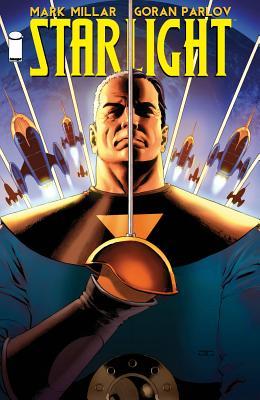
STARLIGHT by MARK MILLAR

STARLIGHT My rating is 4 out of 5 stars.

I’ve always loved swashbuckling sci-fi adventures – stories in the mold of Edgar Rice Burroughs John Carter, Robert E. Howard’s Almuric, or Michael Kane as penned by Michael Moorcock. These tales about earthmen being swept across the galaxy, deposited upon alien worlds, and having to vanquish all the evil natives in sight has always entertained me.

Now, before anyone says it, I know these type of stories are sugar-coated testosterone fantasies with large than life men and scantily-clad females. But every once in a while, there isn’t anything wrong with indulging in that, is there?

As I’ve gotten older (Yeah, it happens to all of us no matter how hard we resist) the charm of these young swashbuckling supermen has diminished somewhat. (Guess, I just do not relate to them as much since I’m not a young, would-be superman anymore.) But when I stumbled upon Mark Millar’s quirky twist on this old favorite, I had to give it a try.

Starlight tells the tale of Duke McQueen; a one time astronaut who forty years ago found himself cast across the universe to an alien world. Once there, he became a swashbuckling legend, helping the adoring natives cast off the chains of slavery, vanquish a vile overlord, and earn a place at the side of a beautiful queen. But guess what?

Duke McQueen gave up all the fame and adoration to return home to earth. There he found no one believed his stories. Instead, he was labeled a delusional nut-job and exited stage right to a small town and an invisible job with his loving wife.

Years have passed. Duke McQueen isn’t a young guy anymore. His kids have grown up, married and have kids of their own. His wife has recently passed away. In fact, Duke is beginning to feel that life has nothing left for him . . . . until a spaceship piloted by a strange boy from the world he once saved comes begging the hero McQueen to save his home once again!

Will the elder Duke McQueen go back to the alien world where he was once a savior?

What will he find there?

And can he be the hero that he once was?

From this great premise, Mark Millar crafts an outstanding homage to those old sci-fi swashbuckling tales, showing Duke McQueen as a John Carter-type hero and then revealing what forty years of life have done to the once superman. And as he does it, a solid story develops that makes you understand Duke, empathize with his life choices, and dare to hope that somehow an older guy can still find a way to remain a hero and ride off into the sunset one last time.

As for the artwork, Goran Parlov has a unique style that really works here. While it might not be the most spectacular art I’ve ever seen, it still draws the eyes, seamlessly advances the story, and clearly delineates the real world of earth from the alien vistas that Duke McQueen has seen before and now has returned to.

Obviously, I enjoyed Starlight. It was a great twist on the old sci-fi swashbuckling tales of Edgar Rice Burroughs and others that delivered an exciting narrative that anyone can enjoy and appreciate – especially middle aged guys who wish they could relive their glory days.

Image Comics and Netgalley provided this book to me for free in return for an honest review. The review above was not paid for or influenced in any way by any person, entity or organization, but is my own personal opinions.

Buy Starlight Volume 1 at Amazon.

Posted in 4 Stars, Graphic Novels, Science Fiction, Sword and Planet | Tagged , , , , , | 6 Comments

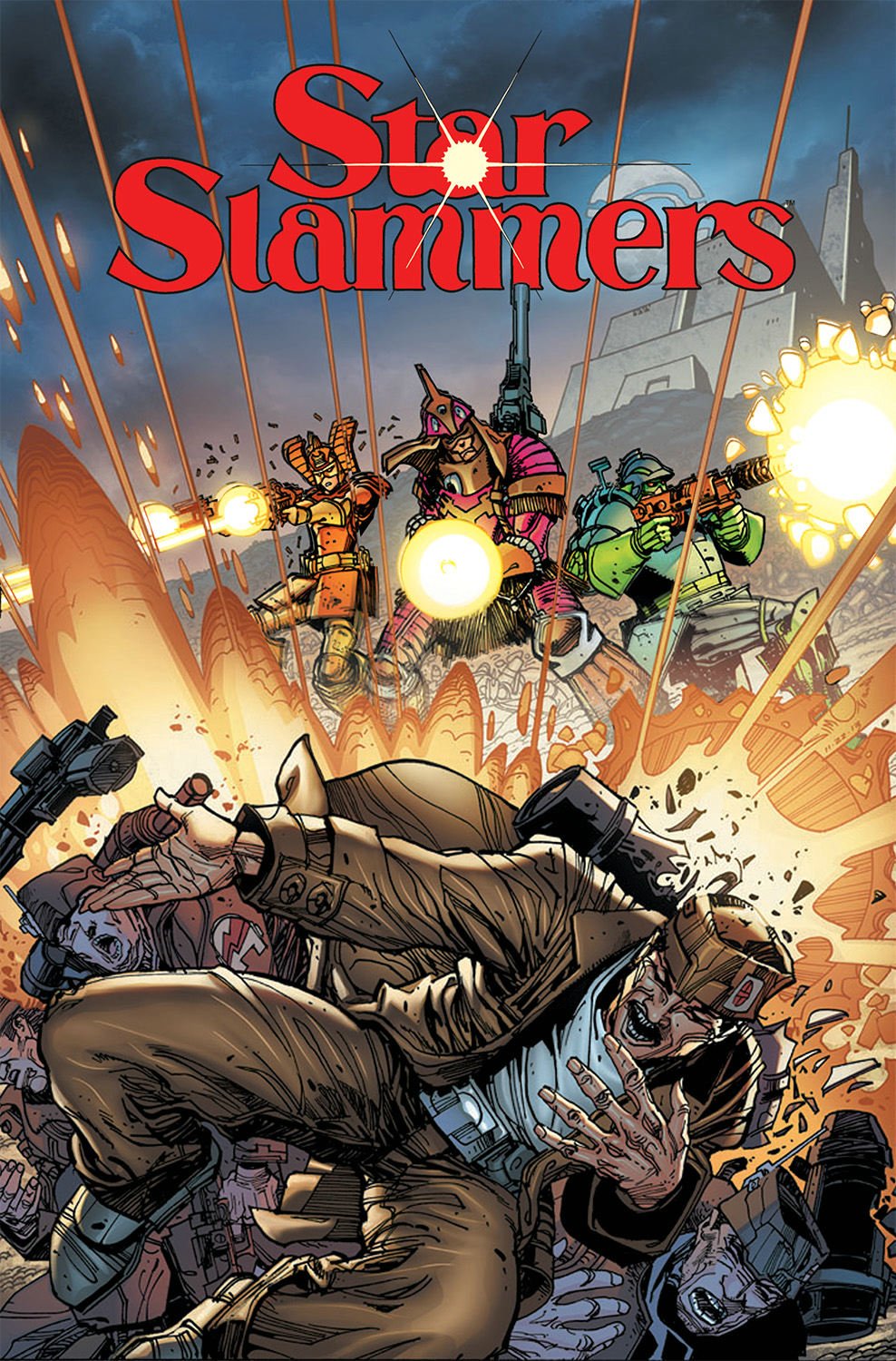
STAR SLAMMERS: THE COMPLETE COLLECTION by WALTER SIMONSON

STAR SLAMMERS My rating is 3 out of 5 stars.

I have to start this review by admitting two, very important things.

One, I love Walter Simonson’s work. Nothing objective about it, I just love the man’s comics.

Two, I have never been able to warm up to space opera comics (other than Star Wars.). Not sure why, but it is just the truth.

So what does that mean, you ask?

Well, obviously, something is about to hit the fan with this review.

Walter Simonson probably described Star Slammers best when he said: “Once upon a time, there was a race of men who could out-shoot, out-fight, and out-kill anybody. They were paid fabulous sums to act as mercenaries. The practice became so lucrative, they decided to go into business. They became the most successful businessmen in history, and they called themselves… The Star Slammers!”

Sounds like this comic collection is about space mercenaries, right? Laser guns, spaceships, star battles, and all that really cool stuff included at no extra charge.

Yeah, it seems so. But wait! The story isn’t really about them going around blowing people and things up. Sure, they do that, but those The Expendables-type action sequences are not what Star Slammers is all about. Nope, it spends lots of its page time on hidden secrets, mystical powers, and racial genocide that turns a straightforward shoot-‘em-up into a more complex story.

What is absolutely great about this collection is the artwork. It is classic Simonson in all his glory. And if you have dug his style in any of his previous comic projects, then you will absolutely not want to miss Star Slammers.

What is not so great is the story that this collection places before a reader. It is a bit convoluted, has murky action scenes, puzzling flashbacks, and a narrative that doesn’t really draw you in and keep you sitting on the edge of your seat. Not that it is bad, but it just isn’t great.

Honestly, if Star Slammers hadn’t been by Walter Simonson, I probably would have given it a two star rating, but with him at the helm, I felt compelled to rate it a three, because any occasion to see a comic drawn by my favorite comic creator is well worth the time. And if you enjoy Simonson’s art, you should give this one a look see – just don’t expect too much from the story itself.

IDW Publishing and Netgalley provided this book to me for free in return for an honest review. The review above was not paid for or influenced in any way by any person, entity or organization, but is my own personal opinions.

Buy Star Slammers: The Complete Collection at Amazon.

Posted in 3 Stars, Cross-Genre, Graphic Novels, Science Fiction | Tagged , , | 3 Comments

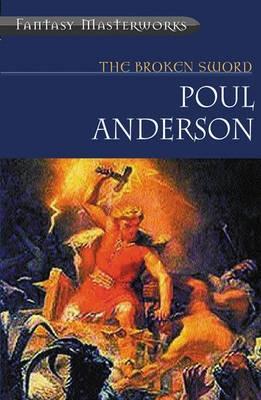
THE BROKEN SWORD by POUL ANDERSON

THE BROKEN SWORD My rating is 3 out of 5 stars.

The Broken Sword is a modern Norse myth that both dazzles and disappoints with its tale of unwitting mortals caught in the web of gods.

When just a newborn, our hero Skafloc is snatched from his mother’s breast due to the machinations of a disgruntled witch, who hates the babe’s father. This crone tricks Imric, a mighty lord of the elf-folk, into substituting a half-elf, half-troll changeling named Valgard for Skafloc. Thereafter, the two babies grow up in different worlds; each unaware of the switch that had occurred so long ago.

But while Imric is joyful and proud of his new human fosterling, Skafloc’s life among the elf-folk begins ominously: Skirnir, messenger of the Aesirs, coming unlooked for to the elf-lord’s domain. Upon his arrival, Skirnir bears a broken sword of old, which he casts down as a gift for the human child, proclaiming that one day Skafloc will need to reforge the accursed blade to fight a horrible foe. Imric, however, disregards the ill words, hiding the weapon away, holding on to the joy that the human child brings to the ethereal world of the elf-folk.

Years pass by peacefully. Skafloc grows tall and strong, coupling the strength of man with the wisdom and grace of the elf. Not only is he beloved by all (in their otherworldly way), girded in the finest armor to be found, wielding the mightiest of blades, but he is a warrior of renown, fighting by his foster father’s side far and wide against the elf-folks most vile enemies: the trolls.

In the human world, Valgard has grown in equal measure. He is tall and strong (a perfect twin to Skafloc), feared by all due to his fierce raids. Yet Valgard is a strange child and man, silent and brooding, full of hidden nastiness and rage, who seemingly is ill at ease anywhere except upon his mighty raiding ship.

And hiding in the background, forgotten by all, is the witch, who finds that the abduction of Skafloc has not brought the misery she desired to his family. Thus, she sets into motion a vile plan with the help of a mighty godling; one which will ultimately doom Skafloc, Valgard, their families, the elf-folk, and troll-kind!

After finishing The Broken Sword, I can easily declare that it is an entertaining tale which does many things well.

One, Poul Anderson does a masterful job of mixing the ethereal otherworld of elf, troll, and gods with the mortal realm of man and the Christian faith; each residing upon the other like two window panes of glass, seemingly separate entities yet unerringly connected to the other. Every action in one reflected in some way upon the other.

Two, the characters portrayed are complex, intriguing, and epic in their own individual way. The “bad guys” have their reasons for their actions; reasons that are not only pointed to but also fleshed out enough to actually matter. And even the “good guys” are not pearly white bastions of sanctity but men and women who commit vile acts (knowingly or unknowingly) that leave them doomed to fates much worse than any they would have ever dreamed possible.

Three, this narrative absolutely captures the grand spirit of the ancient Norse myth. It is epic in its tone, tragic in its twists and turns, and constantly demands of its heroes a frantic fight against the coming doom that they can discern but do not know how to avoid.

However, some of the very things that makes The Broken Sword a grand epic in the spirit of Beowulf is also its worst problems. As mentioned, the doom of the hero is foretold at his birth. Not only that but other fae-folk, gods, and even mortals foreshadow the coming tragedies throughout the narrative, so when the unexpected doom falls upon our heroes, it is something that most readers will have guessed long before it is actually happens. A fact which made the story not awe-inspiring and exciting but disappointing and dull.

Even with that seemingly harsh criticism, Poul Anderson wrote an outstanding modern Norse myth with The Broken Sword. More relatable than Tolkien’s The Silmarillion yet just as dramatic, it is a tale that fantasy fans will definitely savor.

Open Road Media and Netgalley provided this book to me for free in return for an honest review. The review above was not paid for or influenced in any way by any person, entity or organization, but is my own personal opinions.


BUY The Broken Sword AT AMAZON.

Posted in 3 Stars, Fairy Tale, Fantasy, Sword and Sorcery | Tagged , , , | 3 Comments

TOUGH TRAVELLING — KNIGHTS

tough-traveling

Every Thursday, Nathan over at Fantasy Review Barn hosts a weekly party where blogs get to follow along with Diana Wynne Jones’ hilarious book The Tough Guide to Fantasyland: The Essential Guide to Fantasy Travel listing their favorite books with a particular fantasy trope. So sit back and enjoy the fun.

19th February, 2015 – KNIGHTS

Um. Noble rich people on horseback. Come on, you people know what knights are. (Topic provided by Miriam)

At first glance, this looks like a really, really easy list to make. Fantasy literature is filled with knights, right?

Hold up just a minute! That might not exactly be accurate, because who is a knight? I mean, every person wielding a sword in a fantasy adventure isn’t a knight.

Are we saying knights are only those people who wear shiny armor, ride proud steeds, and talk like they walked straight out of a King Arthur story?

That seems a bit too narrow a definition for me.

Well then, are we opening this up to all characters who wield a weapon in defense of their homeland or their family or their loves?

Much too broad, unfortunately.

So knights have to live up to that Arthurian caricature but still portray other “knightly” characteristics. God, that is still a pretty tough criteria to use to pick out some great knights, but I guess we just have to try, because its Tough Travelling Thursday. So here are my picks for my favorite KNIGHTS!

MANDORALLEN (THE BELGARIAD & THE MALLOREAN) by DAVID EDDINGS
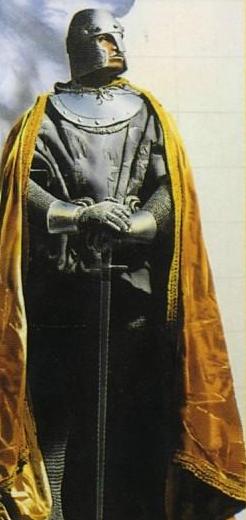
Mandorallen I’m going to start my list off with the knight I always considered the blueprint of chivalrous men in shiny armor.

Sure, this pinnacle of the Mimbrate people might be a bit dense in the head, and he might believe every problem can be solved with his sword or lance, but he is loyal, dedicated, chivalrous to a fault, and epitomizes all that a “Arthurian” knight should be.

Now, does he appear at all realistic most of the time?

Hell, no. But then again, David Eddings was writing a YA fantasy series. Realism wasn’t the utmost on his mind probably.

But for what he was, Mandorallen was a great knight. In fact, this Baron of Vo Mandor and Knight Protector to Princess Ce’Nedra is not only the “Knight Protector” of the Mrin Codex but is the Most Paramount Knight in all the world!

KING KELSON HALDANE (DERYNI SERIES by KATHERINE KURTZ)
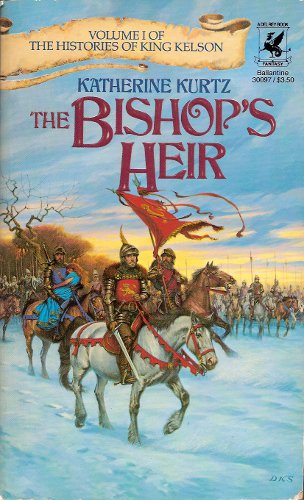
BISHOPS HEIR

Kelson is a young man forced onto a throne before his time. Only through the help of his father’s most trusted friends and his own bravery (Well, he also has some magic, but we won’t focus on that so much.) is he able to stave off death time and again.

As it is easy to see, Kelson is also a knight of the classic European model. His kingdom and its surrounding being a fantasy version of medieval England, Whales, et cetera. But unlike Mandorallen, this young man isn’t a caricature of knighthood but a true embodiment of it. He might be a warrior in shiny armor with a might lance and shield, certainly bases his life around chivalry, but he is also an ordinary youth, who is trying to become a good king — something that all history lovers know is easier to aspire to than actually attain.

STURM BRIGHTBLADE (DRAGONLANCE CHRONICLES by MARGARET WEIS & TRACY HICKMAN)
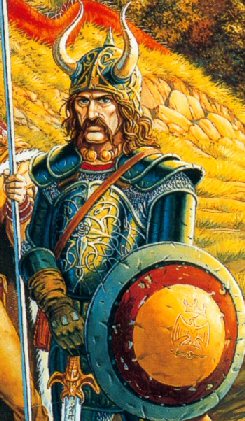
sturm brightblade

Sturm was born from a noble family who had been Knights of Solamnia for generations.

Though his life took an unexpected turn as a child, he was always determined to follow in his family’s footsteps and become a knight. He lived by a strict code of honor, viewed the world in terms of black and white based upon his morals, refused to even consider that some situations are actually gray, and thought all magic (no matter what color its wielder wore) as evil.

Sturm goes on to become a Hero of the Lance and is renowned across the world. But above being a hero, Sturm Brightblade was a Knights of Solamnia, who refused to ever except less than the very best of himself.

PRINCE CARILLON (CHRONICLES OF THE CHEYSULI by JENNIFER ROBERSON)
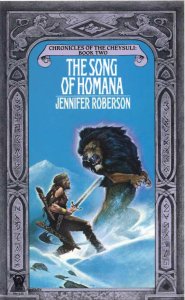
CARILLON

Carillon is a Prince of Homana. While he might be rich, pompous, and bit immature in book one, he turns into a battle-hardened and determined man by the time book two of the series takes its bow and proceeds off stage right.

The one thing that never changes about Carillon, though, is that he is a knight at heart. A man who feels most comfortable strapping on his armor, hefting his sword, and riding off into battle to smite his enemies. Naturally, he has a code of chivalry that he lives by, but as he grows and matures, Carillon sees that his juvenile viewpoint on things isn’t completely realistic, and so he modifies it, turning into a wonderful example of what experience and an open mind can do for someone — even a knight.

JOHN AVERSIN (DRAGONSBANE by BARBARA HAMBLY)
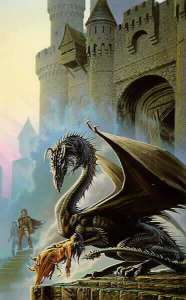
Dragonsbane1
Sir John Aversin is a knight and ruler of a land and people abandoned by their kingdom. While he valiantly fights a losing battle to keep civilization alive in the north, he realizes that for all his noble intentions he is more a hedge knight than a shiny knight of yore.

But, you know what, that is okay, because John is one of those men who adapts to his situation, turns things on their heads. So when people mock him and label him a savage, he is more than happy to play the character for every laugh he can get, never letting their disdain deter him from his knightly calling.

SIR SPARHAWK (THE ELENIUM & THE TAMULI by DAVID EDDINGS)
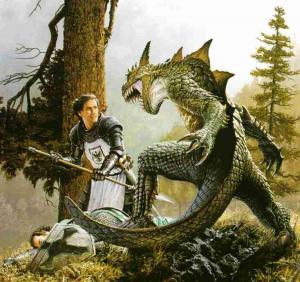
Sparhawk

After having such great success with Sir Mandorallen, David Eddings set out to tell the story of another knight who is a bit more wise and crafty. This knight is Sparhawk.

Sir Sparhawk is a knight of the Pandion Order, who becomes the champion to Queen Ehlana of the kingdom of Elenia. More importantly than that, he is also the “Anakha” – the “One Whose Fate the Gods Do Not Know.” Like any good knight he has a famous weapon, Bhelliom, a rugged handsomeness, a foul-tempered war horse named Faran, and a knightly nemesis in one Martel, a former knight who was expelled from the Pandion order. And his adventures are pure knightly fun.

WALLY SMITH (SEVENTH SWORD by DAVE DUNCAN)
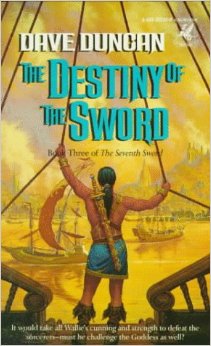
DESTINY OF THE SWORD

Wally is an Earthman transported to another world where he wakes up to find himself a seventh ranked swordsman, which basically means he can kick anyone’s ass that he wants to!

Only one problem: he has to live up to a moral code that is very similar to the Bushido of the samuri on Earth, which means — he is basically an oriental knight.

Yeah, you had to see that one coming, right? I mean, we have to have some non-European knights on this list.

Anyway, Wally is a great example of a fantasy version of a samuri — even if he doesn’t exhibit all the usual samuri characteristics. But it is still great fun.

SANGLANT (CROWN OF STARS by KATE ELLIOTT)
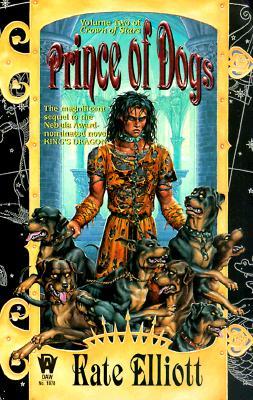
PRINCE OF DOGS

This half-human, half-elven bastard son of King Henry is a medieval knight all right. He is the first Dragon, which means he is the leader of the King’s elite force of knights. His armor is bright and shiny, his lance is strong, his horse is fiery, and his colors are a challenge to all that oppose him. The only problem is that Sanglant can be a bit whiny and terribly boring a lot of the time.

Those who have actually finished this epic series can back me up on that last statement, I feel sure.

Still, I call them like I see them, and Sanglant is definitely a knight.

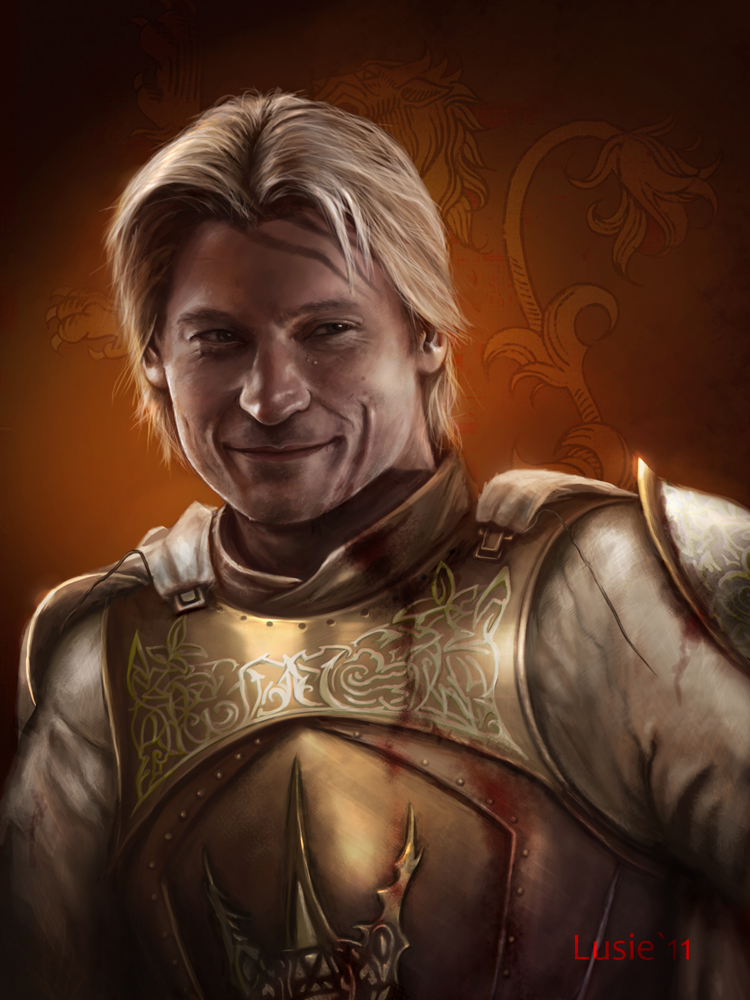
JAIME LANNISTER (A SONG OF ICE AND FIRE by GEORGE R.R. MARTIN)
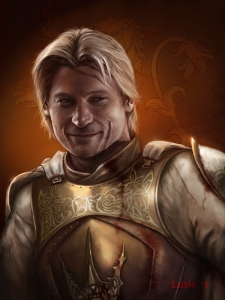
JAIME LANNISTER
Oh, Jaime let me count the ways I dislike you?

Well, we really don’t have time for that.

But when I think of “knights” Jaime always comes to mind.

Can’t we all agree that he has the pedigree, the look, the money, and the swagger that fits the role of knight?

Hell, he can even be chivalrous in his Lannister sort of way . . . though he is a bit too close to his sister for my tastes.

But even if he is the ultimate Westeros knight, I still have to say . . . I really hate you Jaime.

DEACON SHADER (SHADER SERIES by D.P. PRIOR)
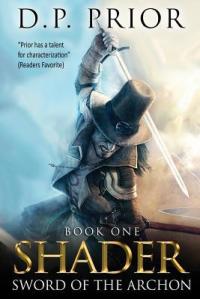
sword of the archon

Deacon Shader is a cross between a knight and a monk. In the book, he is labeled a warrior-monk I seem to recall, but be that as it may, he is a warrior who fights like a knight even as he upholds a moral code of conduct.

In this post-apocalyptic world, the warrior-monk does not measure his actions against a code of chivalry as much as the teaching of a worldwide church that is a mixture of all the modern religions. And so while Shader is a man of honor, he is a picture of paradox, strictly adhering to a vow of abstinence but also sworn to kill as many of the church’s enemies as possible.

Yeah, Shader is a strange one but still an interesting take of knights.

CAPTAIN BRAYLAR KILLCOIN (BLOODSOUNDER’S ARC by JEFF SALYARDS)
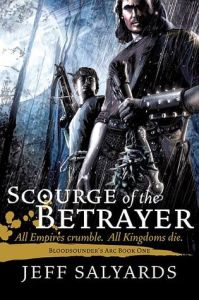
SCOURGE OF THE BETRAYER
Here is another person who might or might not be a knight. I mean, Killcoin is armored like one, fights like one, but he definitely doesn’t worry about any of that chivalry nonsense or any particular code of honor other than staying alive. Nor is he rich or powerful alone. Rather he is a slave turned warrior who is only strong politically through his affiliation with a certain sect of warriors.

No matter all that though, Killcoin is one of the most realistic portrayals of a battle-hardened knight I’ve come upon. No, he isn’t a Jaime Lannister or other Westeros knight, but what he is is pure realism — even down to how he struggles to kill more than one enemy at a time. I mean, really? The nerve of that Salyards, acting like a knight can’t kill four or five assailants at once.

ROLAND DESCHAIN (THE DARK TOWER by STEPHEN KING)
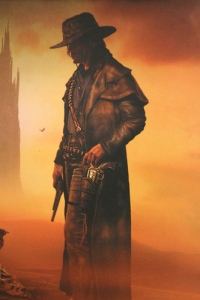
roland deschain

My favorite knight of the moment is the most unlikely one: Roland Deschain.

Roland (known as The Gunslinger) is a 30th generation descendant of Arthur Eld, who was this universe’s King Arthur. Not only is Roland of that knightly bloodline but the guns that he proudly uses were created from the metal of Excalibur itself, serving as both a sign of his authority as one of the lands “Gunslingers” and as a token of his descent from Arthur Eld himself.

While Roland isn’t a knight in shining armor, he conducts himself as one and is treated by most people as if he were one. Plus, he is my favorite “knight” of the moment.

TAKE A LOOK AT MORE OF MY FANTASY LISTS.

Posted in Fantasy, Lists, Tough Traveling | Tagged , , , , , , , , , , , , , , , , , , , , , , , , , , , , , , | 12 Comments

CLASH OF EAGLES

CLASH OF EAGLES

Clash of Eagles by Alan Smale

Genre: Alternate History

Series: Clash of Eagles #1

Publisher: Del Rey (March 17, 2015)

Author Information: Website | Twitter

Length: 432 pages

My Rating: 4 stars

WHAT IF . . . The Roman Empire had never fallen?

Better yet – what if the Roman Empire not only continued to exist but conquered Europe and then decided to invade the American Continent?

Sounds interesting, right?

Well, in Clash of Eagles that is exactly what Alan Smale sets out to explore.

In this “what if” world, Rome has continued to grow. In the east, it is confronted by the Chinese Empire. In the west, it has followed rumors of gold across the wide sea to a new world inhabited by savages.

Leading the Roman expedition of conquest is Praetor Gaius Marcellinus, who lands in what is obviously the Chesapeake Bay region before discovering that the cities of gold lie far away across the mountains. With the whole success of the expedition (not to mention his career) on the line, Gauis sets his army into motion with native guides determined to transverse the wild, forested lands, cross the distant Allegheny Mountains and reach the flood plains of a huge river where the natives say the people build mountains filled with gold.

As the march drags on and on, the Romans begin to be worn down; sweltering heat, overgrown virgin forests, the lack of roads, and war-like natives sucking all hope from their weary limbs. Once the column enters the land of the Iroquois things become even worse, as these fierce fighters constantly stalk the Roman column, slinking within the shadowy undergrowth just out of sight, waiting to silently ambush and kill scouts, hunters and any Roman unlucky enough to be separated from the group. But Gauis Marcellinus will not be deterred by the harshness of the conditions, because the lure of golden cities along the Mississippi River calls to him and he is determined to claim them for Rome’s new western empire!

Clash of Eagles is one of those alternative history novels that takes the familiar, mixes in a few surprises, and creates a plausible world filled with amazing variety. What I mean by that is here we have authentic Roman soldiers existing in a very traditional North American continent, but into this familiar scene, Mr. Smale mixes in new technologies, different historical events, and the imaginary clash of two cultures that had no (or limited) contact with one another in real life, yet he presents it in such a way that it never sounds outlandish at all!

A good book is only as good as its main character though, and Mr. Smale gives readers a fine one in Gauis Marcellinus. He is definitely a Roman, a fighting man, and a conqueror, but as the story evolves, he begins to show other parts of his personality. He shows honor, humility, love, and forgiveness. And through Gauis’ evolution, the whole tale of the clash of different cultures comes alive.

But this is a novel that promises combat between Roman legionaries and tomahawk wielding Native Americans, right? And I’m sure some of you are wondering if Clash delivers on that tantalizing vision. Well, don’t be concerned, because it does. There is battles galore within these pages. Each one blood soaked affairs, filled with enough strategy and bloodletting to keep the adrenaline pumping and the nerves twitching. But be warned, these are a thinking mans fights, not so fixated on minute details of every duel that the battles read like a “How to Fight Like a Roman Legionnaire” manual. And just to liven things up even more, Mr. Smale adds in some Native American weapons and fighting techniques that not only surprise Gauis and his Romans but the reader as well!

Even with all that gushing, however, I have to admit that Clash of Eagles did have a few problems that detracted from my enjoyment.

First, this is a one horse story, in that Gauis Marcellinus is the only character that really develops. While I fully enjoyed his viewpoint, I just believe that someone else’s viewpoint (perhaps a Native American?) would have lent a great deal to the narrative as a whole.

Two, the technological achievements of the Native Americans were never really explained. I thought they were great additions to the story, very creative on Mr. Smale’s part, but there didn’t seem to be any basis for them. What I mean, is that usually technology progresses steadily from Point A to Point B, leaving behind signs of its progress. But in Clash, the Native Americans just have some really cool technology without any lead up to it.

Three, I love alternative history for the . . . cool history! So while I didn’t want Clash of Eagles to be a history book, I still would have like Mr. Smale to have spent a little more time telling me how the Roman Empire’s timeline diverged from ours, why it survived, and some other “What If” factual context such as that. I mean, the absence of this didn’t ruin the story at all, but I personally think its inclusion would have made the novel even better.

Four, even though the Romans were in no way shown as technologically superior in every way to the Native Americans, the later parts of the story spent too much time portraying Gauis as the white man bringing modern technology to the red-skinned natives. It probably wasn’t as bad as I just made it sound, but our favorite Praetor does a lot of teaching things to the natives. Not bad in and of itself, just overdone a little bit in my opinion.

No matter my complaints, I felt Clash of Eagles was a well written, engaging alternative history story that mixed an exciting “What If” scenario with a brilliantly described Native American background. By the end, I not only found myself entertained but craving to know more about the Native American culture that was portrayed so vividly. And that is why I’ll be following this series going forward.

Del Rey Publishing and Netgalley provided this book to me for free in return for an honest review. The review above was not paid for or influenced in any way by any person, entity or organization, but is my own personal opinions.

Buy Clash of Eagles (The Clash of Eagles Trilogy) at Amazon.

Posted in 4 Stars, Alternative History | Tagged , , , , , , | 11 Comments