
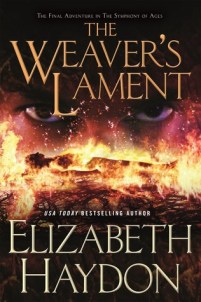
 The Weaver’s Lament by Elizabeth Haydon
Genre: Fantasy
Series: Symphony of Ages #9
Publisher: Tor Books (June 21, 2016)
Length: 352 pages
My Rating: 3 stars
The Weaver’s Lament is the ninth and final book in Elizabeth Haydon’s The Symphony of Ages series. Never having read any of the prior novels, I concede this book was probably not the best place for me to start my journey with these characters, but all in all, I found this finale an entertaining fantasy which I was able to fully enjoy. Ms. Haydon doing a wonderful job highlighting the important events of the past, making it easy for old fans or new readers to slide into this epic saga and understand why events are transpiring as they are and why, in the scope of the series as a whole, they are important.
From line one of the story, it becomes apparent that the “Three” are the focus of this tale. Rhapsody, Achmed, and Grunthor reuniting after significant time apart. Naturally, their reunion causes them to reflect on the past: the good and bad times, the successes and failures, and how a thousand years of peace since the War of the Known World has changed them. Achmed, in particular, muses that Grunthor has aged the most of their trio while Rhapsody has remained virtually untouched by time, though her joy for life is nothing like it once was; a fact which is not pleasing to Achmed at all. Of course, what makes Achmed’s thoughts important is how it highlights his continued desire for Rhapsody even after a thousand years, his disdain for her husband, Ashe, the Lord Cymarian, and the real reason he refuses to attend a “family reunion” Rhapsody has planned. (The family reunion is for the children, grandchildren, great grandchildren, and so forth which Rhapsody and Ashe have accumulated during their prodigious life span.)
Even without her two, oldest friends in attendance however, Rhapsody’s family get together goes forward. But, underneath the tranquility, all is not blissful, because Ashe is finally feeling his age. Yes, the dragon blood coursing through his veins has kept him seemingly ageless, but inside he feels the decrepitness of age enveloping him; more and more effort required to hold back the dragon. This has caused Ashe to desire to shed his mortal shell, ascend to the elemental plane as a dragon like his father before him, and leave his family behind. All that is holding him back Rhapsody’s refusal to let him go and her desire to conceive yet another child. The two at an impasse, which they generally agree to disagree about.
Just when events seem to foreshadow Lament turning into an emotional but rather bland farewell tour, an unexpected and tragic event occurs, which throws things into a downward spiral of chaos. The death of a beloved character the catalyst for the sudden shift in tone. An unfortunate misunderstanding destroying the thousand year peace. Rhapsody, Ashe, Achmed, and Grunthor all playing huge roles in the global drama. The fairy tale ending of our heroes journey seemingly derailed and ruined, begging the question “Why? Why? Why?” as the final half of the book is devoured to its final conclusion.
The best quality of The Weaver’ Lament for me personally was the camaraderie between the Three and the depth of their history together. Rhapsody, Achmed, and Gruntor acting exactly like old friends reunited; their bond of friendship so tight no amount of time — whether it be ten years or a thousand years — capable of severing it. The casual, easy way they slide into age old roles proof of their love for and comfort with one another, no matter their new exalted social positions. And while I (a first time reader) did not know their full history, I still found their bond compelling, convincing, and worthy of this, a final farewell.
The love story between Rhpasody and Ashe was also very well done, I thought. A couple who has been together for a thousand years, raised a family together, braved dangers, fought wars, shepherded new nations, and seen the world around them transform from what they knew can’t remain the same: time changes everything, but these two accept that, desperately seek to remember and celebrate the past which brought them together, and hold on to one another. Of course, they still have problems. They still have rifts they chose not to discuss. (Achmed’s desire for Rhapsody to name one.) They do not always agree. But they attempt to keep their love alive — even when tragedy envelopes them.
And it is actually the bitter tragedies which occur here that I found least compelling. Not wishing to spoil the surprises in Lament, I will refrain from discussing exactly what events I’m referring to, but just know that they felt forced and more than a little convenient. Sure, they were completely plausible, but they did not work for me. Perhaps, constant readers of the series might view them differently, but for my uninitiated eyes, I felt they ruined the organic flow of events, merely giving the author an opportunity to close out plot threads which seemed to have been left dangling the whole series.
A wonderfully entertaining and richly textured novel– truly epic in every aspect — The Weaver’s Lament deftly evokes deep emotions in old and new readers alike. Elizabeth Haydon turning the finale of her Rhapsody saga into a mesmerizing affair, which is both an amazingly entertaining introduction to these character as well as a fitting farewell to them.
I received this book from the publisher in exchange for a fair and honest review. I’d like to thank them for allowing me to receive this review copy and inform everyone that the review you have read is my opinion alone.
Purchase the book at Amazon.


.





 Today, I’m happy to have my son, Connor, return to the blog for yet another of his graphic novel reviews. Thankfully, he was able to tear himself away from his busy schedule (He has returned to the stressful middle school environment, so I’m not being sarcastic this time.) to give his thoughts on an older graphic novel that he read after beginning to devour old episodes of
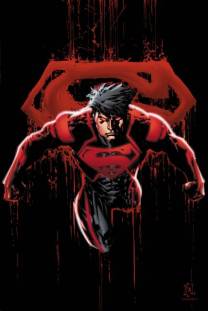 was good, the story better, most of those questions I had about this New 52 Superboy were answered, and it really helped make Teen Titans, Vol. 1: It’s Our Right to Fight an even better comic story.
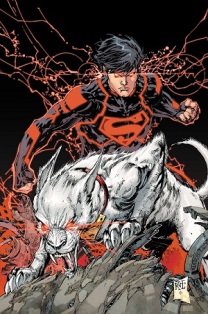 There was a lot to like about this graphic novel. I thought the writer (Scott Lobdell) really brought out how tough and confusing this new Superboy’s life was. I mean, he is a robot created to kill yet isn’t given any choice about how he is going to live his life or whether he wants to be a killer. And the art by R.B. Silva was amazing. I’m not much of an artist, so I can’t really describe why I liked the art here so much, but it was really cool and made the book so much better. I just liked the book all the way around.
 About Connor (In his dad’s words):





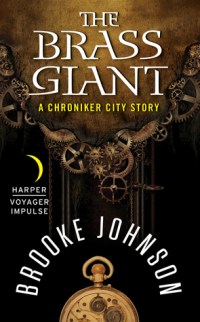 As a kid, I was heavily interested in science—physics and machines especially—but where I grew up, no one really encouraged girls to go into science, and for a long time I thought that there just wasn’t a future in it for me. Boys made fun of me for being interested in it, and my teachers and advisers discouraged me from pursuing that path because it might be too hard and I should pursue my other interests, like art and writing (despite the fact that I was a straight-A student and was deeply interested in taking every physics class my school offered). In the face of all that push-back, I gave up on a future career in science, decided to pursue writing because that’s what I was good at, and as I moved onto college, I wistfully looked at physics and engineering classes from afar, never voicing my desire to take that path. It wasn’t for me, they said. It would be too hard, they said. Part of me believed them.
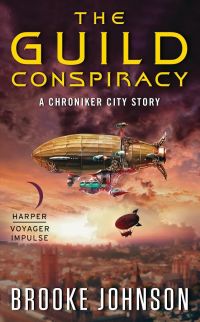 Part of me wonders if she had existed in the books I was reading, if I might have had the courage to take a more difficult path and pursue my interests in physics and engineering, instead of acquiescing to the social expectations of everyone around me. Instead of reading about a girl going through the same struggle, fighting to follow her dreams and defy all expectations, I read about boys on adventures—boy scientists, boy engineers, boy explorers—and there was no room for girls anywhere in the pages of those books. Thankfully, a lot of that has changed, and my daughter—though still a toddler now—will grow up with books like Interstellar Cinderella and Violet the Pilot and Rosie Revere, Engineer, books to encourage an interest in science and engineering… the books I never had. And she’ll have Petra, too, if she needs her.
 BROOKE JOHNSON is a stay-at-home mom and tea-loving writer. As the jack-of-all-trades bard of the family, she journeys through life with her husband, daughter, and dog. She currently resides in Northwest Arkansas but hopes to one day live somewhere more mountainous.







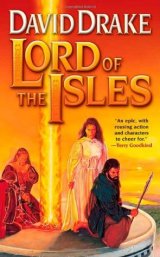 10. Lord of the Isles by David Drake
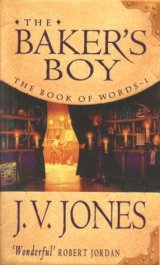 9. The Baker’s Boy by J.V. Jones
 8. The Runelords by David Farland
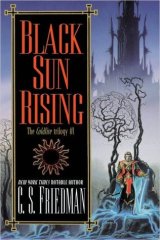 7. Black Sun Rising by C.S. Friedman
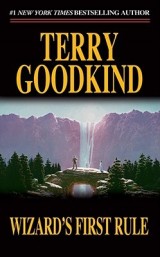 6. Wizards’ First Rule by Terry Goodkind
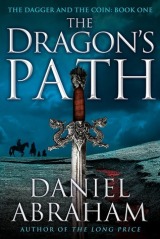 5. The Dragon’s Path by Daniel Abraham
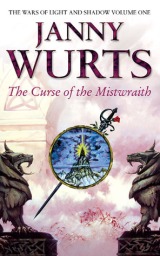 4. The Curse of the Mistwraith by Janny Wurts
 3.The Lies of Locke Lamora by Scott Lynch
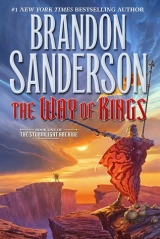 2. The Way of Kings by Brandon Sanderson
 1. The Name of the Wind by Patrick Rothfuss







 bookwraiths.com