
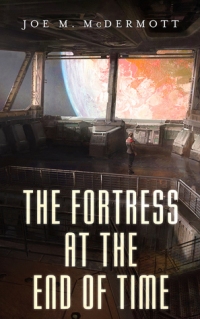
 Saint’s Blood by Sebastien de Castell
Genre: Fantasy
Series: Greatcoats #3
Publisher: Jo Fletcher Books (April 7, 2016)
Length: 576 pages
Author Information: Website | Twitter
My Rating: 5 stars.
Saint’s Blood is as close to perfect as a fantasy book gets. It has hilarious characters, serious moments, jaw-dropping fights, realistic plots, and the dramatic depth to completely sweep you into another world. Sebastien de Castell outdoing himself yet again, as he proves beyond any doubts that he is a writer of incredible talent. This Three Musketeers-like story of friendship and love, loyalty and lose, trust and faith likely to cause you to slip on your own Greatcoat, take up your trusty sword, and ride out to vanquish injustice!
Fresh off their tortuous trials and improbably victory in Knight’s Shadow, Falcio val Mond, Kest, Brasti, Valiana, and company are busy trying to secure Aline’s tenuous hold on the throne of Tristia. A feat which is nearly impossible considering the nation is overcome by corruption and intrigue, carved up by power hungry Dukes, filled with incorrigible knights, and protected by only a handful of Greatcoats. But, somehow, Valiana val Mond is holding things together, proving herself a gifted leader, as she assumes the role of Realm’s Protector. Falcio, however, seems intent on ruining everything by his insatiable need to stick the pointy end of his rapiers in every noble he meets. The fact that our beloved First Cantor of the Greatcoats isn’t quite himself anymore (due to the torture he endured during the “Lament”) making matters worse, as he stumbles from dumb decision to dumb decision.
But just when things look especially hopeless for our heroes THINGS GET WORSE!
Unexpected and overwhelming, a new threat arises. An especially vile and brutal attack upon Tristia commencing in the form of churches desecrated and Saints being summarily tortured and killed. All of this done by an unknown enemy bent on not only the destruction of Aline and the Greatcoats, but also the fundamental transformation of the realm. And while stumbling from one dangerous, devious attack to another, desperate to protect those he loves, and pushed to his limits (both physically and emotionally), Falcio val Mond begins to know true doubt, truly wondering if he and his friends can uncover the identity of their formidable enemy and find the inner strength to stop things before all they have struggled for is destroyed forever!
Now, before I go on with this review, I have to go ahead and admit something: I’m a Greatcoats fanboy. Every time I pick up the next book my first urge to shriek in joy.

Lots of reason why that is, but the main cause is my man-crush on Falcio val Mond and his friends Kest and Brasti. These three trade quips, insult one another, and generally take turns bickering throughout. But, no matter what, they are always standing together. Our trio of Greatcoats willing to face down impossible odds, fight for improbable victory, and brave hell alongside the other; Falcio, Kest, and Brasti determined to stick together through good and bad, because they are not just friends they are family. And this deep love between them is so powerful, it makes me want to be part of the group too.
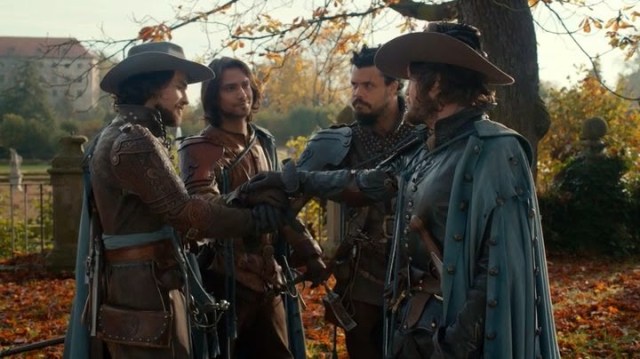
Just like brothers though, these guys can be cruel sometimes though. Funny, but cruel. A perfect example from the beginning of the book is when Falcio stumbles into yet another stupid duel with a young fighter he might not be able to beat. What do his best friends do? They cheer him on naturally.
‘This Undriel fellow really is remarkably skilled,’ Kest remarked.
Undriel. That was the bastard’s name.
Brasti came to my defense, after a fashion. ‘It’s not Falcio’s fault. He’s getting old. And slow. Also, I think he might be getting fat. Just look at him – barely four months since he beat Shuran and already he’s half the man he once was.’
And that small tidbit is merely the tip of the comedic iceberg, if you will. There are many laugh-out-loud moments in a story fraught with danger and hopelessness.
But since I’m being completely honest here I have to admit that Falcio is my favorite of the trio. (Sorry, Brasti. Don’t hate me.) This guy is exactly the kind of stubborn, haunted yet heroic swashbuckler I dreamed of growing up to be when I was young. Every time he stands up for a lost cause, refuses to kneel before the powerful, or finds a way to overcome sure defeat my inner child cheers. Falcio’s deep love and devotion to his friends as well as his deceased wife and king merely adding to my appreciation of him as a man of principles. Definitely, he has flaws, but even these are endearing rather than repulsive, because Falcio knows he has them (Kest and Brasti constantly point them out while also informing him his idiotic idealism is going to get them all killed eventually.) and attempts to correct or work around them. To say Falcio val Mond is quickly growing into one of my all-time favorite fantasy characters isn’t a real stretch.
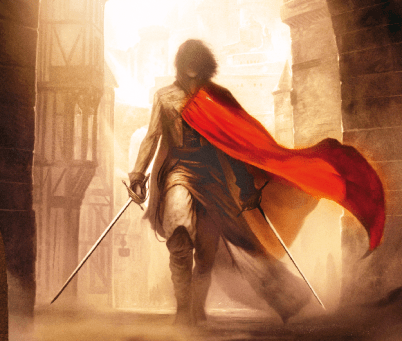
These three Greatcoats are not alone on the stage though. Sharing it with them are several very realistic female characters: Aline, Valiana and Ethalia. Valiana is definitely my favorite of the bunch, as she steals the spotlight in her brief moments, showing a regal bearing and steady proficiency in ruling, which both humbles Falcio and makes him (and me) so proud of the woman she has grown into. As for the future Queen Aline, she is transformed here from the terrified girl of book one and the addled follower in book two to a more mature, innately skilled teenager, who fights to overcome her very real fears to become the person she must. And, lastly, there is Ethalia, Falcio’s fairy tale love interest; her role increasing tremendously, as she is transformed from merely a pretty face into an integral part of the plot and her relationship with the First Cantor of the Greatcoats takes on a definite realistic tone going forward.
But every cast of colorful characters must have a great villain to overcome, and Sebastien de Castell has provided yet another one in Saint’s Blood. I won’t say much about this dastardly demon, because I do not want to spoil anything, but the very sadistic and subtle scheme this antagonist unleashes upon Tristia is pretty damned impressive, filled with amazing twists and turns. And when the curtain is finally pulled back for the big reveal, this enemy is not all black at all, but numerous shades of gray; the seeds of madness and the reasons for the vile deeds so very reasonable and relatable, not so very different from Falcio’s own.
Since this is a swashbuckling adventure though, I’m sure many of you want to know about the fight scenes. Well, I am able to conclusive inform you that the fight scenes in Saint’s Blood are some of the best anywhere. Sebastien de Castell really getting you down into the combatants heads, teaching you what they are attempting to do as well as what they actually are able to do. Sometimes the swashbuckling action taking on the feel of real fencing instructions, sometimes the best Hollywood daring do, but never are any of the scenes dull or boring in the least. Every single encounter is fraught with peril, filled with dramatic tension. Honestly, no one writes dueling better than this author.
What did I dislike about the book though? I mean, I always find a few things to criticize, right? Well, my fellow haters will be happy to know I actually have three, minor complaints. None of them terribly earth shattering, since they didn’t ruin my vast enjoyment with this story, but they did bother me, so I am going to mention them.
One, the disappearance of characters throughout the story. A favorite elements of the series for me has been the introduction of new Greatcoats every story. How we get to learn about them as they are slowly integrated into the group. No, they don’t all become part of the inner circle around Falcio, but in the prior books, they have always revolved around the core trio and interacted with them in important ways that affected the plot. Here, however, several new Greatcoats make an appearance, take part in a few exciting scenes, hang around for a chapter or two, then disappear all together or for long stretches of time. Certainly, there is nothing inherently wrong with co-stars coming and going in a narrative, but here it was bothersome, especially since the reason for their disappearance was never mentioned or not adequately dealt with in my opinion.
Two, the reveal of the villain in this book was a bit of a disappointment. Not who or what this individual was, but the way it was done. The buildup to the confrontation between Falcio and company and this unknown antagonist was one of the best parts of Saint’s Blood. Sebastien de Castell dropping hints, laying false leads, and making you second guess everyone’s allegiance except for Falcio. So mesmerizing was this lead up to our villain stepping out of the shadows that I was expecting magic fireworks, huge explosions, or a “WHAT THE HELL!” moment to rival George R.R. Martin’s Hodor. I didn’t really get that. At least, not to the extent I was expecting and desiring.
Third, too much Ethalia and not enough Valiana. In the author’s defense, the story is structured in such a way that Ethalia having the more prominent role in this narrative is inevitable. Be that as it may, Valiana is much more interesting to me than Ethalia, so I am going to mention my disappointment. And it isn’t that I dislike Ethalia at all, because I don’t. Unfortunately, she does bore me, even this new and improved Ethalia. Valiana, on the other hand, is a strong woman with big issues in her past who I would love to learn more about and see utilized to the utmost. I know I’m whining a little, but I’m allowed to do that since I have now admitted to being a fanboy of this series.
What you should take away from this rather lengthy review is that I highly recommend Greatcoats books to anyone! They are pure swashbuckling fun that have more than enough dark and bloody turns to keep more grimdark inclined fans entertained. So go ahead and read them already, you know you want to.
I received this book from the publisher in exchange for a fair and honest review. I’d like to thank them for allowing me to receive this review copy and inform everyone that the review you have read is my opinion alone.


 Today, I’m happy to have my son, Connor, return to the blog for yet another of his graphic novel reviews. Thankfully, this is becoming something of a regular occasion, and I personally will be enjoying it for as long as it lasts.
 About Connor (In his dad’s words):



 The Wheel of Osheim





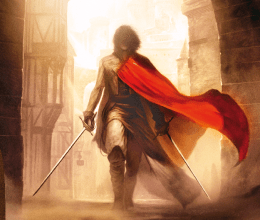 5. Falcio val Mond
 4. Anyone in
  3. Anyone in
  2. Anyone in









 When I started writing, my inspirations were predominantly David Gemmell, Iain M. Banks, Terry Pratchett and Phil K. Dick. All these writers employed humour, to varying degrees, in their superb work. I have always believed that I have a wicked sense of humour (yeah, right). It followed, then, that when I wrote – in whatever capacity – I would simply find humour in certain dialogues, or situations, and exploit that humour. I couldn’t help it. It was just there. Hollywood are happy to make comedies about funerals, I’m happy to employ humour in my writing, whether that be SF, thrillers or dark fantasy. Often, the darkest subjects are those most prone to offering a humorous context.
 My embedded “humour” reached an all-time high in a novel called Biohell, published by Solaris Books in 2006. When Combat K veteran Franco Haggis, (himself, a reasonably humorous character, I surmised – somebody who, when entering a bar, and was asked, “What would you like to drink?” would survey said bar, grin a toothy grin, and retort, “Everything!”) – well, when Franco married his tax-inspector girlfriend, Mel, who then transmogrified into an eight-foot zombie super-soldier whom Franco had to lead around on a chain leash… I was in my element. Unfortunately, the critics did not agree with my humour in this book. And thus, I learned, a more subtle approach was necessary.
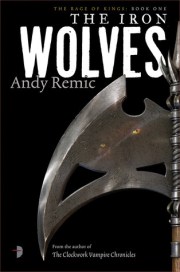
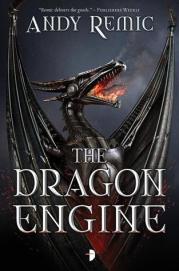
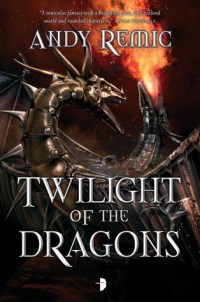 characters found themselves in – and are inherently true to the natures of the characters involved. For example, Narnok the Axeman (himself a star from an earlier novel called The Iron Wolves), stubborn, tough-as-a-coffin-nail, angry, bed-tempered, when confronted by a snarky, violent, psychopathic dragon named Volak (whom could easily bite off his head) replies to the question, “What is your name, tiny human?” with the (quite logical, for his nature, I reasoned) with, “I’m Narnok. Don’t forget it. It’s a name I’m going to carve on your arse”. Well, to me, this was humour derived from a moment of peril. It was a candle in the dark. It was a smile at a funeral when one remembers a particularly humorous trait of a lost loved-one. Ultimately, it was the middle-finger of humanity raised against aggression when faced by insurmountable odds. Humour, yes, but highlighting that iron streak in human nature which I find so appealing.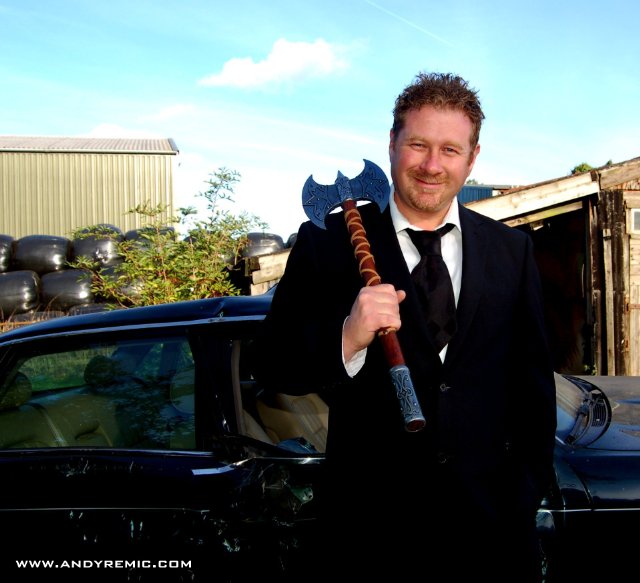





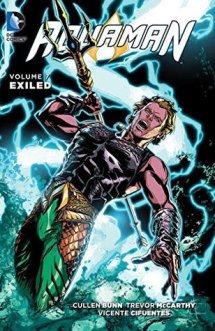
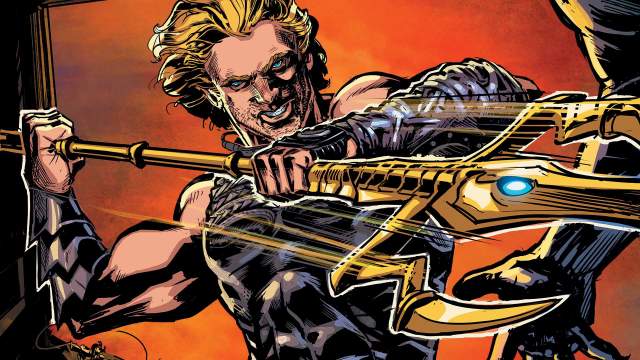 Aquaman: Exiled is about people from another dimension coming to earth, but they are destroying the world (Atlantis and everything else) in the process. This causes lots of problems besides the obvious, mainly that the Atlanteans want to stop the crisis by destroying the other dimension, but Aquaman disagrees, wanting to, at least, save the innocent people from there. Things getting heated, as most of Atlantis and even Queen Mera turn on our hero. But, with the help of some new friends, Aquaman tries to make his plan work.
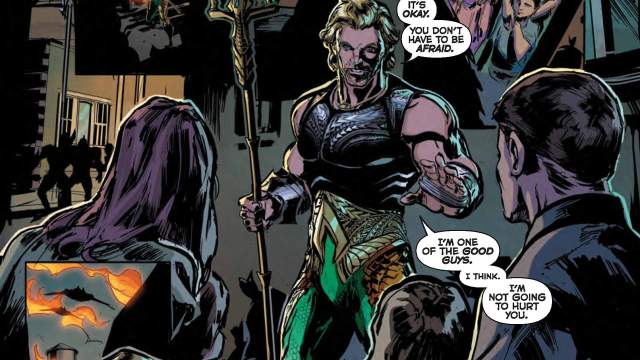 Like I said earlier, Aquaman is my favorite comic. I love the character, love his life both above the sea and below it. Mera is cool. And the stories have kept me interested. Sure, it can get confusing sometimes, but never so bad that I couldn’t understand what was happening. Exiled really gave me everything that I wanted in a comic — except for the art.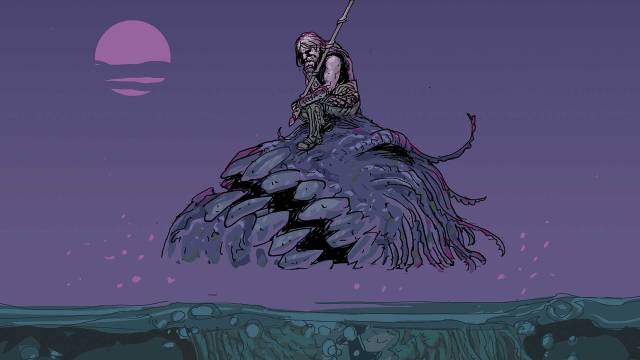










 bookwraiths.com