Fantasy Violence: Too Realistic or Not?

Many reviewers believe fantasy has become too violent, too ultra-realistic in that violence. Many of those critics point to Mark Lawrence’s series The Broken Empire as a prime example of their premise. Since Emperor of Thrones was released today, I wondered what everyone else thought, so please vote in the poll and leave your comments.

Posted in Musings | Tagged , , , , , , , , , , , , , | Leave a comment

Big Release Day for Fantasy Fans!

Lots of great, epic fantasy books being released today.

15804760

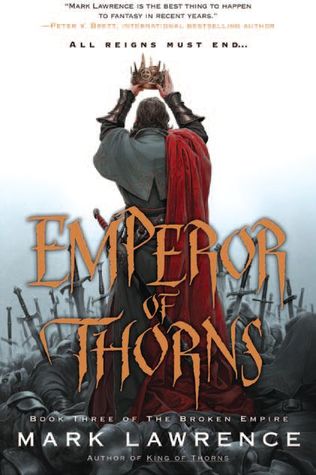
Emperor of Thorns (Broken Empire) by Mark.Lawrence

crowntower-2-5

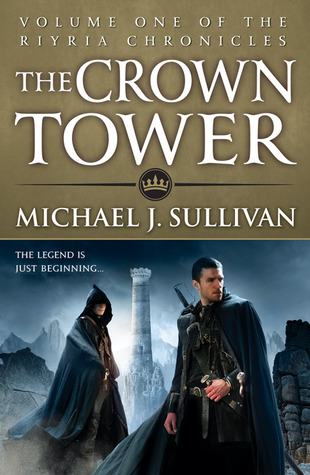
The Crown Tower(The Riyria Chronicles) by Michael J. Sullivan.

16142151

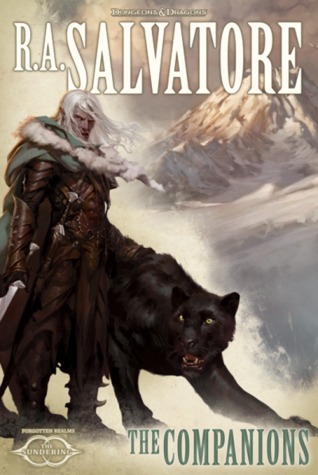
The Companions (The Sundering) by R.A. Salvatore.

I’m looking forward to the first two, have already enjoyed the last. See my review of The Companions by Salvatore here.

Posted in Fantasy | Tagged , , , , , , , , , , , , , | 2 Comments

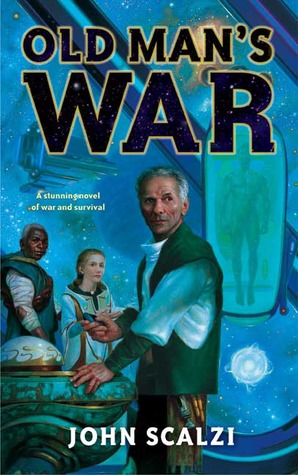
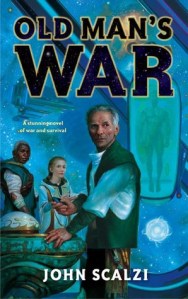
OLD MAN’S WAR (OLD MAN’S WAR #1) by JOHN SCALZI

1406395
My rating 4 out of 5 stars.

In the future, mankind has finally spread out into the stars. Humans from overpopulated countries around the world taking to the stars routinely to found colonies on numerous worlds. There has been no new “renaissance” from this otherworldly exodus on mother Earth however. No change in the sociopolitical norms. Nothing different in the daily life of an average citizens of the United States or any other industrialized country. Indeed, most pay little attention to the news that comes from beyond the globe. It does not affect their daily lives, which revolve around the normal things: getting married, going to work, raising children, and hoping to have enough savings to enjoy their old age.

And, really, there is no need for people of Earth to concern themselves with “out there” anyway. That is what the Colonial Defense Force (CDF) does. It manages and controls everything to do with other world colonization. It is their bureaucrats who decide upon the individuals who take to the stars. Their space station which orbits the Earth. Their skip drive ships that leave from that station to transport both people and materials out into the vastness of space. The CDF even controls the flow of information from those colonies back to mother Earth. Under their supervision, the spread of mankind to the stars has become almost hoo-hum; nothing to get excited about at all.

The only time when a citizen of a rich country even concerns themselves with the CDF is at age seventy-five. For at that age, you have finally become old enough to join the colonial armed forces. Why sit at home, feeling death creeping up upon you, and using up valuable resources when you could join the proud, the few, the colonial defense force!. You’ll never see Earth again, but in return, you will experience the unknown wonders of the galaxy and be given back your youth. How the CDF restores you back to twenty years old is a mystery, but it is a great incentive for seniors to get out of their recliners and head to their local CDF recruiter.

John Perry is one of those seniors who sees nothing for himself on Earth but a countdown to the grave. His beloved wife has already died, his only son is grown, and hanging around to be a granddad on traditional holidays doesn’t hold any allure. Thus, he heads off to the CDF to see something of the colonies and – more importantly – to recapture his lost youth. Maybe his second chance at life will produce as much happiness as his first trip did.

Once he rockets off into space for the nearest human colony, John begins to understand exactly what he has signed up for. The CDF was not lying when they intimated that he would be given back his youth. However, his old, worn out body must be discarded for a young, superhuman body that has been thoroughly tested and patented by the CDF technology division. This new body is genetically modified and enhanced by nano-technology and alien dna. (Not to mention that it is green.) But the worst part is that all these modifications of his frail, human form have been made for the simple reason that otherwise he would have no chance to survive his tour of duty in the CDF!

The galaxy is a very dangers place if you are a human, John learns. The CDF has been guarding the Earth all these centuries, protecting it not only from the aliens’ menace but also from the realization that the majority of the galaxy views mankind as a tasty snack. An animal to be captured, breed, fattened up and then savored at dinner with a nice, white wine. That is why the CDF has hidden the truth from people on Earth. Why they only recruit old people who have already had a chance to live their life. The reason John Perry and his friends “The Old Farts” onboard their outbound ship have to shed their ignorant bliss and become soldiers. Because now that Earth is in the rear view mirror, they are not on top of the food chain anymore!

I’m sure this sounds eerily similar to Heinlein’s Starship Troopers for many of you, but Old Man’s War is a very different flavor of science fiction novel: more tailored toward readers who do not like military fiction or scientific theory. Oh, there is a bit of both here: chapters dealing with military training, combat skirmishes and “theoretical” explanations of basic, future technology. However, Mr. Scalzi never spends much time with an subject, merely introduces enough information to keep one in the “know” before continuing on with the story of John Perry.

And a wonderful story it is. John Perry quickly becomes one of those ordinary guys who turns into a natural “hero”, not because he is gifted above his friends or finds some alien technology that gives him an edge but because he uses his wits and is lucky. His easygoing and sunny disposition is instantly likeable, as he seamlessly alternates between being a grieving old widower too becoming a funloving friend to the other “Old Farts” from his recruitment ship to just trying to survive as a grunt in the trenches of a war against vicious aliens. Mr. Scalzi writes each facet of our heroes story superbly, making a reader both understand and empathize with him all along the way of his second life.

Of course, there are problems with this novel; there always are. Here Perry becomes the person who always has the epiphany which saves the day. He is the guy who always survives the grenade event though he was closest to it. The foot soldier that is honored by his enemies even though he is a nobody in the trenches. When a plot line late in the novel involves a person from John’s past, it doesn’t surprise anyone that once again fortune has smiled upon him. Simply put, it is good to be John Perry in Old Man’s War, and that does distract from the overall tone of the narrative a bit.

Even with these annoyances, Old Man’s War was a joy to read. The writing was clear and concise, easy to consume, and John Perry’s journey from ignorant, protected Earthman to wise, veteran soldier of the Colonial Defense Force was a joy to read. I could barely put it down when I read it, and I am sure you will do the same if you give it a try. So stop reading this review already and go get a copy of the book.

CHECK OUT MY REVIEWS OF THE SERIES
THE GHOST BRIGADES

BUY THE BOOK AT AMAZON

Posted in Science Fiction | Tagged , , , , , , , | 10 Comments

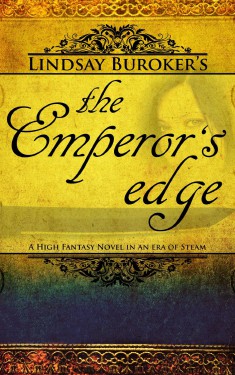
THE EMPEROR’S EDGE (EMPEROR’S EDGE #1) by LINDSAY BUROKER

THE EMPEROR'S EDGE

The Emperor’s Edge by Lindsey Buroker

Genre: Fantasy

Series: The Emperor’s Edge

Publisher: Self published (January 1, 2010)

Author Information:Website | Twitter

My Rating: 2 out of 5 stars.

After all my friends had positive things to say about The Emperor’s Edge, I decided to give it a try. Any novel that was described as “one of the bright stars of fantasy self-published fare” was something I had to read. (For those who were wondering, one of my friends used that description.)

Well, after finishing this one, I can understand why so many people adore Lindsay Buroker’s steampunk fantasy epic. However, the fun, campiness of the tale underwhelmed rather than charmed me.

The Emperor’s Edge begins with Amaranthe Lokdon, a woman enforcer, of Stumps, the capital of the Empire. As a female officer, she is a rarity in town (even though women are the business owners of the city) and a stickler for proper enforcer behavior, determined to rise up the chain of command so that she can change all the wrongs of the male-dominated department. One day, Amaranthe finds herself patrolling the city when she stumbles upon a crime; thereafter, she single-handedly takes into custody several “bad guys” while unbeknownst to her the young emperor watches. Thereafter, Emperor Sespian complements her for her daring-do, bides her au revoir and that is that — though he is somewhat fascinated by her.

But a single pebble can begin a massive landslide. At least it does in this novel, where the brief meeting between the young Emperor and a female police officer sends tremors through the status quo at the imperial palace. For you see, Commander of the Armies Hollowcrest has been the real power behind the young Emperor for years, viewing his young charge as a mere figurehead while he holds the true reigns of power in the Empire, and when he hears that Sespian has an interest in a female enforcer he views it as a threat to his monopoly over imperial power. (Why he feels this way is never fully explained.) Thus, the commander determines to kill Amaranthe. But since arranging the disgrace, disappearance, or death of a police officer is too much for the most powerful man in the Empire to facilitate, he personally meets with her at the imperial palace before sending her off to kill the most wanted assassin in the empire. All this done to get her out of the way.

Did I mention that Amaranthe had met the emperor only one time for maybe 5 minutes? Yeah, I guess I did mention it didn’t I.

Anyway, from this somewhat head-scratching beginning, the plot moves forward with Amaranthe quickly turning into a rebel against Hollowcrest. Soon, she gathers together a motley group of people whom she convinces to aid her in a plot to destabilize the Empire; all of them somehow getting onboard with trying to overthrow the most powerful man in the Empire — even if it might mean their deaths.

Now, to say, Amaranthe is the star of the tale that follows is like saying Batman is the main character of his movies. It is without a doubt a fact, not a theory, and in The Emperor’s Edge, Amaranthe quickly morphs from a simple police officer into a “Mary Stu” character. Only she can charm the most heartless of men. Only she can escapes death time and again. Her goodness of heart turning even the most hard-hearted criminal into her ally. Soon, she is not only capable of outwitting the most powerful and corrupt politicians in the empire, but also outthinking the most devious spies and wizards. Hell, even biological weapons have no chance against Super Amaranthe!

When I spoke these feeling out loud to my friends, they immediately pointed out that Amaranthe’s “Mary Stu-ness” and the somewhat silly plot was all campy fun. The eye-rolling luck of the good guys very much like an old school superhero comic or a classic, pulp fantasy. And I totally agree that it can be read that way, because Buroker does seem to emphasize the humorous camaraderie between Amaranthe and her helpers over the complicated realism of a true epic fantasy thriller. However, even though I did warm up to Amaranthe’s interaction with her co-conspirators, the unrealistic campiness of everything grew into more of a negative with me rather than a positive. Something that inevitably ruined my overall enjoyment of this novel.

So to wrap this up, The Emperor’s Edge is a fantasy set in a world of steam with some fun characters and many laugh out loud moments, but the only way to fully enjoy it is to accept that campy adventure is the rule, not the exception here.

Buy The Emperor’s Edge Collection (Books 1, 2, and 3) at Amazon.

Posted in Fantasy | Tagged , , , , , , , , , , , | 3 Comments

Game of Souls Might Steal Yours.

17453142

My rating is 3 out of 5 stars.

Game of Souls comes out swinging.

The tale starts off with an assassin contemplating his latest job. This assassin is not concerned with plans or worries of how he is going to accomplish his mission however. No, he hopes his latest target will actually give him a challenge!

But the surprises do not stop there because immediately the assassin’s target does something totally unexpected. (Can’t tell you what because it would ruin the surprise.) This event sets up a classic confrontation, teasing one with a whole set of mysteries that require answering.

Unfortunately, as the tension is building for a big showdown, these two dynamic characters disappear. The story then jumps forward in time by a decade and a half at least; our assassin and his target lost in the hazy past.

This will no doubt disappointed a lot of readers, but you should not lose heart: just keep turning the pages. For after time shift, a whole new set of characters are introduced quickly, and a different plot is put into place. Mr. Simpson also uses these introductory chapters to world build, laying out simply and quickly the history of an empire, the ruling elites games of power, and the downtrodden people and their position as shunned citizens. He also weaves an interesting – though complex – magic system of Melders, who are individuals who can call upon the power of their “soul” to do marvelous feats of magic.

After this foundation is laid, the world of Game of Souls comes alive as Keedar, Melder from the slums, and Winslow, son of a powerful noble, are slowly drawn together. Their individual stories gradually intertwine and become a driven pursuit for truth of their lives and for the ability to master the eight cycles of the “soul.” Thrown in a good dose of political intrigue and mysterious legends, and you have a good, old-fashioned page turner.

Take a chance on this one, but be careful Mr. Simpson’s writing jsut might “steal” your soul.

Posted in Fantasy | Tagged , , , , , , , | 2 Comments

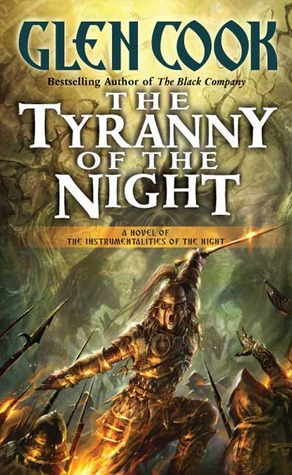
THE TYRANNY OF THE NIGHT (THE INSTRUMENTALITIES OF THE NIGHT VOLUME 1) by GLEN COOK

325398
My rating is 4 out of 5 stars.

I’m a big fan of Glen Cook and have been since I was a know-it-all teenager, so whenever he puts out a new book, I eventually get around to reading it. Usually I love the thing, because I just enjoy the way the man tells stories, but even I have to say this book was difficult to get real excited about. However, since Cook wrote it, I finally gave it a try and was glad I did so.

With The Tyranny of the Night, Cook takes us to a thinly concealed 13th century Europe. So thinly disguised I might add that I soon made a list of what fictional country was Italy, which was Burgundy, et cetera and kept up with the characters locations that way instead of the fictional ones.

Sorry, I digressed there.

In this fantasy world, there is a wall of ice in the north which is slowly crawling over humanity, reclaiming the land for the imps, demons, and dark gods who are (drum roll please) the instrumentalities of the night. The wise in the world theorize that this ice age is occurring because the great magical Wells of Ihrain, which the world’s two greatest religions both covet and which correlates to Jerusalem in our world, are gradually drying up. Indeed, the glacier’s growth is increasing, which suggests that the wells are accelerating toward their eventually demise. However, this lessening of their power has not kept the Patriarchs of the West and the Pramans, or the followers of the Written, from fighting several crusade-like wars for possession of them.

As our story begins, a precarious truce holds sway over the world, but that all changes when Else, a young Praman warrior, and his small band of comrades are attacked by a creature of the night: a demigod to be specific. Too ignorant or too stubborn to just die, Else determines to fight back, and he does just that, using his ingenuity to cast down the undefeatable creature of the night. A victory which brings not great joy and accolades to Else but the eternal wrath of the night and the hatred of more human enemies. In fact, Else’s immediate reward for his unexpected success is to be sent as a spy into the heartland of his people’s mortal enemies – unto the Patriarchal city itself, leaving his family, his friends, and all he has ever known behind. There his mission is simple: weasel his way into a position of power and direct the attention of the western kingdom away from any war to take back the Wells of Ihrain.

These ridiculous orders from his lord are accepted by Else as his duty, and he departs even though he has lots of unanswered questions. However, he soon finds that in order to survive he has to do more than pretend to be a westerner; he has to become one. Quickly, our hero is emulating his sworn enemies, eating their food even though it is sacrilege to his beliefs, casting aside his own spirituality, and even fighting and killing other Pramans. Submerged in this alter ego he has crafted, determined to do his duty even though it violates his every belief, Else begins to doubt the foundations of his life: faith, country, and family.

If all that wasn’t enough for poor Else to deal with, someone keeps trying to kill him too? But is it the night, or is it human enemies? Else doesn’t know, and neither does the reader – at least in large part. But there is one thing everyone is certain off: once a man kills a god how can the world ever be the same again. And that is what Cook explores in this first book of the series.

Hopefully, I did the book justice with that brief description. Please understand there are several characters who get considerable page time here – it isn’t just about Else and his mission – and these separate stories do not always interconnect in any but a very remote way. So it can be very confusion to get everything straight in your mind when you first begin reading this novel. However, it’s worth the effort and does grow on you. Now, I don’t know if the growth is new hair on your bald head or fungus on your toes, but it is there nonetheless. But my bad jokes aside, give this book a try you might enjoy it.

Purchase the book at Amazon.

Posted in 4 Stars, Fantasy, High | Tagged , , , , , , | Leave a comment

Hammer of God: Decent SciFi

158403

My rating 3 out of 5 stars.

I was at my local public library trying to sign up for e-book service (Don’t get me started on how annoying that was) when I stumbled upon this book. As I began reading, I wondered how I had missed this novel back in the 90s. This was answered within two chapters, however, when I realized I had read this back in the day and just forgotten about it.

The premise of The Hammer of God is (drum roll please) an steroid on a collision course with Earth. And yes, there have been several novels exploring this same premise and also a couple movie released in 1998. (For those keeping track, the movies were Deep Impact starring Robert Duvall and Morgan Freeman and Armageddon directed by Michael Bay, produced by Jerry Bruckheimer, and headlined by a star-studded cast including Bruce Willis, Ben Affleck, Billy BobThornton, Liv Tyler, and Owen Wilson.)

Mr. Clarke’s novel is a bit different from the normal disaster, end-of-the-world story or movie in that it spends the majority of its time following the life of our main character, spaceship-captain Robert Singh. Singh appears to be a normal man of his times, and we explore that time through his life. We are shown his youth as an athlete competing in a marathon race on the Lunar surface. We are watch as Singh reminisces about his first love and his first child being born on a technocrat controlled Earth of 3 billion people. From there, we follow Robert Singh to the colony on Mars, which is gradually terra forming the Red Planet, and we even touch upon his time as a bored space captain. Interspersed among our life story of Robert Singh is plenty of narrative about Earth history, the evolution of technology, religion, and society, and the how of Earth’s plan to protect itself against the fate of the dinosaurs: extinction by asteroid strike.

Eventually, Mr. Clarke gets around to talking about our ominous asteroid of death: Kali it is named. The how and why of Kali’s existence is touched upon, and we then are given a brief story of Goliath, Singh’s ship, emergency voyage to rendevous with Kali. The narrative briefly describes the construction and operation of a special thruster used on Kali to nudge its orbit a tiny bit so as to make it miss Earth, and – since this is a novel, not a scientific paper – Mr. Clarke throws several problems at Robert Singh and the crew of the Goliath to complicates their task and make it a more interesting story.

All in all, this was a decent novel, but it was not a great one by any stretch. Mr. Clarke writes at the end that The Hammer of God began its existence as a short story, and it probably should have remained one, because it seemed stretched out for no practical purpose except to relay more scientific information. Also, the difficulties encountered by Singh and his ship seem impractical and somewhat ridiculous though they did add a small amount of drama. No matter its faults, however, I will admit that the moments when Robert Singh contemplates his past and speaks about his first love and his first child being the most precious times of his life were poignantly written and did touch a chord with me. For that reason and the science it imparts, I’m glad I “rediscovered” this book.

Posted in Science Fiction | Tagged , , | Leave a comment

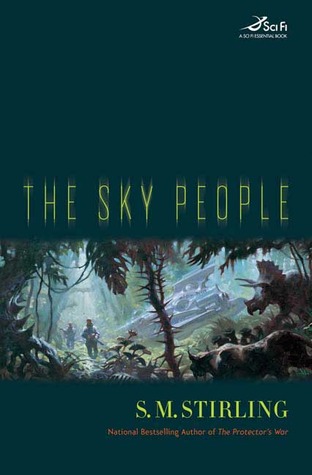
The Sky People: Old-fashioned SciFi Romp!

77879

My rating is 3 out of 5 stars.

What if Mars and Venus had been living worlds just like ours?

And what if humans discovered this at the start of the Cold War space race?

Would the U.S.A. and U.S.S.R. still squabble over the Korean Peninsula and Vietnam, or would they set there sites and space rockets toward a more lofty goal?

And once that race began what would they have found on these other worlds and how did it get there?

These are some of the questions that S.M. Stirling poses here, and he does a great job of making this interplanetary space race interesting.

The story itself revolves around the planet Venus, where Soviet planetary probes have discovered both Homo Sapiens and Homo Neanderthalensis. Manned space flights by both the Soviets and Americans have established bases on the planet, where other familiar animals like dinosaurs and plants from the dinosaur era are found to exist. Our main character is one Lieutenant Marc Vitrac, a rugged Cajun from the Louisiana bayous who is now a Ranger in the US Aerospace Force. He and a small party of other Americans – along with one Soviet – are sent out in an airship (i.e. ballon-type airship) to recover the crew of a downed Soviet shuttle.

Needless to say, weather, animals, mechanical failure, natives and sabotage from an unknown enemy cause this mission to become exciting. But throughout our near nonstop adventures, Mr. Stirling always manages to seamlessly return to the mystery of how could evolution on Venus have produced people, animals and plants so similar to Earth. A mystery that only deepens when the natives turn out to speak a language similar to those found on Earth thousands of years before.

Of course, like all good scifi novels, there is a cute, savage princess who falls for our leading man; numerous fights between man and animals or man and natives; and the introduction of an unknown alien force that might hold the answers to all the questions about how similar life exists on Earth, Venus and Mars. What more could any scifi fan want from a book that is not trying to be anything other than a good old-fashioned scifi romp?

Nothing. That is why you should give this book a try.

Posted in Science Fiction | Tagged , , | Leave a comment

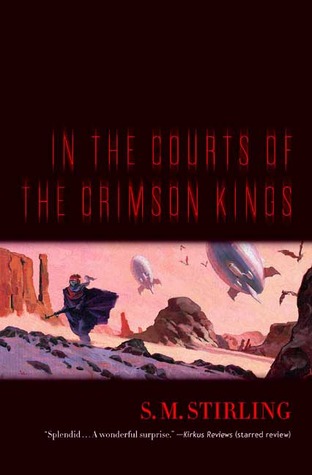
Courts of the Crimson Kings: Best Mars Book Since Burroughs!

1723945

My rating is 4 out of 5 stars.

Even though I enjoyed The Sky People, the first novel in S.M. Stirling’s duology, I was not really excited to read this book. I mean, it is a scifi novel about Mars, and my book list contains several of Edgar Rice Burroughs’ books. Honestly, how can anyone top John Carter? But after finishing, I have to say that Stirling did a stupendous job of making this Mars a cool place. It had a haunting similarity to Barsoom but with a history and flavor all its own.

The story itself is standard pulp scifi; a continuation of the story begun in The Sky People. By 2000, both the Soviets and Americans have established small enclaves on Mars, but whereas Venus was a pristine wilderness with savage natives, Martian civilzation is millenium older than Earth’s own with a very rich history. Indeed, the remnants of the world spanning Tollamune Empire still exists and functions upon the red planet, safe and secure under the gargantuam mountain called Olympus Mons. There the current emperor resides; his lordship belonging to a ruling dynasty that once ruled the whole planet and spans back thousands of years into Earth’s remote past. Indeed, even in its death throws, Martian science still surpasses Earth’s in such areas as genetic engineering; a skill which seemingly pervades all areas of Martian life including their weapons and landships.

Our tour guide through this ancient realm is archeologist Jeremy Wainman who has been rocketed to Mars by the U.S. Aero-Space Force; his mission to explore the lost city of Rema-Dza out in the “Great Beyond”, i.e., the Martian desert. To aid Jeremy, his bosses in the USASF contracts with a female Martian mercenary, Teyud za-Zhalt, to lead the expedition and basically keep Jeremy from getting killed. Of course, while keeping Jeremy alive, our Martian mercenary falls in love with him.

But the fun doesn’t stop there, because you see there is more to Teyud than meets the eye. When the expedition discovers an ancient Martian artifact at the lost city, she stops being Jeremy’s lover and protector and turns into the one needing protection. From there, the book only gets better and better as political intrigue, duels, and unknown alien forces erupt in our story. And all the while, the reader gets to learn more and more about this very cool Mars and its intriguing science and history. Even the ending, though completely expected, is entertaining. My only reget as I laid the book down was that I would not read any more stories of Stirling’s Mars.

Posted in Science Fiction | Tagged , , , , , , | Leave a comment

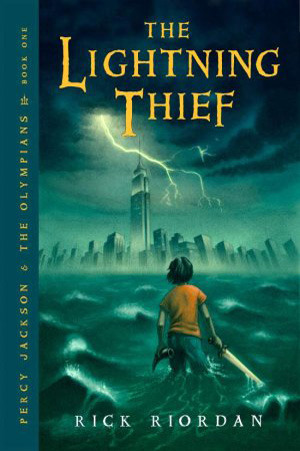
THE LIGHTNING THIEF by RICK RIORDAN

28187

My rating is 3 of 5 stars.

The Lightning Thief is an engaging story involving Percy, a confused teenage boy, who does not fit in no matter which boarding school he attends. His mother loves him dearly, but Percy and his step-dad do not get along, because “Smelly” Gabe treats him like crap. And don’t even mention his “real” father, because Percy has few memories of that stranger. Due to all this, our dark-haired and green eyed boy has attitude problems, learning problems, and family problems. Of course, Percy tries to hide all his insecurities and anger behind a tough facade and – mostly – lame jokes. But deep down, our troubled youngster is seeking for some meaning to his problematic life. Something that explains exactly who he is and why he is like this.

Almost immediately in the story, Percy stumbles upon the fact that he is not a mere mortal at all! Turns out he is a half-blood: a child born from the union of a mortal and a god. No wonder, he has felt like he did not belong in the modern world. It also explains why his “real” father has never been around, because his dad is a member of the ancient Greek pantheon.

Yes, those guys still exist, and most of them still live on Mount Olympus – which is suspended above the Empire State Building!

Yes in New York City!

Because you see, the Greek gods are not really the gods of ancient Greece at all but of western civilization itself. So as the center of the western world has shifted through the ages, the Greek gods have migrated with it through numerous countries until they found themselves centered in the good, old U.S. of A..

Once Percy discovers his godly heritage, his life is in grave danger . . . from otherworldly monsters! Thankfully, our teenage hero finds allies to help him escape his pursuers and reach sanctuary. The trip is fraught with danger, monsters and fighting. Percy comes through it all however, discovering otherworldly abilities within that he doesn’t understand and that surprises those at camp. Yeah, the safe haven Percy has been through hell to get through is Camp Half-Blood: a summer camp for the god’s kids.

At camp, Percy goes through the normal juvenile process of fitting in; some of the other half-bloods like him and some do not, i.e., there is a bully who instantly hates him. He meets ancient, powerful individuals from Greek mythology, lives in a house with the other campers, participates in camp “activities,”drinks from self-filling cups, and realizes that he might have some destiny to fulfill. His mentors even try to train him to fight with ancient weaponry. (It seems good, old-fashioned firearms do not work for the gods of western civilization or their offspring. Who knew?) Percy naturally shows uncanny abilities, is gifted with a wondrous weapon of power, finds himself on a quest that he is not prepared for but which he must undertake to save the world from certain destruction, and finally finds the true friends who understand his teenage pain.

Even though I do not read many Young Adult novels, The Lightning Thief made me want to try more; it was just good old fashioned fun. The Olympian mythology kept things interesting, the writing was fast-paced and enjoyable, the characters were fun, and Percy – though dense at times – was an interesting protagonist. So for all those reasons, give this one a try.

Oh, did I mention that I read this as a bedtime story to my kids?

I didn’t. Well, I read it to them every nite for a couple months. They loved it. I did to, because it put them to sleep within 10 minutes tops. And that, my friend, made this book a dad’s best friend!

BUY THE NOVEL AT AMAZON.

Posted in Young Adult | Tagged , , , , , , , , , , | 2 Comments