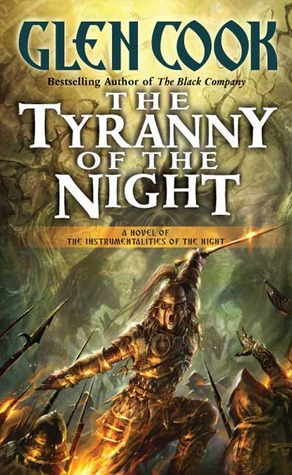
THE TYRANNY OF THE NIGHT (THE INSTRUMENTALITIES OF THE NIGHT VOLUME 1) by GLEN COOK

325398
My rating is 4 out of 5 stars.

I’m a big fan of Glen Cook and have been since I was a know-it-all teenager, so whenever he puts out a new book, I eventually get around to reading it. Usually I love the thing, because I just enjoy the way the man tells stories, but even I have to say this book was difficult to get real excited about. However, since Cook wrote it, I finally gave it a try and was glad I did so.

With The Tyranny of the Night, Cook takes us to a thinly concealed 13th century Europe. So thinly disguised I might add that I soon made a list of what fictional country was Italy, which was Burgundy, et cetera and kept up with the characters locations that way instead of the fictional ones.

Sorry, I digressed there.

In this fantasy world, there is a wall of ice in the north which is slowly crawling over humanity, reclaiming the land for the imps, demons, and dark gods who are (drum roll please) the instrumentalities of the night. The wise in the world theorize that this ice age is occurring because the great magical Wells of Ihrain, which the world’s two greatest religions both covet and which correlates to Jerusalem in our world, are gradually drying up. Indeed, the glacier’s growth is increasing, which suggests that the wells are accelerating toward their eventually demise. However, this lessening of their power has not kept the Patriarchs of the West and the Pramans, or the followers of the Written, from fighting several crusade-like wars for possession of them.

As our story begins, a precarious truce holds sway over the world, but that all changes when Else, a young Praman warrior, and his small band of comrades are attacked by a creature of the night: a demigod to be specific. Too ignorant or too stubborn to just die, Else determines to fight back, and he does just that, using his ingenuity to cast down the undefeatable creature of the night. A victory which brings not great joy and accolades to Else but the eternal wrath of the night and the hatred of more human enemies. In fact, Else’s immediate reward for his unexpected success is to be sent as a spy into the heartland of his people’s mortal enemies – unto the Patriarchal city itself, leaving his family, his friends, and all he has ever known behind. There his mission is simple: weasel his way into a position of power and direct the attention of the western kingdom away from any war to take back the Wells of Ihrain.

These ridiculous orders from his lord are accepted by Else as his duty, and he departs even though he has lots of unanswered questions. However, he soon finds that in order to survive he has to do more than pretend to be a westerner; he has to become one. Quickly, our hero is emulating his sworn enemies, eating their food even though it is sacrilege to his beliefs, casting aside his own spirituality, and even fighting and killing other Pramans. Submerged in this alter ego he has crafted, determined to do his duty even though it violates his every belief, Else begins to doubt the foundations of his life: faith, country, and family.

If all that wasn’t enough for poor Else to deal with, someone keeps trying to kill him too? But is it the night, or is it human enemies? Else doesn’t know, and neither does the reader – at least in large part. But there is one thing everyone is certain off: once a man kills a god how can the world ever be the same again. And that is what Cook explores in this first book of the series.

Hopefully, I did the book justice with that brief description. Please understand there are several characters who get considerable page time here – it isn’t just about Else and his mission – and these separate stories do not always interconnect in any but a very remote way. So it can be very confusion to get everything straight in your mind when you first begin reading this novel. However, it’s worth the effort and does grow on you. Now, I don’t know if the growth is new hair on your bald head or fungus on your toes, but it is there nonetheless. But my bad jokes aside, give this book a try you might enjoy it.

Purchase the book at Amazon.

Posted in 4 Stars, Fantasy, High | Tagged , , , , , , | Leave a comment

Hammer of God: Decent SciFi

158403

My rating 3 out of 5 stars.

I was at my local public library trying to sign up for e-book service (Don’t get me started on how annoying that was) when I stumbled upon this book. As I began reading, I wondered how I had missed this novel back in the 90s. This was answered within two chapters, however, when I realized I had read this back in the day and just forgotten about it.

The premise of The Hammer of God is (drum roll please) an steroid on a collision course with Earth. And yes, there have been several novels exploring this same premise and also a couple movie released in 1998. (For those keeping track, the movies were Deep Impact starring Robert Duvall and Morgan Freeman and Armageddon directed by Michael Bay, produced by Jerry Bruckheimer, and headlined by a star-studded cast including Bruce Willis, Ben Affleck, Billy BobThornton, Liv Tyler, and Owen Wilson.)

Mr. Clarke’s novel is a bit different from the normal disaster, end-of-the-world story or movie in that it spends the majority of its time following the life of our main character, spaceship-captain Robert Singh. Singh appears to be a normal man of his times, and we explore that time through his life. We are shown his youth as an athlete competing in a marathon race on the Lunar surface. We are watch as Singh reminisces about his first love and his first child being born on a technocrat controlled Earth of 3 billion people. From there, we follow Robert Singh to the colony on Mars, which is gradually terra forming the Red Planet, and we even touch upon his time as a bored space captain. Interspersed among our life story of Robert Singh is plenty of narrative about Earth history, the evolution of technology, religion, and society, and the how of Earth’s plan to protect itself against the fate of the dinosaurs: extinction by asteroid strike.

Eventually, Mr. Clarke gets around to talking about our ominous asteroid of death: Kali it is named. The how and why of Kali’s existence is touched upon, and we then are given a brief story of Goliath, Singh’s ship, emergency voyage to rendevous with Kali. The narrative briefly describes the construction and operation of a special thruster used on Kali to nudge its orbit a tiny bit so as to make it miss Earth, and – since this is a novel, not a scientific paper – Mr. Clarke throws several problems at Robert Singh and the crew of the Goliath to complicates their task and make it a more interesting story.

All in all, this was a decent novel, but it was not a great one by any stretch. Mr. Clarke writes at the end that The Hammer of God began its existence as a short story, and it probably should have remained one, because it seemed stretched out for no practical purpose except to relay more scientific information. Also, the difficulties encountered by Singh and his ship seem impractical and somewhat ridiculous though they did add a small amount of drama. No matter its faults, however, I will admit that the moments when Robert Singh contemplates his past and speaks about his first love and his first child being the most precious times of his life were poignantly written and did touch a chord with me. For that reason and the science it imparts, I’m glad I “rediscovered” this book.

Posted in Science Fiction | Tagged , , | Leave a comment

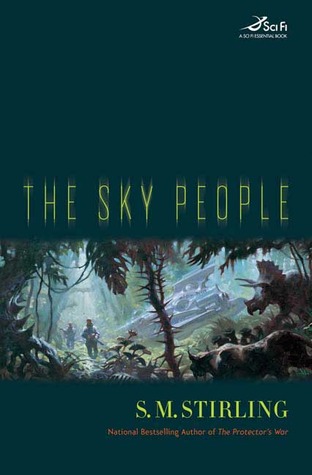
The Sky People: Old-fashioned SciFi Romp!

77879

My rating is 3 out of 5 stars.

What if Mars and Venus had been living worlds just like ours?

And what if humans discovered this at the start of the Cold War space race?

Would the U.S.A. and U.S.S.R. still squabble over the Korean Peninsula and Vietnam, or would they set there sites and space rockets toward a more lofty goal?

And once that race began what would they have found on these other worlds and how did it get there?

These are some of the questions that S.M. Stirling poses here, and he does a great job of making this interplanetary space race interesting.

The story itself revolves around the planet Venus, where Soviet planetary probes have discovered both Homo Sapiens and Homo Neanderthalensis. Manned space flights by both the Soviets and Americans have established bases on the planet, where other familiar animals like dinosaurs and plants from the dinosaur era are found to exist. Our main character is one Lieutenant Marc Vitrac, a rugged Cajun from the Louisiana bayous who is now a Ranger in the US Aerospace Force. He and a small party of other Americans – along with one Soviet – are sent out in an airship (i.e. ballon-type airship) to recover the crew of a downed Soviet shuttle.

Needless to say, weather, animals, mechanical failure, natives and sabotage from an unknown enemy cause this mission to become exciting. But throughout our near nonstop adventures, Mr. Stirling always manages to seamlessly return to the mystery of how could evolution on Venus have produced people, animals and plants so similar to Earth. A mystery that only deepens when the natives turn out to speak a language similar to those found on Earth thousands of years before.

Of course, like all good scifi novels, there is a cute, savage princess who falls for our leading man; numerous fights between man and animals or man and natives; and the introduction of an unknown alien force that might hold the answers to all the questions about how similar life exists on Earth, Venus and Mars. What more could any scifi fan want from a book that is not trying to be anything other than a good old-fashioned scifi romp?

Nothing. That is why you should give this book a try.

Posted in Science Fiction | Tagged , , | Leave a comment

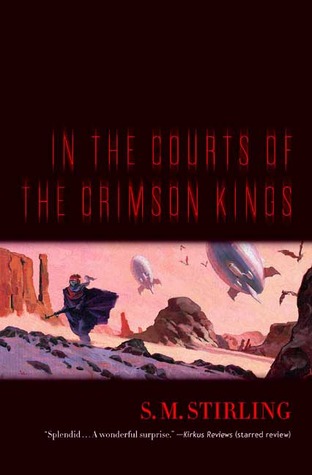
Courts of the Crimson Kings: Best Mars Book Since Burroughs!

1723945

My rating is 4 out of 5 stars.

Even though I enjoyed The Sky People, the first novel in S.M. Stirling’s duology, I was not really excited to read this book. I mean, it is a scifi novel about Mars, and my book list contains several of Edgar Rice Burroughs’ books. Honestly, how can anyone top John Carter? But after finishing, I have to say that Stirling did a stupendous job of making this Mars a cool place. It had a haunting similarity to Barsoom but with a history and flavor all its own.

The story itself is standard pulp scifi; a continuation of the story begun in The Sky People. By 2000, both the Soviets and Americans have established small enclaves on Mars, but whereas Venus was a pristine wilderness with savage natives, Martian civilzation is millenium older than Earth’s own with a very rich history. Indeed, the remnants of the world spanning Tollamune Empire still exists and functions upon the red planet, safe and secure under the gargantuam mountain called Olympus Mons. There the current emperor resides; his lordship belonging to a ruling dynasty that once ruled the whole planet and spans back thousands of years into Earth’s remote past. Indeed, even in its death throws, Martian science still surpasses Earth’s in such areas as genetic engineering; a skill which seemingly pervades all areas of Martian life including their weapons and landships.

Our tour guide through this ancient realm is archeologist Jeremy Wainman who has been rocketed to Mars by the U.S. Aero-Space Force; his mission to explore the lost city of Rema-Dza out in the “Great Beyond”, i.e., the Martian desert. To aid Jeremy, his bosses in the USASF contracts with a female Martian mercenary, Teyud za-Zhalt, to lead the expedition and basically keep Jeremy from getting killed. Of course, while keeping Jeremy alive, our Martian mercenary falls in love with him.

But the fun doesn’t stop there, because you see there is more to Teyud than meets the eye. When the expedition discovers an ancient Martian artifact at the lost city, she stops being Jeremy’s lover and protector and turns into the one needing protection. From there, the book only gets better and better as political intrigue, duels, and unknown alien forces erupt in our story. And all the while, the reader gets to learn more and more about this very cool Mars and its intriguing science and history. Even the ending, though completely expected, is entertaining. My only reget as I laid the book down was that I would not read any more stories of Stirling’s Mars.

Posted in Science Fiction | Tagged , , , , , , | Leave a comment

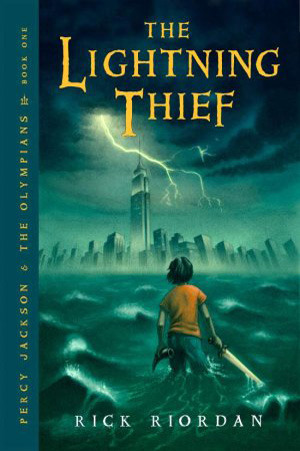
THE LIGHTNING THIEF by RICK RIORDAN

28187

My rating is 3 of 5 stars.

The Lightning Thief is an engaging story involving Percy, a confused teenage boy, who does not fit in no matter which boarding school he attends. His mother loves him dearly, but Percy and his step-dad do not get along, because “Smelly” Gabe treats him like crap. And don’t even mention his “real” father, because Percy has few memories of that stranger. Due to all this, our dark-haired and green eyed boy has attitude problems, learning problems, and family problems. Of course, Percy tries to hide all his insecurities and anger behind a tough facade and – mostly – lame jokes. But deep down, our troubled youngster is seeking for some meaning to his problematic life. Something that explains exactly who he is and why he is like this.

Almost immediately in the story, Percy stumbles upon the fact that he is not a mere mortal at all! Turns out he is a half-blood: a child born from the union of a mortal and a god. No wonder, he has felt like he did not belong in the modern world. It also explains why his “real” father has never been around, because his dad is a member of the ancient Greek pantheon.

Yes, those guys still exist, and most of them still live on Mount Olympus – which is suspended above the Empire State Building!

Yes in New York City!

Because you see, the Greek gods are not really the gods of ancient Greece at all but of western civilization itself. So as the center of the western world has shifted through the ages, the Greek gods have migrated with it through numerous countries until they found themselves centered in the good, old U.S. of A..

Once Percy discovers his godly heritage, his life is in grave danger . . . from otherworldly monsters! Thankfully, our teenage hero finds allies to help him escape his pursuers and reach sanctuary. The trip is fraught with danger, monsters and fighting. Percy comes through it all however, discovering otherworldly abilities within that he doesn’t understand and that surprises those at camp. Yeah, the safe haven Percy has been through hell to get through is Camp Half-Blood: a summer camp for the god’s kids.

At camp, Percy goes through the normal juvenile process of fitting in; some of the other half-bloods like him and some do not, i.e., there is a bully who instantly hates him. He meets ancient, powerful individuals from Greek mythology, lives in a house with the other campers, participates in camp “activities,”drinks from self-filling cups, and realizes that he might have some destiny to fulfill. His mentors even try to train him to fight with ancient weaponry. (It seems good, old-fashioned firearms do not work for the gods of western civilization or their offspring. Who knew?) Percy naturally shows uncanny abilities, is gifted with a wondrous weapon of power, finds himself on a quest that he is not prepared for but which he must undertake to save the world from certain destruction, and finally finds the true friends who understand his teenage pain.

Even though I do not read many Young Adult novels, The Lightning Thief made me want to try more; it was just good old fashioned fun. The Olympian mythology kept things interesting, the writing was fast-paced and enjoyable, the characters were fun, and Percy – though dense at times – was an interesting protagonist. So for all those reasons, give this one a try.

Oh, did I mention that I read this as a bedtime story to my kids?

I didn’t. Well, I read it to them every nite for a couple months. They loved it. I did to, because it put them to sleep within 10 minutes tops. And that, my friend, made this book a dad’s best friend!

BUY THE NOVEL AT AMAZON.

Posted in Young Adult | Tagged , , , , , , , , , , | 2 Comments

THRONE OF THE CRESCENT MOON by SALADIN AHMED

11487807
My rating is 2 out of 5 stars.

“Dhamsawatt, King of Cities, Jewel of Abassen
A thousand thousand men pass through and pass in
Packed patchwork of avenues, alleys, and walks
Such bookshops and brothels, such schools and stalls
I’ve wed all your streets, made your night air my wife
For he who tires of Dhamsawaat tires of life”

This is the home of the protagonist of our story: Doctor Adoulla Makhslood, and he is the last “real” ghul hunter in the city, though there are always charlatans about who prey on the ignorant. However, Adoulla is getting old; his desire to continually risk his life destroying heart eating ghuls and other magical monsters waning as his years lengthen. Indeed, he finds that now his heart’s desire lies in the comfort of his beloved city, his simple house, the familiarity of his books, the soothing taste of his favorite tea, and a desire to settle down with the love of his life – a woman who adores him but despises his ghul hunting ways.

No matter his desires, there is horrible trouble brewing. Adoulla feels it within his soul. A terrible evil is stalking his beloved Dhamsawatt. That is why he continues to have the nightmares. Dreams where he finds himself walking through “streets, waist high in a river of blood . . . Everything tinted red – the color of the Traitorous Angel . . . And all about him the people of Dhamsawatt dead and disemboweled.”

With such horrid visions haunting his sleep, how can Adoulla do anything but continue his ghul hunting. Who would replace him?

Not his young assistant Raseed bas Raseed. No, that young holy man and warrior might be a devote follower of the Almighty God and an expert swordsman, but he lacks both the desire and the training to replace Adoulla. Though the doctor can admit, at least to himself, that the boy is helpful beyond measure and has even saved his life more than a few times.

The only others who have ever shared Adoulla’s path in life are his neighbors and fast friends, Dawoud, a weaver of spells, and his wife, Litaz, expert of the art of alkhemy. They have aided him time and time again, shared his hardships and triumphs over horrendous foes, and suffered personal losses greater than he could ever understand. Yet they have their own life, and Litaz tires of Dhamsawatt, wishing to return to their homeland far to the west and south.

Alas, if anyone must face this horrid ghul apocalypse, it has fallen to Adoulla – though he feels too old and must call upon his friends to aid him.

This is how Throne of the Crescent Moon begins. Great setup for a story! (And did I mention how awesome that cover was?) Well, between that cover and this beginning, I really thought this would be an interesting read. But as I kept flipping the pages, I kept missing something. Something I assumed was my fault for not seeing, but as I tried harder to locate it, it became painfully obvious the author had not included it in this novel.

What was missing you ask?

A sense of urgency.

To me a story is a multi-faceted thing. It needs an interesting plot (several of them is better), well-rounded characters, good magic system (in a fantasy book), and a sense of urgency to make me care what is going on. One is just as important as the other, but there MUST be urgency. This urgency can be numerous things: war, political intrigue, environment disaster, zombie apocalypse, et cetera. It doesn’t really matter as long as a reader I feel like I’m caught up in a wave of events that is propelling me forward through the pages, making me desire to keep reading to see how it all ends. If I do not feel any urgency, chances are I’m not really “into” the book.

As I read along with Throne of the Crescent Moon, I was never swept up in events. How could I be when the characters themselves were so apathetic about the whole ghul apocalypse. Honestly, our protagonist, Adoulla, is having these horrid nightmares, but he spends paragraph after paragraph filled with concerns about getting too old for all this, his love of tea, his comfortable home, and his desire to reignite a relationship with his lady love. All these things seemed more important to him than actually stopping this massive threat of genocide.

If the ghul apocalypse is so horrible, why isn’t our hero frantically trying to find the way to stop it instead of drinking tea?

Who knows. But Adoulla isn’t. Nor his assistant Raseed. Nor Dawoud. Nor Litaz. Not even Zamia, whose whole tribe has been killed by this monster. Nope, they methodically go about their personal lives. They take time to have tea, celebrate a feast, visit old lovers to reignite past relationships, are love sick over one another, and generally act as if there is no sense of urgency to anything. I mean, it is just a ghul apocalypse. Guess they deal with this sort of thing all the time. No need to get help. Naw, they got this. Just go home and drink some more tea, good citizens.

This lack of urgency was even present in the fight scenes – the few there were. Let me give an example. At one point, Litaz and Zamia get in an altercation with some religious fanatics, and they begin to argue, setting up the fight to come. Here is an excerpt from this big “altercation.”

“Suri,” Litaz repeated. “A beautiful name. And very, very old.” She turned to the Students with a clearly forced smile. “Surely you brothers see the sign from Almighty God here? The Heavenly Chapters’ story of Suri says “O Headsman, drop your sword and serve His mercy! O Flogger, drop your whip and serve His mercy!’”

The gray-haired Student spread a conciliatory hand, but he sneered as he did so. “The Chapters also say ‘And yea, proper punishment is the sweetest mercy,’ do they not? A new era is coming, outlander? An era when only those who walk the path prescribed will prosper.”

You can feel the adrenaline pumping in this altercation, can’t you?

In that excerpt, you probably also noticed that there was a good bit of scripture quoting. This is the norm, not the exception in this novel. In fact, the characters are quoting holy scriptures all the time, no matter what the situation. Now, I agree this quoting of holy scripture was part of the characters’ cultures, but it became too repetitive, reading as filler material after a while. Can’t explain my dislike other than to say it was just distracting.

I did finish this book, but I did so more out of a need for completion than any desire to see how the “story” ended. The focus of the novel seemed to be the people and the city, so eventually, I tried to just get to know them instead of looking for a grand storyline. After I did that, the reading became easier, because Adoulla, Baseer, Zamia, Damoud, and Latiz became real people to me. I knew about their likes and dislikes, their dreams and regrets, and even their personal habits – Adoulla liked tea very much. And by the end, I felt as if I had lived a few days with them in glorious Dhamsawaat, which was okay. I suppose I focused on the journey and not the destination.

Now, this Saladin Ahmed’s novel will not go on my favorite list, but I do not regret reading it. It was a close call with me if this was a 2 star or 3 star book, but since I can’t see myself ever rereading it, I went for 2. I personally like more epic stories with lots of action or suspense, and if you feel the same, I doubt you will find this book enjoyable. However, if you can read it just for the characters, it might be right up your alley.

Buy Throne of the Crescent Moon (Crescent Moon Kingdoms Book 1) at Amazon.

Posted in Fantasy | Tagged , , , , , , , | 2 Comments

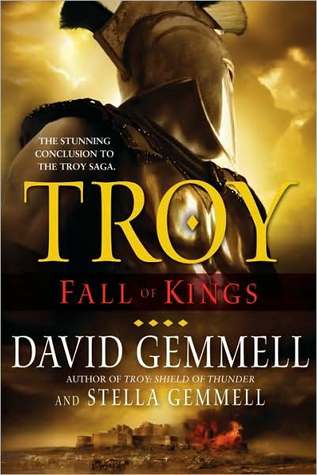
FALL OF KINGS by DAVID GEMMELL

870807

Fall of Kings by David Gemmell

Genre: Historical Fiction

Series: Troy #3

Publisher: Ballantine Books (August 27, 2007)

Length: 496 pages

My Rating: 4 out of 5 stars.

Troy: Fall of Kings is the end of David Gemmell’s epic historical series, and here a reader will find portrayed the final days of the Trojan War, the duel between Hektor and Achilles, the Trojan Horse, and the fall of mighty Troy. Without a doubt, the novel dazzles in its realistic portrayal of these historical events, leaving one both in awe of its brilliance and perplexed by its obvious flaws.

The good parts of the novel are easy to point out. David Gemmell and his wife (Who I understand finished said book after her husband’s death.) did an outstanding job of portraying realistic characters, who fit perfectly into the historical narrative of this period. These characters behave realistic based upon their established personality, and some of them almost burst off the page in their brilliance. The same can be said about the combat scenes in Fall of Kings, because they radiate ultra realism as the Greek and Trojan warriors exude fear and adrenaline while clashing in ancient combat. Even the final duel between Hector and Achilles is superbly done, penned in such detailed and dramatic fashion that it must stand as one of the best portrayed combats between heroic warriors in all of literature. And we must not forget the final “Trojan Horse” resolution, which might be the most well thought out and simplest solutions I’ve ever encountered.

No matter how well the Gemmell’s did some things, however, there are still obvious flaws with the story. Helikaon and Andromache, in particular, make certain decision that do not ring true to their characterization throughout the series and seem forced so that other important moments in history can be written about. Another is the resolution – if you can even call it that – of Gershom’s strange plot line that was somewhat mystifying throughout the series. There are other examples of characters just disappearing or behaving strangely throughout the later part of the book, especially the last few chapters where Troy’s survivors are shown fleeing for their lives, but I do not want to belabor the point, only point out that these moments detract from the effect of the narrative as a whole.

With all that being said, I enjoyed the novel. It was a fitting ending to a good series. A trilogy where the Gemmells did an excellent job of taking the myths about Troy and turning them into compelling historical fiction. Not to say they did not take artistic liberties with historical fact, but that, even though they did, it rang more or less true. For attempting to shed a light of reason on the Trojan War, this novel and series is a must read for lovers of historical fiction.

Finally, I would be remise if I did not salute the legendary David Gemmell. There will never be another writer who can do justice to a warrior’s true spirit as he did in this series and all his novels. A final triumph for a true master of his craft!

Buy the book at Amazon.

Posted in 4 Stars, Historical Fiction | Tagged , , , , , , , , | 2 Comments

ASCENDANCY (THE GODSWAR SAGA #1) by JENNIFER VALE

ASCENDANCY My rating 3 out of 5 stars.

This is one of those books that I picked up just because it looked interesting. And somehow I got lucky, because Ascendancy was a first class epic fantasy of war and magic.

The story takes place upon the world of Obsidian where two millenniums ago a race of Immortals emerged from the nether. At first, they were helpers and bearers of knowledge to the peoples of the world, but soon they “changed,” ruling the world as living gods.

Eventually, the “gods” turned on one another. Some slight igniting the Godswar, where all the Immortals were destroyed and nearly all life obliterated on Obsidian. But as they faded from the world stage, these creatures left behind a wondrous gift: Aether.

Aether is a fine mist of energy surrounding and permeating the very air of Obsidian. While invisible to most, the Ascendants, their followers the Bound (trained magic users) and the Unbound (wild magic users) can see and channel it, using Aether to enhance their senses and perceptions, even to reshape the very energy and matter of the world.

With this wondrous gift, the races of Obsidian heal their lands, carve out continent wide kingdoms, and build civilization to heights never dreamed possible. But with all these Aether-users, the wise of the world fret that a new Godswar is inevitable. How can they stop it?

A system of Aether-user control is established. A way by which an “Ascendant” binds others to his/her power, making them a “Bound”; a symbiotic relationship where the Ascendant allows the Bound to use Aether and the Bound is monitored for unlawful or destructive use of his/her power. In this way, a single Ascendant maintains control over hundreds, perhaps thousands, of Aether-users.

Like all things, however, this system of control is imperfect, for there are people who can control Aether without need of an Ascendant. These Aether-users are called “Unbound” and are hunted down, forcible placed into “asylums” to guard them against destructive use of their power.

No matter the flaws of the system of control, the Ascendants have allowed life to flourish upon Obsidian. But now war is brewing. A conflict that might be as destructive as the Godswar itself.

In the Kingdom of Galvia it all begins. This small buffer state between the Crell Imperium and the Solarian Alliance is being overrun by the Crell. During the last stand, many important characters are introduced; people who will go on to play huge roles in the tale to be told. Acts of heroism occur. Selfless sacrifices are made. People die. Children have their personality warped by the brutality they witness. And as it ends, a new world has been formed; one where world war is only a breath away and even the most insignificant personal acts may be the spark to ignite it.

From this start, Jennifer Vale crafts a story from multiple view points, jumping from the heart of the Crell Imperium to the halls of the Solarian Alliance to the backrooms of Galvia. Characters from the prologue return in different roles. New heroes and villains are introduced. Well intentioned people begin to do horrible things in the name of good. Crimes against humanity are committed to maintain peace. An object of power is found and sought by all sides to the coming conflict. And slowly, ever so slowly the world continues its unstoppable slide toward a cataclysm that it is not – and cannot – be prepared for!

All in all, Ascendancy was an enjoyable read. The plot had enough twists and turns to keep me interested; Jennifer Vale switched from one plot line to the other with little difficulty, weaving them each into a splendid tapestry of action, intrigue, and world building; none of the main characters were one dimensional – though of course there are a few who lean that direction; and even the “bad” guys were relatable – no matter how disturbing their behavior might be. But what sold me on Ascendancy was the Aether-wielding paladins, who were the best sword and sorcery equivalent of Jedi Knights that I’ve ever run across. To say these guys were dazzling doesn’t do justice to their dynamic duels and Aether casting.

Like many indie fantasy works, however, this novel did have its fair share of problems: wordiness and a lack of refinement being the most pressing issues. But with a bit more editing, tightening up of the storylines, and SOME MORE PALADIN ACTION, I think all that could be easily solved – or overlooked by a reader. 🙂

Now, I won’t go so far as to say Ascendancy is the best indie fantasy I have read, but I will say that it had lots of great ideas, some strong characters, and enough interconnecting plot lines to make it a pleasure to read. Hell, it even left me wanting more, which doesn’t always happen. For those reasons, I would recommend any fantasy reader try this one – if you can find it within yourself to overlook the editing issues.

Buy Ascendancy (The Godswar Saga Book 1) at Amazon.

Posted in Fantasy | Tagged , , , , , , , , | 3 Comments

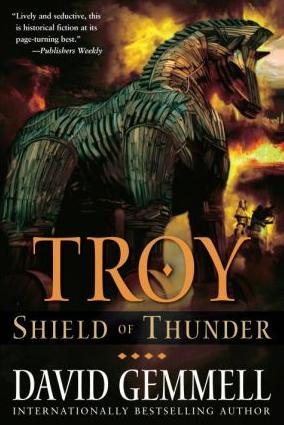
SHIELD OF THUNDER by DAVID GEMMELL

44012
Shield of Thunder by David Gemmell

Genre: Historical Fiction

Series: Troy #2

Publisher: Ballantine Books (March 27, 2007)

Length: 512 pages

My Rating: 2 out of 5 stars.

Book one of this series started off slow but really picked up speed as it reached its conclusion, so I started book two very excited to see where Gemmell was going with it. Unfortunately, Shield of Thunder really failed to deliver.

As soon as you begin this book, you will notice that Gemmell has skipped forward in time. No big deal really except for one important fact: a tragic event has occurred, which has left one of our main characters dead or dying. (I suppose the author might have done this to build suspense or tension, but it had the affect of annoying me more than anything else.) And so, with this former main character in limbo, the focus of Shield of Thunder shifts to a brand new character, Piria, and two, minor characters, Kalliades and Banokles, from book one.

Immediately, our new stars take center stage, uniting in tragic fashion before their backstory is revealed. Unfortunately, from this intriguing beginning, the story takes a big nosedive as the three journeying by sea to Troy (IF this sounds like deja vu after reading Book I I understand completely.), and even Odysseus’ presence or the hopeless love of one of the companions for the other can’t make this sea trip any better than the one in Lord of the Silver Bow. Honestly, if not for the constant interludes with Andromache in Troy itself, the book would have floundered from the start, but once again the city of Priam comes to the rescue, as the politically charged wedding games of Hektor and Andromache liven things up with political machinations, emotional fights, and the dramatic return of an old character.

By the end of the wedding games, Shield of Thunder was right back on pace, rushing forward not only toward the beginning of the Trojan War but also toward the emotionally charged completion of Piria, Banokles and Kalliades’ quest. But, alas, Gemmell once again crushed my hopes for this novel. Let me explain.

One, the epic quest of Piria had been the major plot line in the book from page one. Gemmell spends chapters explaining it, making it heart-rending, and setting up a climatic ending to it. Then, when Piria, Banokles and Kalliades are moments away from completing it, things just . . . fizzle out. I won’t explain how, but Piria’s story just ends. No other way to say it. Boom it is gone, and you sit there and ask yourself why Gemmell spent all this time building this up to just snuff it out like a candle flame. Big letdown.

Second, Gemmell skips forward in time again. The first time it was between book one and two, so I can live with that even though I didn’t like it. Here, however, there is no reason for the time skip. One minute, there is a looming war between Mycene and Troy, and the next it has been going on for years. We hear about all these huge battles that have taken place. Characters talk about Hektor’s victories and Odysseus’ strategic brilliance, but what we actually read about is Kalliades and Banokles’ struggles. And, while I did like both characters, Kalliades spends more time waxing philosophical on his inability to love anyone rather than actually fighting.

Third, Gemmell has this annoying habit of giving you a character, feeding you a backstory then never returning to him. The Egyptian, Gershom, is a prime example. Book one starts off with him getting lots of page time; we get a detailed backstory with some plot issues twisting around. Then in Shield of Thunder Gershom goes poof! and disappears. Oh, he makes some appearances, but nothing related to his backstory. And he isn’t the only character treated this way by the author. It is beyond irritating.

So while Shield of Thunder is an okay read, I can’t say I really liked it. Honestly, Gemmell barely keeps his Trojan War epic afloat with this one.

Buy the book at Amazon.

Posted in 2 Stars, Historical Fiction | Tagged , , , , , , , , , | Leave a comment

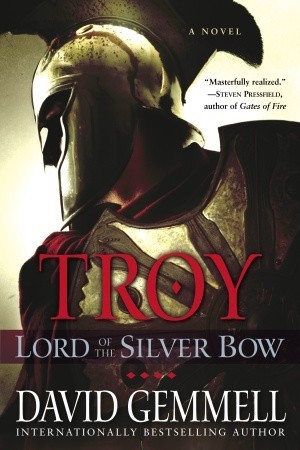
LORD OF THE SILVER BOW by DAVID GEMMELL

257149
Lord of the Silver Bow by David Gemmell

Genre: Historical Fiction

Series: Troy #1

Publisher: Ballantine Books (October 31, 2006)

Length: 483 pages

My Rating: 3 out of 5 stars.

My rating is 3 out of 5 stars.

Wow, a book about the Trojan War with a new protagonist and a different – perhaps more realistic – portrayal of the Greek world and the reasons for the great struggle. I couldn’t have ordered a book more suited to my tastes.

After finishing my read, all I can say is that Lord of the Silver Bow is okay. On one hand, it does a wonderful job of presenting the Greek world of the Aegean Sea in a more historic and realistic way with lots of re-imagined historic characters. However, on the other, the first half of the novel is plodding and suffers from the introduction of two, new characters.

So who are these new heroes of Gemmell’s Troy and what was wrong with them, you ask?

Well, the protagonist of the book is one Helikaon, a warrior-prince of Troy’s empire. He is all that a hero of ancient Greece should be: tall, strong, a great warrior, a great sailor, a wise trader, and a friend to Mycene, Trojans, and Cretans. Unfortunately, Helikaon is also aloof and rather boring. Oh, Gemmell tries to explain this behavior by providing him with a dramatic back story, but no matter how awful his upbringing and no matter how angst ridden he is, Helikaon starts out as a one dimensional character, who broods more than he excites.

The other main character of the novel is the beautiful and strong-willed Andromache, a priestess fated to marry an important Trojan hero. Unfortunately, that hero does not seem to be Helikaon. However, since any tale about Troy needs a tragic love story, Andromache becomes the obsession of the testosterone-filled males in Lord of the Silver Bow, and so instead of the classic Paris and Helen love story, we have a new one involving Andromache and Helikaon and her future husband. The only problem with this new love triangle is that Andromache starts out this story nearly as boring as Helikaon, and so she and her star-crossed lover’s passion for one another seems very unrealistic and not very compelling.

At about the halfway section of Lord of the Silver Bow, I found myself bored out of my mind by Helikaon, Andromache, their attraction, and the seemingly endless sea voyage to Troy, and I honestly began to wonder if I would be able to finish the story. Instead of writing a review, I envisioned throwing this book on my huge stack of “try it again later” novels. Then something most unexpected happened. This story came to life.

All of a sudden, Helikaon and Andromache’s ship reached Troy, and once at the golden city of legend, everything came into focus. The city of Priam providing just the right backdrop for this story to be transformed into something well worth reading.

That boring hero Helikaon? Once he stepped upon the streets of Troy, he sprang to life, becoming more dramatic and lordly. His innate heroic qualities reflected off both the kind and the devious members of the Trojan royalty. His unattainable desire for the betrothed Andromache becoming more compelling, as it is mingled with another love story between two unlikely but likeable minor characters.

And Andromache? Her introduction to the grandeur and decadence of Troy’s royal court transformed her into a determined woman, willing to suffer the wrath of a king to live by her own terms. Her desire for one man seemingly at peace with her love for another. And to see her deal with megalomaniac King Priam and his devious children was a real treat.

Add to this the tense situation in the Trojan hegemony, where armed conflict between Agamemnon’s Mycene and Priam’s Trojans is inevitable, and you can see that our two protagonists arrival at the legendary city was destined to not only reinvigorate Helikaon and Andromache but provide plenty of sword swinging action, which it does. For almost immediately, gritty combat ensues, as a reader is swept up in Gemmell’s classic testosterone splendor. The sounds of swords clashing against shields rings through one’s ears. Blood splatters across the pages. Courageous men fight against overwhelming odds. And at the end, the last words of love spoken between two star-crossed lovers brings a tear to your eye.

Yes, Lord of the Silver Bow is not a great book, but it is very good – especially the last half. So while it has its problems *cough* The first third of the book was boring *cough* it is still a good solid Gemmell read — if you can just hold out until you get to Troy.

Buy the book at Amazon.

Posted in 3 Stars, Historical Fiction | Tagged , , , , , , , | Leave a comment