
 Wolf’s Empire: Gladiator by Claudia Christian & Morgan Grant Buchanan
Genre: Science Fiction
Series: Stand Alone
Publisher: Tor (June 28, 2016)
Author Information: Claudia’s Website | Claudia’s Twitter | Morgan’s Website
Length: 496 pages
My Rating: 3 stars
Wolf’s Empire: Gladiator is a sweeping space opera in the tradition of Frank Herbert’s Dune. Set in a galaxy where the Roman Empire not only survived barbarian invasions but went on to conquer the world then the universe, the story faithfully portrays an evolved Roman civilization yet mixes in enough futuristic science fiction elements to create a perfect blend of history and high-tech; all of it setting the stage beautifully for the tale of one woman’s quest for vengeance.
Readers follow along behind a young noblewoman named Accala Viridius, who sets out on a path of revenge after the murder of her mother and brother. Their deaths just more sacrifices in the scheming and deadly rivalries between the Roman royal houses. Once a galactic conflict sweeps aside any chance Accala has to obtain justice, she resorts to a life of the gladiator, where she dreams of exacting bloody retribution in the imperial games.
Being a sucker for historical space operas like Dune, Wolf’s Empire was an enjoyable read for me, quick paced, horrific in parts, and nearly always exciting. The bickering royals, callous murder, and galactic war recalling all the good elements of Herbert’s classic sci-fi masterpiece without any of the tedious political monologues. Christian and Buchanan even avoiding the far too frequent “Chosen One” trope, instead opting for a more realistic, more modern heroine.
Here Accala is a decidedly “normal” (for her society) person. She is flawed. Addiction issues plague her. She loves but can’t maintain relationships. Her loyalties are divided, pulling her in different directions. Her desire for revenge at any cost actually costing her. And she makes poor decision more than a few times. These lapses in judgment reinforcing that she is no divine prodigy, but a young woman doing her best in an ever-changing, nebulous situation filled with dire consequences at every turn.
Surrounding our heroine, the authors have palced other complex characters. These men and women growing and evolving as circumstances dictate. Bad guys begin as horrible, vicious monsters only to be revealed as real people, who are more gray than they are black. Good guys might start off as shining beacons of light, but soon their own failings and suspect motives or desires drag them back down to the muck of the ordinary. All of this character development done organically, gifting Accala’ tale with a deep sense of realism not always encountered in space operas.
All of these people play out their tragedies upon a stellar stage. The futuristic, high-tech Roman Empire a galactic edifice serving as an amazing backdrop to this tale. Especially impressive is the authenticity of Roman society, which still retains so many vestiges of its ancient self with a patriarchal slant, bisexual leanings and strict class stratification. The attention to detail clearly showing that Christian and Buchanan definitely did their research, determining to capture the essence of Rome before placing their own unique spin upon it.
But I haven’t even mentioned the combat yet. Naturally, it is intertwined in everything going on here. Brutal and bloody, horrific and cringe worth at times. Just as it should be. I mean, any book touching upon Roman gladiators (even high-tech ones) has to get down into the gory muck of the arena, and Wolf’s Empire does so willingly and well.
The only negative I had with the novel was my lack of deep attachment to Accala Viridius. For whatever reason, she and I never bonded. Yes, I understood her motives, felt her anger and pain, and even rooted for her triumph more than a few times. However, my empathy never turned into a true love like I have for other characters like Jon Snow of A Song of Ice and Fire or even Luke Skywalker in the original Star Wars space trilogy.
Overall, I felt Wolf’s Empire: Gladiator was a creative, exciting and bloody addition to the science fiction space opera genre, more than worthy for lover of that area to give a try. Hell, even lovers of alternate history works based on the Roman Empire might find this one interesting, because the authors did such a great job of capturing the feel of ancient Rome. As for me, I’m definitely glad I gave this a try and did enjoy my time with it, even if I wished the heroine and I had hit it off more.
I received this novel from the publisher in exchange for a fair and honest review. I’d like to thank them for allowing me to receive this review copy and inform everyone that the review you have read is my opinion alone.









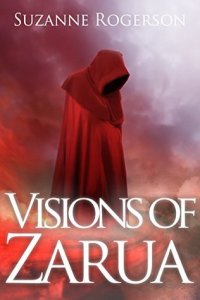 I knew Paddren had been tormented with visions since his childhood, and these visions were responsible for setting him apart from his family. He was left in the care of the Royal Wizards, but he soon went to live with a wizard named Kalesh who bid him keep the visions a secret.
 About the Author:


 Children of Fire

 Nightshades

 The Bound Folio


 vs.
vs. 
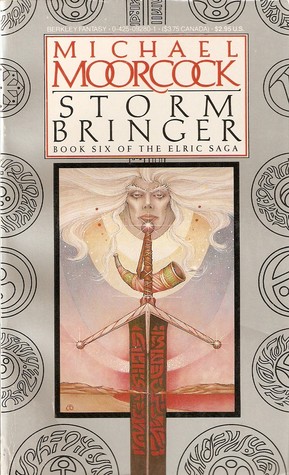
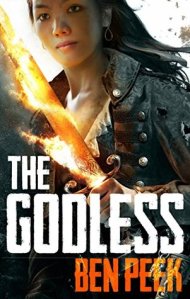 The Godless


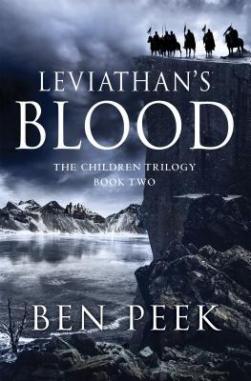
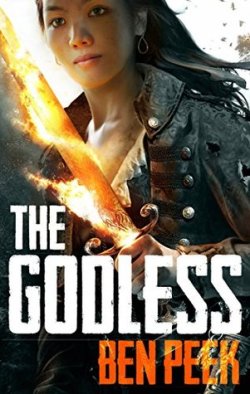 Perhaps that is a strange thing for me to say. After all, I write fantasy. Big, epic fantasy, with dead gods, swords, and all of that. My latest book is called Leviathan’s Blood. If you hold it just right, swing it hard enough, you could commit regicide with it. I’m not saying you should, but it’s a big book and you could. There’s no need to thank me.
 In 1839, what many consider to be the first refugees, the Lutherans, came to Australia because of persecution in Prussia. Lots of European refugees came after them, helped, if I am to be honest, by the White Australia Policy. Sadly, the title is a bit self explanatory. After WW2, Australia continued to take in more and more white refugees. It wasn’t until the seventies that a large Vietnamese population, fleeing the war, began to seek asylum within the country. Since then, people have come from Sri Lanka, Afghanistan, Africa, Iran, and more. Unfortunately, there are a lot of countries that do a lot of terrible things to their people. Despite the politics that surrounds the topic, it has always struck me as a welcome thing that Australia can provide this safety, this ability to make a new life. It isn’t to say Australia has always treated its people right – I refer you, with sadness once again, to the White Australia Policy – but immigration is much more a part of Australia’s heart that a Queen.
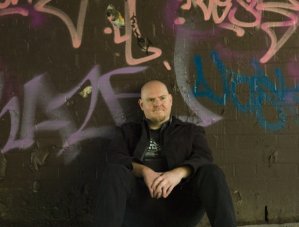 Ben Peek is the critically acclaimed Sydney based author of the Godless, Twenty-Six Lies/One Truth, Black Sheep, and the collection Dead Americans and Other Stories.


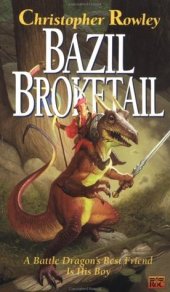
 at Amazon.







 bookwraiths.com